Intangible Assets Drive Value: Bill Nygren’s Investment Strategy
Oakmark Funds CIO Bill Nygren is redefining value investing by focusing on intangible assets and a five-to-seven-year outlook. His strategy moves beyond traditional metrics, analyzing companies like Salesforce and Dr Pepper for long-term potential amidst current market volatility.

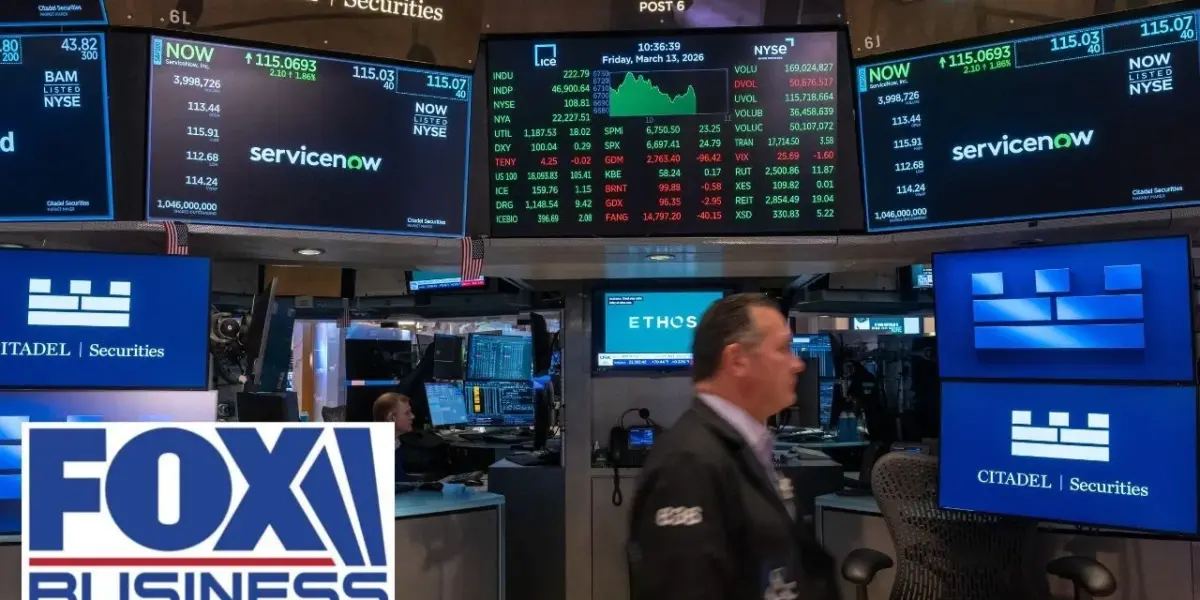
Nygren Rethinks Value Investing in Intangible Asset Era
In an investment landscape increasingly shaped by intangible assets, Oakmark Funds CIO Bill Nygren is challenging traditional valuation methods. Speaking amidst geopolitical tensions and ongoing inflation concerns, Nygren outlined his firm’s forward-looking approach to value investing, emphasizing a focus on long-term business worth over short-term market fluctuations and outdated metrics.
A Five-to-Seven-Year Horizon
Nygren’s investment philosophy centers on estimating a company’s intrinsic value five to seven years into the future. This long-term perspective allows his team to look past immediate disruptions, such as geopolitical conflicts or temporary economic pressures, which he argues have a limited impact on a company’s seven-year valuation. “What we are trying to do is look out five to seven years in the future and estimate what a company is worth then and fight at a big discount to that today,” Nygren explained. “The events we are talking about as terrible as the war is, it might affect one year at cash flow a little bit, it doesn’t really alter the seven year business value very much.”
Beyond Traditional Metrics: The Rise of Intangibles
The core of Nygren’s strategy involves a departure from traditional value investing metrics like Price-to-Earnings (P/E) and Price-to-Book (P/B) ratios. He argues that these metrics are increasingly inadequate in an economy where significant value resides in intangible assets – intellectual property, brand recognition, customer relationships, and software. To capture this, Oakmark adjusts GAAP accounting to what they term “Oakmark Accounting,” aiming to better reflect the true economic value of these intangible drivers of growth.
“We want tethered to PE ratios and price-to-book ratios like value investors used to be because we think so many — so much of the value today is an intangible asset,” Nygren stated. The firm seeks companies trading at a discount based on these adjusted valuations, prioritizing well-managed businesses with the potential to grow their value over time.
Portfolio Highlights: Energy, Software, and Beverages
Energy Sector Strength
Nygren noted a significant allocation to “classic value” stocks within the Oakmark portfolio, a trend he attributes to the current market divergence where lower P/E stocks are gaining traction. A prime example is a major energy holding, which Nygren highlighted for its strong cash flow generation and shareholder returns. “What we like is if oil is about $70 a barrel… the future markets have it there in about a year, and that number, it’s about nine times earnings and returning almost all that cash flow to shareholders primarily through repurchase,” he said.
The management’s disciplined approach to capital allocation is also a key attraction. “If they don’t think they have a competitively advantaged way to reinvest capital, they give it back to the shareholders,” Nygren commented, suggesting that while a special dividend is unlikely, increased share buybacks are a probable outcome.
Salesforce: A Value Play in the AI Era?
Challenging conventional perceptions, Nygren discussed Salesforce as a potential value investment, despite its recent market pressure. He observes that Salesforce’s current metrics, including a low teens P/E ratio and a significant share buyback program (around 25% of the company), make it appear as a value stock. Nygren contrasts this with its valuation a few years prior, when it traded at roughly double the multiple.
He views Salesforce as a high-quality business deeply embedded in its customers’ operations, with AI poised to enhance, rather than displace, its growth trajectory. “We think AI is going to increase growth rate, Salesforce,” Nygren asserted, suggesting the company is well-positioned to benefit from technological advancements.
Dr Pepper: Unlocking Value Through Separation
The beverage giant Dr Pepper Snapple Group presents another compelling investment thesis for Nygren. The company is expected to split into two distinct entities: one focused on beverages and the other on coffee. Nygren’s argument is that the soft drink division warrants a valuation comparable to industry leaders like Coca-Cola, given its faster growth rate.
“Our argument is we think soft drink side of the business deserves to be priced the mother to Coca-Cola, growing faster,” he explained. “If you put that multiple on it, you get the coffee business for free and we think that’s a nice business.” This potential undervaluation of the coffee segment, once separated, offers a clear path to increased shareholder value.
Zimmer Biomet: Re-rating Potential
In the medical device sector, Nygren pointed to Zimmer Biomet as an attractive opportunity, contrasting it with the more highly valued Stryker. While acknowledging Stryker’s superior quality, Nygren highlighted the significant re-rating of its valuation premium. “Stryker is sold at 50%, premium today that premium is more like 150%,” he observed.
Zimmer Biomet, in contrast, trades at a single-digit P/E multiple. Nygren is encouraged by its recent organic growth and the substantial return of capital to shareholders. “Low PE really entices us there,” he concluded.
Inflation Resilience Through Brand Strength
A common thread among many of these investments is their resilience to inflation. Nygren believes that companies with strong brands possess the inherent ability to pass on increased costs to consumers and benefit from economies of scale, thus mitigating inflationary pressures. “When you have a strong brand, it gives you the ability to pass through inflation and quantico benefits,” he stated.
Looking Ahead
As the market navigates complex geopolitical events, persistent inflation, and the rapid evolution of artificial intelligence, Nygren’s strategy offers a compelling framework for identifying long-term value. Investors will be watching closely to see how Oakmark’s focus on intangible assets and adjusted valuations plays out, particularly in companies undergoing significant strategic shifts or facing temporary market headwinds. The firm’s disciplined approach suggests a continued emphasis on intrinsic value, independent of short-term market noise.
Source: So much of the VALUE today is in intangible assets: Bill Nygren (YouTube)

Related Articles


Tiger Woods Arrested for DUI After Crash
Golf legend Tiger Woods was arrested for DUI in Florida following a dramatic rollover crash. Meanwhile, a government shutdown continues as House Republicans block a Senate deal, leading to airport chaos and TSA worker pay issues. The stock market also plummeted into correction territory amid fears of a prolonged Iran conflict.


Markets Tumble Amid Iran Tensions and Shutdown Gridlock
Wall Street experienced a significant slide today, with the Dow and Nasdaq entering correction territory, driven by escalating tensions with Iran and market uncertainty. Meanwhile, a government shutdown continues to cause chaos at airports nationwide, leaving thousands of workers unpaid and travelers facing long delays. The global energy supply is also under pressure, impacting prices and availability worldwide.


Iran’s Capabilities Destroyed, Stocks to Soar: Analyst
Geopolitical analysis suggests Iran's military capabilities are nearing destruction, paving the way for U.S. control of the Strait of Hormuz. This resolution is expected to lower oil prices and significantly boost the stock market, according to market watchers.