Indigo Crisis: India’s Aviation Rocked by Mass Flight Cancellations
India's largest airline, IndiGo, faced a major crisis in December 2025 when mass flight cancellations stranded nearly a million passengers. The disruption exposed vulnerabilities in the nation's aviation sector, highlighting the risks of market dominance and the challenges of balancing operational efficiency with safety regulations.

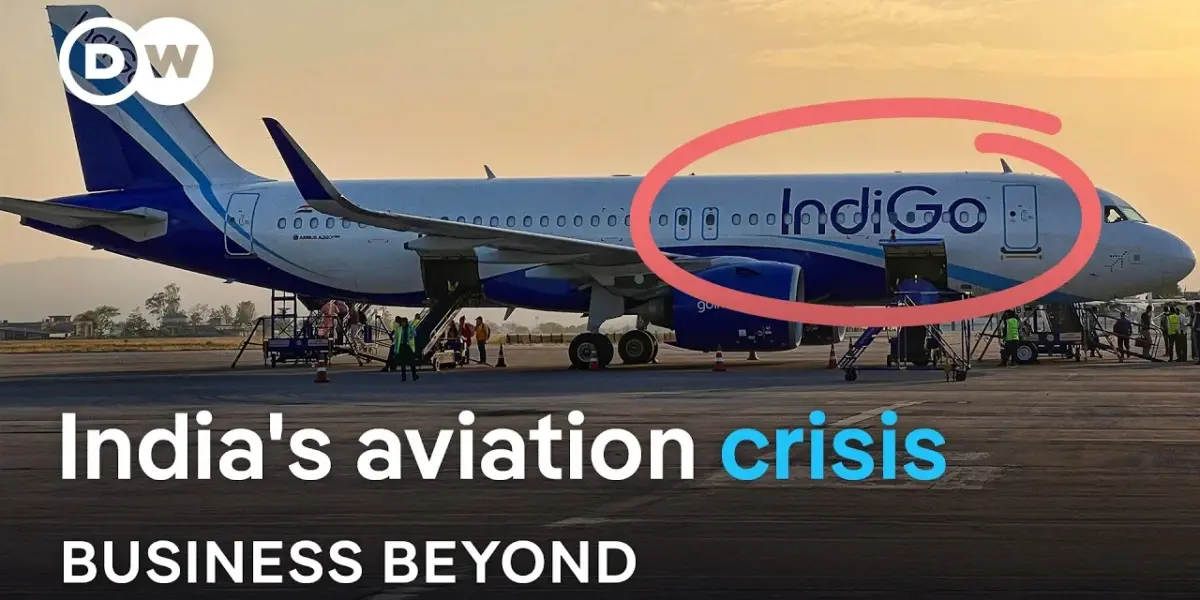
India’s Skies Grounded: Mass Cancellations Expose Aviation Weaknesses
New Delhi, India – In early December 2025, India’s largest airline, IndiGo, unexpectedly canceled thousands of flights, stranding nearly a million passengers nationwide. The disruption, which lasted for several days, brought the country’s air travel to a near standstill and raised serious questions about the resilience of India’s aviation sector. This event highlighted the risks posed by a dominant market player and the delicate balance between efficiency and operational stability.
A Nation Reliant on Air Travel
For context, IndiGo is a colossal presence in Indian aviation, controlling over 60% of the domestic market share. With a fleet of around 440 aircraft, it typically operates more than 2,200 flights daily, carrying over 100 million passengers annually. India’s vast size makes air travel the quickest option for many; a flight from Bengaluru to New Delhi takes under three hours, compared to a 32-hour train journey. When IndiGo faltered, the impact was nationwide, effectively grounding the country.
Official Reasons and Underlying Issues
IndiGo officially cited a combination of factors for the mass cancellations. The most significant reason given was the implementation of revised Flight Duty Time Limitations (FDTL) norms. These are regulations that set limits on how long flight crews can work and mandate specific rest periods to prevent fatigue. However, the scale of the disruption suggested deeper issues within the airline’s operational planning and its approach to compliance.
IndiGo’s Rise to Dominance
IndiGo’s journey to becoming the dominant carrier is a story of strategic growth in a challenging market. Launched in 2006, it entered an Indian aviation landscape that was once crowded with many airlines, including established names like Air India and Jet Airways, and low-cost carriers like Kingfisher Airlines and SpiceJet. Over two decades, most of these competitors collapsed due to financial mismanagement, economic downturns, or acquisitions that didn’t pan out.
Captain Shakti Lumba, a former vice president of flight operations at IndiGo, explained the airline’s early success. “The IndiGo startup was done by experienced professional teams tasked with laying the foundation for a profitable, low-cost carrier in which cost control was of paramount importance,” he stated in a written interview. The airline’s flat organizational structure allowed for quick decision-making. As other airlines failed, IndiGo capitalized on available airport slots and market gaps, rapidly increasing its fleet size, market share, and profitability.
The Impact on Passengers
For passengers like travel writer Pablo Chaterji, the cancellations were a shocking departure from IndiGo’s reputation. “Their track record having been so good of being largely on time and running a slick operation and being customer friendly, focused on the customer’s needs more or less. That all came crashing down in 3 days time,” he recalled.
Chaterji experienced the chaos firsthand when his direct flight was canceled. “I turned around to the counter and there were roughly 300 people at that counter all yelling and screaming,” he described. His journey, which should have been under three hours, turned into a multi-day ordeal involving hotel stays, road trips, and additional flights, with luggage piled high at baggage claim areas.
Beyond the inconvenience, the financial impact was severe. Passengers scrambled for refunds and faced exorbitant prices for alternative travel. “Other airlines immediately took advantage of all this and jacked up their prices. I mean, there were people who were paying a lack of rupees to fly one way within the country,” Chaterji noted, calling it a quick slide from capitalism to price gouging. The government eventually stepped in, imposing price caps for certain distances.
Understanding FDTL and Pilot Fatigue
The revised FDTL norms, which came into effect in stages in 2025, are crucial for aviation safety. These rules dictate daily, weekly, and monthly flight times, along with mandatory rest periods for pilots and cabin crew. The goal is to ensure crews are well-rested and capable of flying safely. “This is a specialized job where the pilot needs to be totally alert because anytime anything happens and sometimes a fraction of a second you have to take the decision,” said Captain C.S. Randhava, president of the Federation of Indian Pilots.
Key changes included increasing mandatory rest from 36 to 48 hours, redefining night duty to account for natural dips in concentration (circadian low), limiting night landings, and restricting consecutive night duties. Aviation expert Thomas Frica explained the implications: “What this means to airlines in India is that their existing pilots are available to them for shorter periods of time and need more rest in between. If they want to run to their full schedules, they need to hire more pilots and this comes at a significant cost.” Airlines are expected to schedule flights within these limits, not push right up to the maximum performance boundaries.
A Duopoly’s Grip on the Market
IndiGo’s dominance, coupled with the struggles of other airlines, has created what many consider a duopoly, with the Air India Group as the only other significant player. This market structure raises concerns about competition and consumer choice. “Monopolies or duopolies in any corporate sector… then who will pay for it is the public,” commented an aviation correspondent, highlighting the potential for exploitation.
Operational Efficiency vs. Resilience
IndiGo’s success has been built on extreme efficiency, but the crisis questioned its resilience. While the airline recorded significant profits, its lean operational model, which stretched pilot utilization to the legal limits, may have contributed to the problem. “It is well known in the industry that IndiGo does stretch its pilots to the maximum limits that are permitted under the law,” noted Jagriti Chandra, aviation correspondent at The Hindu.
This approach has led to concerns about the work culture and the treatment of pilots. Many pilots spoken to for this report were unwilling to speak on the record, fearing repercussions such as failing medicals or license renewal issues. “Pilots in our country are very scared because the moment you want to bring out anything wrong in the company, then they terminate you,” one pilot stated. The high cost of pilot training in India, with licenses and ratings costing up to 70 lakh rupees (approx. $75,000) and cadet programs even higher, leaves pilots heavily indebted and tied to airlines through long notice periods and employment bonds, limiting their bargaining power.
Regulatory Scrutiny and a Special Dispensation
Following the crisis, IndiGo faced penalties, including a fine of 22.2 crore rupees (approx. $2.4 million) and increased monitoring by the Directorate General of Civil Aviation (DGCA). However, in a move that drew criticism, IndiGo was granted a temporary exemption until February 2026 from fully complying with the revised FDTL norms, while other airlines had to adhere to them. This created a situation where IndiGo pilots were reportedly subjected to extra working hours compared to their counterparts at other airlines.
“What kind of regulation is that? You take the country to ransom by not employing pilots and you don’t want to implement the rules. So you take advantage and you arm-twist the government and the people of the country,” argued one observer, criticizing the special dispensation. Some experts believe that the industry culture has shifted from strict adherence to regulations to viewing them as targets, leading to a system that prioritizes optimization over safety margins.
The Path Forward
While IndiGo is now advertising for new pilots and complying with FDTL norms, the damage to its reputation and the questions raised about India’s aviation sector remain. The crisis has ignited a debate about the need for more airlines to foster genuine competition and ensure the sustainability of the industry. Without meaningful competition and system slack, the possibility of future disruptions of similar magnitude looms. The focus now shifts to whether India can implement policies that break the cycle of market dominance and ensure a more resilient and passenger-friendly aviation future.
Source: India's aviation crisis | Business Beyond (YouTube)

Related Articles

Jet Fuel Shockwaves: Airlines Warn of Fare Hikes, Flight Cuts
Rising jet fuel prices, driven by conflict in the Strait of Hormuz, are forcing airlines to warn travelers of higher fares and fewer flights. This comes as TSA lines ease, but worker pay remains uncertain, highlighting broader instability.


Air Travel Chaos: System Pushed to the Brink
The U.S. air travel system is under immense strain due to TSA staffing shortages and outdated infrastructure, leading to long passenger lines and operational disruptions. While back pay for TSA agents offers potential relief, experts warn that long-term retention and significant modernization efforts are crucial for stabilizing the system.

Summer Holidays at Risk: Jet Fuel Shortages Loom
Potential jet fuel shortages could disrupt summer holidays, leading to higher flight prices and cancellations. Lingering supply chain issues and global conflicts mean a return to normal fuel availability may take months. Meanwhile, the UK's housing target faces a significant shortfall, with the government citing conflict as a contributing factor.