India Scales Back Transgender Rights, Sparking Widespread Protests
India has rolled back transgender rights with a new law requiring government permission for self-identification and medical treatment, sparking widespread protests. Activists argue the legislation reverses progress, excludes many, and risks criminalizing support networks, while rights groups challenge its constitutionality in court.

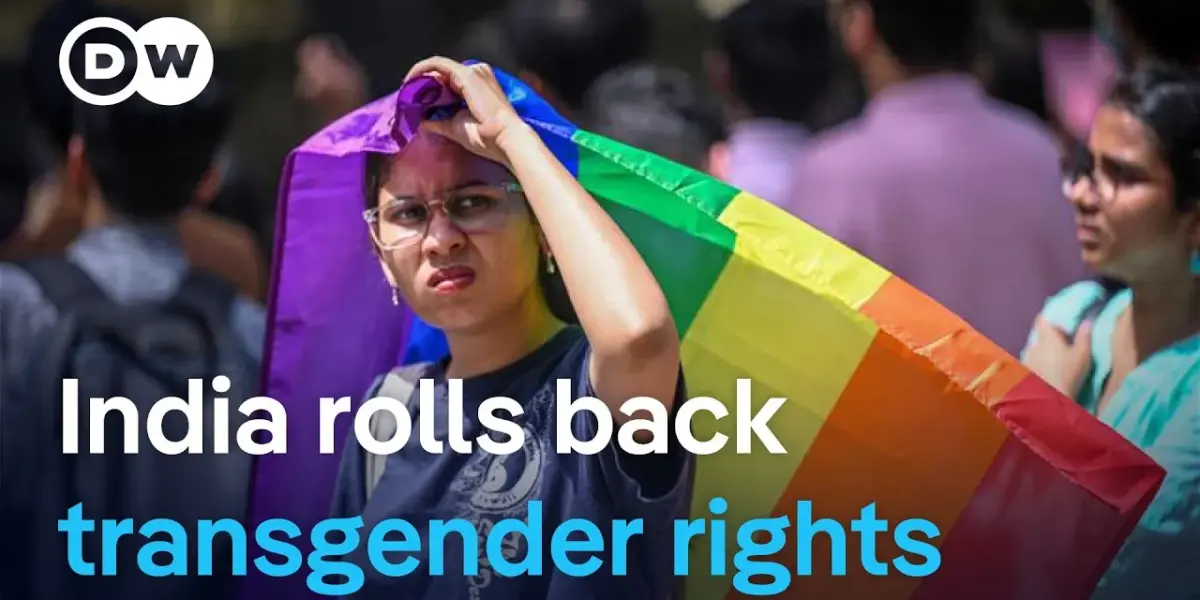
India Reverses Transgender Protections, Igniting Outrage
New Delhi, India – Seven years after enacting landmark legislation to protect transgender individuals, India has passed a new bill that significantly narrows those rights. The legislation requires government permission to officially identify as transgender and restricts access to gender-affirming medical treatment. While proponents argue the bill aids transgender people, critics warn it could further marginalize an estimated 2 million individuals.
Community Leaders Condemn New Law
The transgender community in India is expressing deep anger and despair over the new law. Activists state that the government has effectively reversed years of progress on transgender rights. Tan, a non-binary activist who uses he/they pronouns, described receiving numerous calls daily from people experiencing intense fear, sadness, and suicidal thoughts.
“Their lives have been appended with a new law that takes away their right to self-identify and limits the definition of who is a transgender,” Tan explained. “And if you’re not giving us a fighting chance, then we have to believe that you are malicious.”
Loss of Self-Identification Rights
The 2019 law recognized self-perceived gender identity and established a framework to support the transgender community. The new bill, however, revokes this right to self-identification. It also introduces strict requirements for medical procedures.
Under the new law, doctors providing gender-affirming medical care must report to the district magistrate, who serves as the granting authority for transgender identity cards. This requirement has drawn sharp criticism.
“Why should they know what I’m doing with my body?” asked one activist. “Do cis women have to report when they get breast augmentation surgery or vaginal rejuvenation surgery or a rhinoplasty? They don’t.”
Exclusion and Criminalization Concerns
While the legislation maintains protections for intersex individuals, often known as hijra or aravani, it excludes a significant portion of the transgender community that does not fit within traditional Hindu mythological frameworks. The law also makes it harder for individuals exploring their gender identity to find support.
Furthermore, those who assist such individuals now risk imprisonment. The law criminalizes forcing someone to assume a transgender identity. This has created fear among those providing crisis intervention.
The Risk of Helping
Activists highlight the danger this poses to crisis support work. Young people often reach out about family violence, forced conversion therapy, and even electric shock therapy. Previously, parents have accused support groups of manipulating their children.
“Every time I help a young person understand whether they are trans or not trans, which is a journey I went through, I can go to jail for that,” an activist stated, expressing concern over potential prosecution for offering guidance.
Legal and Practical Limbo
The new law has thrown many into a state of legal uncertainty. Lucky, who managed to change his gender on some official documents, now faces challenges with his voting card and proving his identity for inheritance.
“I now have a national ID to prove that I’m Indian. But where do I come from on India’s map? This is a big challenge to prove,” Lucky explained. He cannot vote in state elections without proper identification proving his origin from Assam, and his inability to inherit land due to documentation issues highlights the severe practical consequences.
Government’s Defense and Rights Groups’ Challenge
The Indian government defends the law, claiming it will make welfare benefits more accessible to the community. However, rights groups have already challenged the law’s constitutionality in court.
“I will fight. I will fight because as marginalized peoples, we have no other option but to fight,” declared one activist, emphasizing the community’s determination.
Broader Context: A Global Trend
Don Hassar, an LGBTQ+ rights activist, noted that India’s move is part of a larger, coordinated rollback of rights occurring globally. He stressed that the Supreme Court’s landmark NALSA judgment in 2014 affirmed that gender identity is an inherent right, not granted by the state.
“What we are seeing right now is a reversal of that,” Hassar said. “The current law brings the government back to the center of identity. It tells people that who they are must be verified, filtered and approved.”
Lack of Consultation and Vague Language
Hassar also pointed out that the bill was introduced without meaningful consultation with affected communities or even the National Council for Transpersons, designed specifically for this purpose. The law includes vague and potentially dangerous language around “allurement, enticing, and coercion,” which critics argue is not neutral legal drafting.
Psychological Toll and Intersecting Identities
The requirement for government boards to verify identity takes a significant psychological toll, disrupting a fragile shift towards dignity. Activists stress that transgender lives in India are complex, shaped by caste, religion, class, and disability, not just a single identity lens.
This law could mean loss of documentation, increased domestic violence, and reduced access to healthcare and livelihoods. Hassar warned that frameworks from the Global North often fail to account for these intersecting realities, flattening complex experiences.
Exploitation Claims Questioned
The government’s claim that the bill protects vulnerable people from trafficking and exploitation is questioned by activists. They argue that the law disrupts a fundamental right to self-determined identity, which was hard-won.
“How do you identify somebody? How how do you verify somebody’s gender identity through bioessentialist methods? It does not,” Hassar stated. “Gender is something that we experience and we affirm to it.”
Exclusionary Frameworks
Concerns are also raised about the accessibility of such a framework in a country where English is spoken by a small percentage of the population. The law risks creating a problematic discourse of who is a “real” transgender person, excluding more people than it includes.
“This does not just criminalize trans communities or erases trans communities. We need to be very clear about that. It does not. Anybody who’s trying to provide support to such community members could be criminalized,” Hassar concluded.
Looking Ahead
As rights groups mount legal challenges and community members continue to protest, the full impact of India’s new transgender rights law remains to be seen. The global context of shrinking rights for LGBTQ+ individuals suggests this struggle for recognition and protection is far from over.
Source: India scales back transgender rights, sparking protests in Delhi | DW News (YouTube)

Related Articles


Iran’s Bold Stance: Regime Feels Empowered Amidst Negotiations
Iran appears emboldened on the international stage, presenting maximalist demands ahead of negotiations and maintaining control over the Strait of Hormuz. The regime's strategy, viewed as a victory by supporters, contrasts sharply with the silenced dissent of the majority of the Iranian population who face a grim reality of suppressed freedoms.


Sweden’s Child Services Seize Kids Over Faith, Court Says No
A Swedish custody case involving a Christian family has raised serious questions about parental rights and religious freedom after their daughters were taken into state care. The European Court of Human Rights rejected the family's appeal, sparking concerns over potential overreach by child protection services.


India’s Trans Community Loses Self-Identification Rights
India's transgender community has lost its right to self-identification following the enactment of a new law. The legislation removes protections for gender queer identities and mandates doctors to report gender-affirming procedures. This has led to widespread fear, anger, and despair among transgender individuals.