Immigrant “Americanness” Debate Ignites Online Firestorm
A heated online debate erupted over the definition of "Americanness" after a conservative commentator suggested her legal immigrant husband was "more American" than some citizens. The exchange questioned subjective criteria for national identity, sparking discussions on assimilation and inclusivity.


Legal Immigrant’s Status Questioned, Sparking Debate on National Identity
A recent online exchange, captured in a YouTube video titled “Who are YOU?! Brian Tyler Cohen SCHOOLS rightwinger,” has ignited a fierce debate surrounding the definition of “Americanness” and the criteria used to assess it. The controversy centers on comments made by a conservative commentator, identified as Riley Gaines, who suggested that her husband, a legal immigrant from England, is “more American than a lot of Americans who are currently citizens.” This assertion, stemming from his adherence to certain political viewpoints and respect for U.S. immigration enforcement agencies, has been met with sharp criticism for seemingly imposing subjective standards on national identity.
The Case of the “More American” Immigrant
The conversation began with the video’s host, Brian Tyler Cohen, highlighting his husband’s journey as a legal immigrant. “My husband is a legal immigrant. He came to the United States from England uh back in 2018. He did everything the right way,” Cohen stated, emphasizing his husband’s gratitude for living in America and his understanding of its freedoms. Cohen further elaborated that his husband, who is in the process of becoming a U.S. citizen, “loves this country” and “sees the trajectory of England.” He acknowledged that the legal immigration system needs reform, advocating for a more efficient and sped-up process. However, he sharply questioned the conservative movement’s tendency to “qualify somebody’s Americanness” based on their political leanings.
“Who are you to say that somebody is more or less American because of because of their adherence to certain political issues? That is isn’t that inherently unamerican?” Cohen challenged.
Challenging the Definition of “American”
Cohen directly posed the question, “What is an American to you?” to his conservative counterpart. The response, attributed to Riley Gaines, suggested that being American means having the freedom to “do to do to believe in to say to practice whatever religion we want to.” This broad definition, however, was quickly contrasted with her earlier statement about her husband being “more American” due to his flag salutes and support for ICE officers.
Cohen pressed further, “Who are you? Who who is your husband to determine whether somebody is more or less American because of who they who they support?” He pointed out the apparent contradiction: if being American means adhering to any belief or practice, then someone living abroad who claims to be American should, by that definition, be considered one. This line of questioning aimed to expose what Cohen perceived as a flawed and selectively applied standard for national identity.
“Assimilation” as a Criterion?
The conservative commentator attempted to clarify her position, stating that her husband had “fully assimilated to Western culture” and “loves the freedom.” This introduction of assimilation as a key factor in defining Americanness became the new focal point of the debate.
Cohen seized on this, interpreting it as a requirement for immigrants to conform. “That’s what it is. It’s assimilate. So it’s assimilation. You you have to assimilate otherwise you’re not American. According according to Riley Gaines, if you’re not if you didn’t assimilate enough, you’re not American,” he stated, implying that this standard excludes those who do not fully adopt a specific cultural or political outlook.
Gaines, however, attempted to refine her point, differentiating between legal status and principal identity. “I think in terms of what it means to principally I’m not talking about legally, of course. I understand the argument of you need your paperwork, you need to be a citizen, to be an American,” she explained. This distinction suggested that while legal citizenship is a given, the deeper sense of being “American” might involve cultural integration and shared values, a concept that remains contentious.
Broader Implications for National Identity
The exchange highlights a persistent tension in the United States regarding immigration and national identity. While the country is historically a nation of immigrants, debates frequently arise over what it truly means to be an American. The incident underscores the differing perspectives on whether Americanness is primarily a legal status, a matter of cultural assimilation, or a set of shared values that can encompass a wide range of beliefs and backgrounds.
Critics argue that imposing subjective criteria, such as political alignment or specific cultural practices, on the definition of Americanness can be exclusionary and counterproductive. They contend that a truly American identity should be inclusive, embracing the diversity that immigrants bring and respecting individual freedoms of thought and expression. Conversely, those who emphasize assimilation often argue that it is necessary for social cohesion and the preservation of national culture and values.
What’s Next in the Identity Debate?
This online controversy is likely to fuel ongoing discussions about immigration policy and the evolving nature of American identity. As the United States continues to grapple with demographic shifts and political polarization, the question of who belongs and what defines belonging will remain a critical and often contentious issue. Future debates may focus on finding a balance between celebrating diversity and fostering a shared sense of national unity, potentially leading to renewed calls for comprehensive immigration reform that addresses both practical and philosophical aspects of integration.
Source: "Who are YOU?!" Brian Tyler Cohen SCHOOLS rightwinger (YouTube)

Related Articles


Gaines Accused of Xenophobia in Immigration Debate
Brian Tyler Cohen challenged conservative commentator Riley Gaines' definition of 'American' during a debate, arguing that qualifying Americanness based on assimilation or political views is un-American. Cohen suggested the focus on immigration is a political distraction from economic failures.

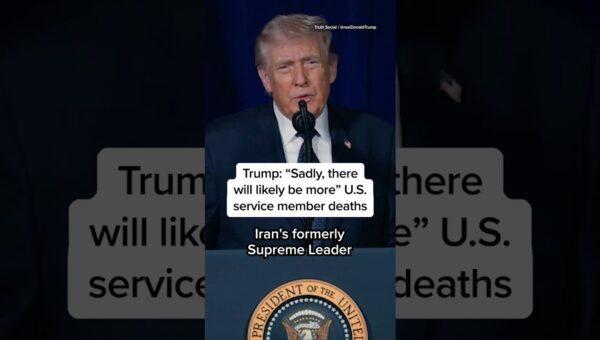
Trump Warns of More US Deaths in Escalating Conflict
Former President Donald Trump issued a somber warning on Truth Social, stating that further U.S. service member deaths are "likely" as geopolitical tensions escalate. He condemned Iran's former supreme leader, Ayatollah Ali Khamenei, and vowed retribution for fallen soldiers.


Air Travel Chaos Erupts as Gulf Conflict Shuts Skies
Tens of thousands of passengers are stranded as the conflict in the Persian Gulf forces widespread airspace closures, disrupting global air travel. A tourist in Israel described witnessing air strikes and the desperate search for escape routes amidst rapidly changing travel options.