IMF Signals Global Finance Reset Amidst Economic Turmoil
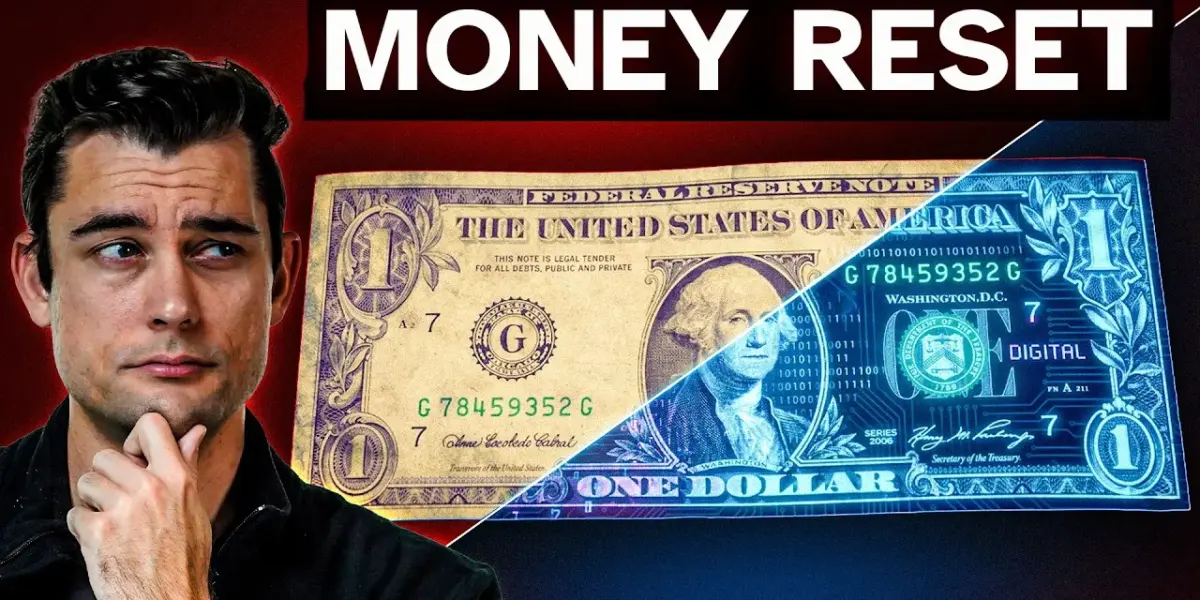
The International Monetary Fund (IMF) is signaling a major shift in global finance with its upcoming "Policies Amid a Reset of the International Trade and Financial Systems" session. This event highlights growing concerns over geopolitical instability and energy shocks, prompting a move towards programmable money and central bank digital currencies (CBDCs). Meanwhile, alternative payment systems are emerging, challenging the dominance of the U.S. dollar.

IMF Signals Global Finance Reset Amidst Economic Turmoil
The International Monetary Fund (IMF) is set to host a significant session on April 9th, 2026, titled “Policies Amid a Reset of the International Trade and Financial Systems.” This event, held at their Washington D.C. headquarters, signals a formal acknowledgment by the global financial institution that the existing post-war economic order is undergoing a fundamental transformation. The shift is driven by geopolitical conflicts and significant energy price shocks, prompting global elites to explore programmable alternatives to the current fiat money system.
IMF Managing Director Kristalina Georgieva recently highlighted these concerns, warning of continuous compounding shocks to the global economy. The upcoming IMF World Economic Outlook report, due April 14th, arrives at a time of considerable disagreement among financial authorities regarding the U.S. economy’s future. The Organization for Economic Cooperation and Development (OECD) projects U.S. headline inflation to reach 4.2% by the end of 2026, a revision attributed to energy price shocks and supply chain issues. This contrasts sharply with the Federal Reserve’s projection of inflation settling at 2.7% for the same period.
Economic Discrepancies Fuel Stagflation Fears
The 1.5% difference between the OECD and Federal Reserve inflation forecasts is not a minor detail; it represents the potential gap between a manageable economic slowdown and a severe stagflation crisis. Stagflation occurs when high inflation combines with slow economic growth and high unemployment, eroding the purchasing power of money. If the OECD’s higher inflation forecast proves accurate, the Federal Reserve might be forced into sudden policy changes. Market indicators already reflect this uncertainty, with futures contracts showing a 52% chance of an interest rate hike by year-end.
Underlying economic data paints a challenging picture. Recent employment reports showed a loss of 92,000 jobs in February, marking the fourth decline in nine months. Simultaneously, consumer sentiment has dropped significantly, partly due to geopolitical events. This combination of rising inflation and a weakening job market presents textbook conditions for stagflation, forcing central banks into a difficult balancing act between controlling inflation and supporting employment.
The Petro-Dollar System Under Pressure
For decades, international trade has largely relied on the petro-dollar system, where oil transactions are settled exclusively in U.S. dollars. However, this system is rapidly weakening. In March 2026, Indian refiners reportedly settled approximately 60 million barrels of Russian crude oil without using traditional Western financial channels. Instead, payments were processed through specialized overseas accounts, converting Indian rupees directly into Chinese yuan and UAE dirhams.
This transaction occurred during a temporary U.S. sanctions waiver window, highlighting a growing willingness to bypass the dollar. The situation is further complicated by actions in the Strait of Hormuz, a critical maritime route. Iran has begun demanding significant transit fees, with payments increasingly being routed through China’s cross-border interbank payment system (CIPS) using Chinese yuan. This effectively creates a dollar-free toll booth, impacting global oil trade dynamics.
BRICS Nations Develop Alternative Clearing Systems
The BRICS nations (Brazil, Russia, India, China, and South Africa) are actively developing their own blockchain-based clearing systems to circumvent Western financial infrastructure. A key initiative is the “BRICS Bridge,” focused on central bank digital currency (CBDC) interoperability. This project aims to create a multi-tiered settlement system connecting national payment networks without relying on the U.S. dollar.
The BRICS Pay infrastructure, launched in 2024, is an open-source protocol designed to link payment systems like India’s UPI, China’s CIPS, Russia’s SPFS, and Brazil’s PIX. Additionally, digital settlement instruments, like the “unit,” are being explored, backed by a mix of gold and local currencies. BRICS central banks have been accumulating significant gold reserves, reportedly over 6,000 tons, to support this new financial architecture. The mBridge multi-CBDC platform, a component of this effort, has already processed around $55 billion in transactions, primarily in digital yuan.
The Rise of Programmable Money and CBDCs
While the U.S. dollar may appear strong in the short term due to global demand for energy imports, its long-term share of global foreign exchange reserves has fallen to a 30-year low of 56.9%. This trend suggests a weakening foundational position for the dollar.
The global financial elite are reportedly planning a transition towards a multipolar currency system centered on programmable money. A significant number of countries are exploring or implementing CBDCs. These digital currencies could offer enhanced efficiency but also raise concerns about surveillance and control. For example, India’s Payments Vision 2028 roadmap mentions programmable features like “switch on and switch off” controls and full transaction traceability. China has already used smart contracts to issue digital yuan vouchers with expiration dates, demonstrating programmable spending controls.
The European Central Bank is also advancing its digital euro project. The core concern with CBDCs is the potential for central authorities to impose restrictions on how, when, and where users can spend their money, including programmed expiration dates or geographic limitations. The IMF estimates that even a non-interest-bearing CBDC could capture a significant portion of the commercial deposit market.
U.S. Approaches Digital Currencies Differently
The United States is taking a different approach. Legislation has been passed to prevent the Federal Reserve from issuing a retail CBDC, and executive orders have halted federal research into such a currency, citing privacy risks. Instead, the U.S. has established a strategic Bitcoin reserve, reportedly holding over 328,000 seized coins. This move positions decentralized digital assets as a contrast to state-controlled digital currencies.
Even without a U.S. CBDC, new stablecoin regulations require private issuers to have the ability to freeze transactions upon lawful order. The “Genesis Act” established a federal stablecoin framework mandating this capability. Additionally, frameworks like the Crypto Asset Reporting Framework aim to integrate decentralized assets into existing tax and reporting systems, effectively creating surveillance through corporate intermediaries.
Market Reactions and Investor Choices
The current market environment presents a stark contrast for investors. Bitcoin has seen a significant drawdown of 22.5% year-to-date, falling to around $68,700. Meanwhile, gold has surged nearly 8%, reaching new all-time highs above $4,700 per ounce. This suggests that during times of geopolitical uncertainty, institutional capital often seeks the perceived safety of traditional assets like gold, rather than cryptocurrencies, which have yet to consistently prove their safe-haven status.
Even large institutional holders are facing pressure. For example, Strategy Incorporated, holding over 762,000 Bitcoin with an average cost basis of $75,600, is currently facing an estimated $6 billion unrealized loss. Despite this short-term volatility, the long-term case for permissionless innovation remains strong. Bitcoin, as a decentralized, peer-to-peer digital commodity with no central authority, offers censorship resistance. This characteristic is becoming increasingly valuable as governments explore programmable digital currencies.
The choice facing investors is whether to remain within a potentially programmable financial system or to opt for decentralized networks that offer greater control and resistance to censorship. BlackRock’s continued significant holdings in Bitcoin ETFs, despite market volatility, underscore the perceived fundamental value of such decentralized assets in a world increasingly focused on controlled digital finance.
Source: IMF's SECRET RESET: How Your Money Gets Replaced (YouTube)

Related Articles


Chemical Shortage Triggers Global Manufacturing Freeze
A critical shortage of NAFTA, a key petrochemical feedstock, is causing global manufacturing disruptions. Geopolitical events have severely impacted supply lines, leading to soaring prices and factory shutdowns across Asia. This crisis threatens supply chains for everything from semiconductors to medical devices, with central banks struggling to respond.


Fed’s Money Printing Meets Oil Shock: Inflation Fears Soar
The Federal Reserve faces a challenging scenario if it prints money while oil prices are high. Unlike past instances where cheap oil absorbed new money, expensive oil could trigger widespread inflation, impacting essentials like food and rent. This combination risks stagflation and a sovereign debt crisis, making it a potentially devastating outcome for investors and the economy.

Jobs Report Masks Economic Woes Amidst Iran Conflict
A recent jobs report showed 178,000 new jobs in March, with the unemployment rate falling to 4.3%. However, analysts caution that healthcare drove most of these gains, and underlying economic weakness persists. Rising inflation and the impact of international conflicts are creating significant economic pain and raising fears of stagflation, with potential political repercussions.