Iceland: NATO’s Unsinkable Arctic Aircraft Carrier
Iceland, a nation with minimal defense spending, plays a pivotal role in NATO's Arctic strategy. Its unique position and history have shaped a model of 'strategic complementarity,' making it a vital, albeit unconventional, security asset for the alliance.


Iceland: NATO’s Unsinkable Arctic Aircraft Carrier
In the geopolitical landscape of NATO, where defense spending is often measured in billions and military might is paramount, Iceland presents a curious paradox. Despite allocating virtually no GDP to core defense, this island nation is considered by many to be one of NATO’s most vital Arctic assets. This seemingly counterintuitive strategic position is not accidental; it is a carefully crafted outcome of Iceland’s unique history, geography, and its innovative approach to collective security.
A History Forged by Necessity
Iceland’s strategic importance and its unusual defense posture can be traced back to the tumultuous events of World War II. Initially in a personal union with Denmark, Iceland’s foreign affairs were managed by its larger neighbor. When Denmark was occupied by Nazi Germany in 1940, Iceland declared neutrality. However, its critical location for maritime trade and weather prediction in the North Atlantic made it a strategic prize. Britain, under Winston Churchill, recognized this vulnerability and, after diplomatic overtures failed, proceeded with an invasion. While officially protested, the British occupation was relatively benign, providing Iceland with a measure of security against a potential Nazi takeover and leading to the development of crucial infrastructure like Reykjavik Airport.
The arrangement soon shifted, with the United States taking over security responsibilities as the war progressed. This period saw further infrastructure development, most notably at Keflavik, which would become the island’s primary international airport. Despite the occupation, the relationship was largely cooperative, though the significant presence of American soldiers did lead to social complexities, famously known as “The Situation.”
Post-War Realities and Strategic Alliances
Emerging as a fully independent nation after the war, Iceland faced a new geopolitical reality: the burgeoning Soviet threat. A continued foreign military presence was necessary, leading to two pivotal agreements. First, Iceland became a founding member of NATO in 1949, formally ending its neutral stance. Second, a bilateral security agreement was signed with the United States in 1951. This accord stipulated that the U.S. would be responsible for Iceland’s defense on behalf of NATO, with Iceland providing the necessary facilities free of charge.
This arrangement persisted for decades, with the U.S. maintaining a significant military presence at Keflavik. However, the post-Cold War era brought about a strategic shift. Reductions in global military spending, coupled with U.S. focus on conflicts in Iraq and Afghanistan, led to the withdrawal of its main base in 2006. Iceland, while developing some of its own limited capabilities, continued to rely on allies for its defense, a decision rooted in its unique characteristics.
The Iceland Advantage: Small Size, Big Impact
Iceland’s diminutive size is central to its defense strategy. With a population comparable to a mid-sized American city and a GDP of around $33 billion, the financial burden of maintaining a modern, independent military is prohibitive. For context, the cost of a single U.S. Navy aircraft carrier far exceeds Iceland’s entire defense budget if it were to meet NATO’s recommended spending targets. The sheer fixed costs associated with establishing and operating a military force place it beyond Iceland’s economic reach.
Instead of traditional military investment, Iceland has leveraged its geography and strategic position through a unique form of “strategic complementarity.” The island is situated within the Greenland-Iceland-UK (GIUK) gap, a crucial maritime choke point through which Russian submarines and aircraft must pass to threaten the Western Hemisphere. Iceland’s role is to serve as a stationary, unsinkable aircraft carrier – a vital piece of real estate that hosts allied forces and infrastructure.
A Model of Strategic Complementarity
This model flips the traditional notion of defense burden-sharing. Instead of Iceland spending more on its own military, its contribution lies in providing and maintaining the essential infrastructure that enables its allies to project power. This includes facilities for rotating NATO air policing missions, radar installations for surveillance, and logistical support. For instance, Keflavik Airport, maintained by Icelanders, serves as a crucial hub for these rotating forces, offering ample airspace for training exercises.
The benefits are mutual. Allies gain a strategic foothold in a critical Arctic region, ensuring surveillance and response capabilities. Iceland, in return, receives robust security guarantees without the crippling cost of independent military development. This arrangement has proven its worth historically, as seen in the “Cod Wars,” where Iceland’s threat to withdraw from NATO was instrumental in resolving fishing disputes with the United Kingdom.
Evolving Role in a Changing Arctic
While Iceland’s core defense spending remains minimal, there are indications of a gradual shift. Recent years have seen a slight increase in defense expenditure, with discussions underway to potentially raise it to 1.5% of GDP. The Directorate for Security within the Ministry for Foreign Affairs is expanding, and Iceland is exploring new avenues of contribution, including cybersecurity and specialized ordnance disposal. The “Northern Viking” exercises, focusing on naval and air operations in the Arctic, highlight Iceland’s growing engagement.
The warming Arctic and increasing geopolitical competition in the region are likely to further elevate Iceland’s strategic importance. The current system of rotating air policing, while functional, leaves periods of potential vulnerability. As the Arctic becomes a more contested domain, the need for consistent allied presence and enhanced Icelandic capabilities, particularly in areas like search and rescue and maritime surveillance, will become more pronounced.
Why This Matters
Iceland’s unique defense posture challenges conventional wisdom about military spending and collective security. It demonstrates that strategic value can be derived not just from direct military investment, but from providing critical infrastructure and leveraging geographical advantages. This model offers a potential blueprint for other small nations within alliances, suggesting that tailored contributions, rather than uniform spending targets, can be highly effective. Furthermore, as the Arctic gains prominence, Iceland’s role as a linchpin for NATO operations underscores the evolving nature of security in a changing global environment. It highlights how cooperation, infrastructure, and strategic positioning can create a formidable defense asset, even in the absence of a large standing army.
Future Outlook
The future for Iceland within NATO appears to be one of increasing relevance. While a significant increase in defense spending is unlikely to mirror that of larger allies, its role as a foundational piece of Arctic security infrastructure is undeniable. The ongoing development of its capabilities, coupled with its strategic location, positions Iceland to play an even more active part in allied operations. As global powers vie for influence in the Arctic, Iceland’s commitment to maintaining its critical infrastructure and potentially expanding its specialized defense roles will be crucial in ensuring regional stability and NATO’s continued strategic advantage.
Source: NATO’s Most Powerful Arctic Asset Is Hiding in Plain Sight (YouTube)

Related Articles

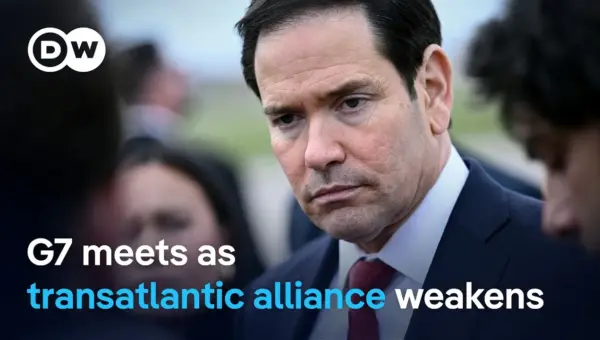
G7 Allies Clash Over Iran War Strategy, Urge Focus on Russia
G7 foreign ministers met in Paris, revealing deep divisions over the U.S. war with Iran. European allies urged the U.S. to pressure Russia, linking its actions to the conflict and fearing support for Ukraine will wane.

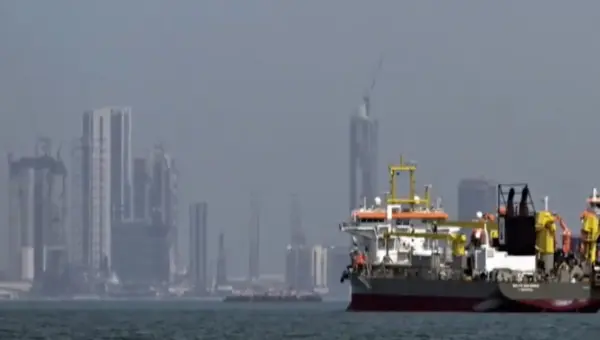
Iran Blocks China Ships, Exposing Beijing’s Weak Grip
Iran's recent decision to block Chinese ships at the Strait of Hormuz is exposing the limits of Beijing's influence in the Middle East. This action is causing delays and cancellations for Chinese manufacturers, turning a perceived geopolitical win into an economic strain.
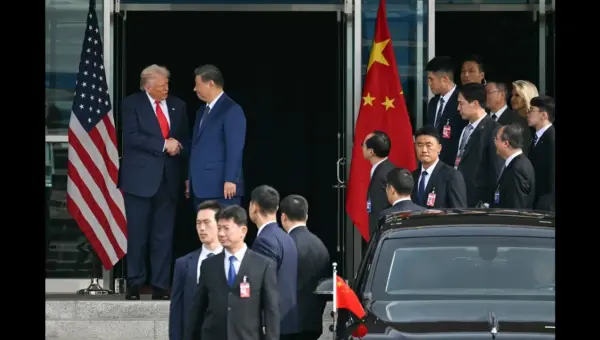
Trump’s “Walk Away” Tactic Signals Tougher Stance on China
Retired Air Force Brigadier General David Stillwell believes President Trump's strategy of being willing to walk away from negotiations puts pressure on China. This tactic, combined with US global actions and strengthened alliances, signals a more assertive American foreign policy.