ICE Agents Deployed to Airports Amid TSA Staff Shortages
Major U.S. airports are experiencing severe travel delays due to a surge in TSA officer call-outs, exacerbated by a DHS shutdown. ICE agents have been deployed to assist, but their role and effectiveness are questioned, with concerns over political motivations and passenger intimidation.

TSA Call-Outs Cripple Airport Security, ICE Deployed
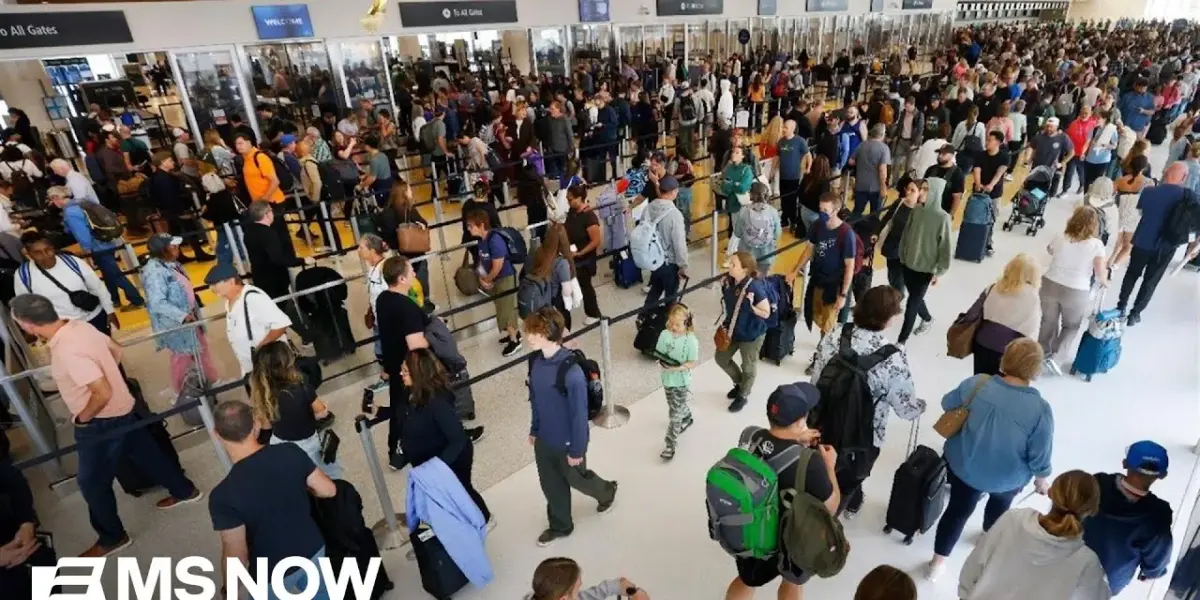
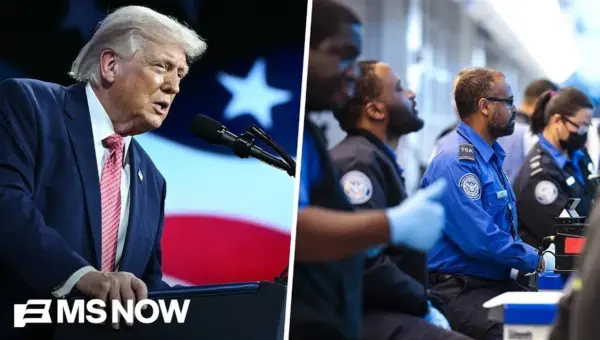
Long lines and widespread travel chaos have gripped major U.S. airports as a surge in Transportation Security Administration (TSA) officer call-outs, reportedly due to a Department of Homeland Security (DHS) shutdown, leaves security checkpoints understaffed. Passengers at Hartsfield-Jackson Atlanta International Airport, one of the hardest-hit locations, have faced extreme wait times, with some arriving four to five hours before their flights. While wait times at Atlanta saw a temporary improvement to five to ten minutes for security screening, passengers still faced significant delays of about three hours after clearing security.
The primary driver of these disruptions is a staggering 40% of TSA officers calling out sick at airports like Atlanta. These officers are currently not receiving pay, fueling passenger sympathy and calls for congressional action. “I understand TSA, I feel so bad for them, but you know, we still was going to plan on coming at least four to five hours early because we understand,” one traveler shared, expressing empathy for the TSA staff while acknowledging the need for early arrival.
ICE Agents Deployed Amid Confusion and Concern
In response to the staffing crisis, Immigration and Customs Enforcement (ICE) officers have been visibly present at affected airports. These agents have been seen walking through terminals, with one ICE officer stating off-camera that their mission was to “support TSA officers” and to do “whatever it takes.” However, the exact role and effectiveness of these ICE agents remain unclear.
Analysts suggest the deployment of ICE agents may be more politically motivated than practically effective. “The here to support is fairly vague and amorphous, and it does not necessarily seem to be helping with those call-out numbers or some of those wait times,” noted Ashley Parker, MSNOW political analyst and staff writer for The Atlantic. She drew parallels to the deployment of the National Guard, where agents were present but engaged in minimal duties not directly related to the stated mission.
Sarah Saldana, former ICE director in the Obama administration, echoed these concerns. “Practically speaking, what could these agents do to help out? Well, that and that is the question and I’m very curious about that response about whatever it takes because it doesn’t look like they are doing much other than milling around and being available,” Saldana stated. She believes the deployment serves a political purpose, potentially as a threat to Democrats, rather than a genuine solution to airport congestion.
Passenger Experiences and Political Ramifications
Passengers have reported feeling intimidated by the presence of ICE agents. The visual of ICE officers, often associated with immigration enforcement, at TSA checkpoints has created an uneasy atmosphere for some travelers. “I’ve talked to some passengers as well, who said that they are a bit intimidated by just the presence of them here at this airport,” reported Ariel Hickson, reporting live from Hartsfield-Jackson Atlanta International Airport.
The situation has extended beyond passenger delays, impacting other critical functions. Reports indicate that even NTSB investigators faced delays getting to LaGuardia Airport after a collision due to the long TSA lines. This highlights how the TSA staffing crisis can have ripple effects on national security and incident response.
Broader Implications and Political Strategy
The deployment of ICE agents, particularly those not wearing masks despite mask use being common in other ICE operations, has also drawn attention. Saldana expressed hope that this might signal a concession on mask mandates, while emphasizing the importance of safety for ICE agents. “I don’t think there’s going to be a problem at the airports and I’m glad to see it,” she said.
Politically, the airport chaos presents a tangible problem that could resonate with voters. Ashley Parker explained that lawmakers often react to constituent concerns, especially during peak travel seasons like spring break. “Going to the airport, having to get there five or six hours early, missing your flight. These are tangible things that affect real people in their real lives, that they will be sharing with their elected officials,” Parker said. The administration’s strategy of deploying ICE agents, while potentially aimed at pressuring political opponents, may not effectively resolve the travel disruptions that directly impact Americans.
What’s Next?
As the DHS shutdown continues to affect federal employees and critical services, the focus remains on finding a legislative solution. The effectiveness and political fallout of deploying ICE agents to airports will likely be closely watched. Travelers are advised to continue checking with their airlines and airports for the latest updates on wait times and travel advisories. The pressure on Congress to end the shutdown and restore full staffing at TSA is expected to grow as more travelers experience significant disruptions.
Source: Hours-long airport waits as TSA call-outs surge due to DHS shutdown (YouTube)

Related Articles

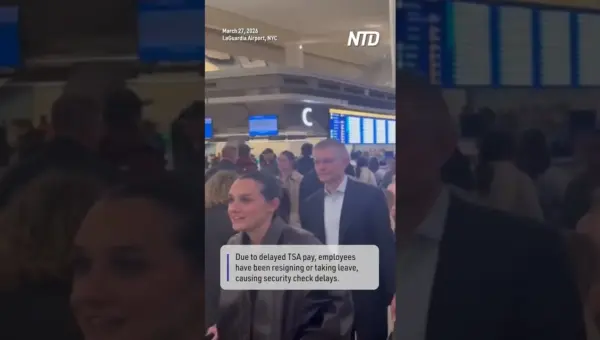
TSA Staff Cuts Create Airport Chaos for Travelers
Recent TSA agent shortages, fueled by a government shutdown and delayed pay, have caused significant delays and long security lines at major airports. This situation highlights the critical role of TSA staff and the impact of funding issues on essential services.
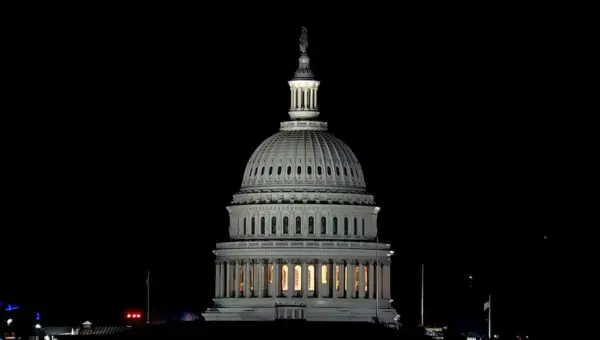
House Funds DHS, But Senate Deal Unlikely Amid Shutdown
The House of Representatives has passed a bill to fund the Department of Homeland Security, but the measure is unlikely to pass the Senate. TSA workers, who have faced missed paychecks and disruptions, may receive some pay soon due to a presidential order, but the broader shutdown continues.
TSA Workers Paid as Congress Remains Divided on Funding
TSA workers are set to receive paychecks thanks to a presidential memo, bypassing a divided Congress. Meanwhile, a bipartisan Senate deal to fund the Department of Homeland Security was rejected by House Republicans, who are now pushing their own stopgap bill. The ongoing stalemate highlights deep political divisions and raises concerns about the government's ability to function effectively, impacting essential services and public confidence.