ICE Agents Deploy Amid DHS Shutdown Stalemate
As the U.S. faces a partial DHS shutdown, ICE agents are deployed to airports, sparking debate over immigration enforcement and political strategy. Meanwhile, the Supreme Court reviews a Mississippi law on mail-in ballots, with potential impacts on midterm elections.


ICE Agents Deployed Amid DHS Shutdown Stalemate
The partial shutdown of the Department of Homeland Security (DHS) has led to a notable action by President Trump: deploying U.S. Customs and Border Protection (CBP) agents to airports nationwide. The stated goal is to help American airports cope with staffing issues. President Trump said these agents would stay as long as needed. He also suggested that this move might encourage Democrats to negotiate an end to the shutdown.
Democrats, however, see reforming Immigration and Customs Enforcement (ICE) as a key part of any deal to reopen DHS. This comes after tragic shootings earlier in the year. Senate Democrats have indicated some progress has been made in talks. Yet, they feel the current Republican offer does not do enough to regulate ICE.
Supreme Court Considers Mail-In Ballot Law
Meanwhile, the Supreme Court is looking at a Mississippi law. This law allows mail-in ballots to be counted even if they arrive after Election Day, as long as they are postmarked by Election Day. Federal law generally requires ballots to be counted on Election Day. Conservative justices have questioned the state’s lawyer about the law. The court’s decision could significantly impact the upcoming midterm elections. Nineteen states and territories currently allow late ballots to be counted. Some worry that overturning this law could cause confusion on Election Day.
Debating the DHS Shutdown Strategy
Political commentators Harry Sisson, a progressive, and Brilyn Hollyhand, a Republican, discussed these events. Sisson questioned the effectiveness of deploying ICE agents to airports. He pointed to an incident where a woman with no criminal record was detained in front of her child. Sisson suggested this action might give the President more time to avoid making a quick deal, potentially at the expense of TSA officers. The union representing TSA officers is reportedly unhappy with this arrangement.
Hollyhand viewed the situation differently. He suggested Democrats are using the chaos at airports to scare voters before the midterms. He argued that Democrats are using fear tactics, similar to how they allegedly used the Minneapolis shootings to influence voters. Hollyhand believes TSA workers might welcome the reinforcement, noting long lines and overworked staff he observed while traveling.
The debate also touched on negotiations in Washington. Republican Senator John Kennedy’s comments on Senator Schumer’s demands were mentioned. Sisson argued that Democrats have proposed bills to fund the TSA while separating ICE funding for further negotiation. He stated that Republicans have rejected these proposals multiple times, even when presented to President Trump. Sisson believes Republicans are currently blocking a clean funding bill for the TSA.
Hollyhand countered that a “clean bill” is unlikely in Washington. He cited an incident where a college student was killed by an undocumented immigrant, suggesting that ICE officers could have prevented this if they were enforcing the law. He also questioned the idea of reforms like body cameras or masking for ICE agents, implying these could hinder their work. Hollyhand believes that requiring IDs for elections is crucial for security, comparing it to the ID checks required to enter a studio.
Global Impact and Future Scenarios
The DHS shutdown and the Supreme Court’s consideration of mail-in ballots highlight ongoing tensions in U.S. domestic policy. The deployment of ICE agents, while intended to alleviate airport disruptions, raises questions about immigration enforcement priorities and the separation of powers. The Supreme Court’s ruling on mail-in ballots could reshape voting access and administration across the country, potentially influencing election outcomes and future voting laws.
Historically, government shutdowns have often become leverage points in partisan battles, with each side seeking concessions. The Supreme Court’s role in election law cases has also been a frequent area of contention, particularly concerning voting rights and access. The current debates reflect deeper divisions over immigration policy, border security, and the fundamental principles of democratic participation.
The economic implications are significant. A prolonged DHS shutdown could affect border security operations, impacting trade and travel. Sanctions and trade dependencies are not directly mentioned but are often underlying factors in broader immigration and security debates. The control of borders and the flow of labor have economic consequences for both the U.S. and its neighbors.
Looking ahead, several scenarios are possible. The DHS shutdown could end with a compromise that addresses both security and immigration reform. Alternatively, it could drag on, leading to further disruptions and political fallout. The Supreme Court’s decision on mail-in ballots will set a precedent that could either expand or restrict voting methods, with long-term implications for electoral politics.
The current situation demonstrates a complex interplay of political interests, public safety concerns, and legal interpretations. The differing perspectives on ICE operations and voting rights reveal fundamental disagreements about the role of government and individual liberties.
Source: Harry Sisson, Brilyn Hollyhand debate DHS shutdown | Jesse Weber Live (YouTube)

Related Articles


TSA Funding Fight Sparks Airport Chaos, Worker Exodus
TSA officers will soon receive back pay after President Trump signed an emergency order, but the ongoing congressional funding fight continues to cause airport chaos. Long security lines and a significant number of TSA officer resignations highlight the deep divisions over border security measures, leaving travelers frustrated.

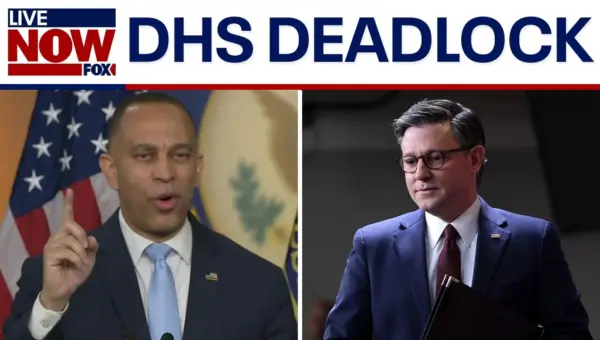
Democrats Demand End to DHS Shutdown, Pass Bipartisan Bill
Democrats are demanding an immediate end to the Department of Homeland Security (DHS) shutdown, urging House Republicans to pass a bipartisan Senate bill. The legislation aims to fund essential services, pay TSA agents, and end airport chaos. Democrats criticize Republicans for obstructing the bill to push ideological agendas and reform ICE.

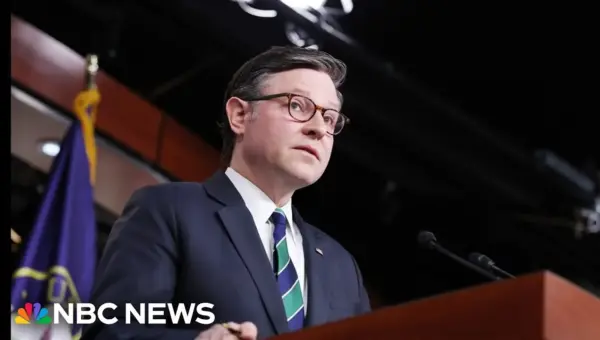
DHS Shutdown Deepens as Speaker Johnson Rejects Senate Deal
The partial government shutdown continues as House Speaker Mike Johnson rejected a bipartisan Senate deal to fund the Department of Homeland Security. Instead, the House will vote on a separate measure, a move Democrats call "dead on arrival." President Trump has used an executive order to unilaterally fund TSA workers, offering some relief amid widespread airport disruptions and financial hardship for federal employees.