ICE Agents at Airports Won’t Speed Up Security Lines
ICE agents are now assisting at U.S. airports, but former TSA administrator John Pistole states they won't speed up security lines. Travelers face long waits due to TSA staff shortages caused by the government shutdown. Pistole suggests ICE could serve as a visible deterrent but lacks screening expertise.

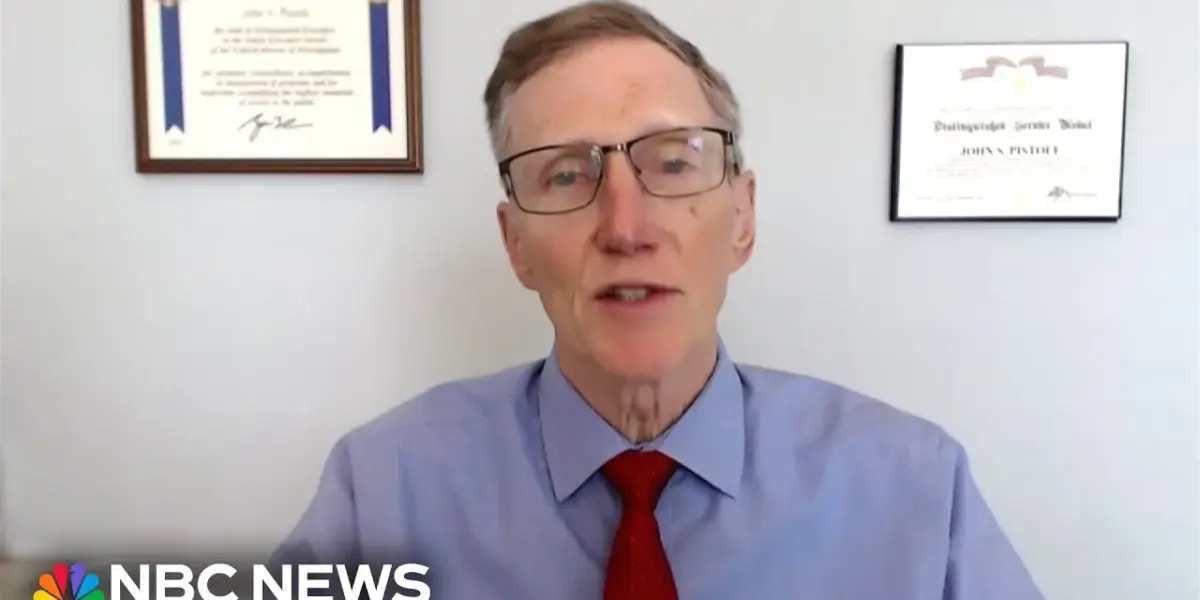
ICE Deployed to Airports Amidst Growing TSA Staff Shortages
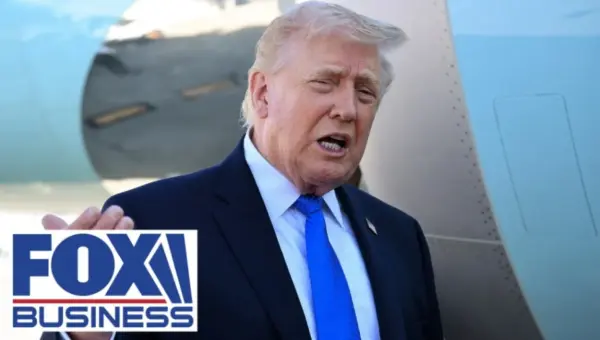
Immigration and Customs Enforcement (ICE) agents are now helping at over a dozen major U.S. airports. A senior ICE official told NBC News that about 50 ICE personnel will work each shift. Their role is not to help with security screening but to assist with other tasks like crowd control. President Trump has taken credit for these deployments. He also warned that the National Guard might be called in next if needed.
“And I want to thank ICE because they stepped in so, so strongly. They’ll do great,” President Trump stated. “And if that’s not enough, I’ll bring in the National Guard. We’re not going to have the Democrats destroy our country.”
Travelers Face Long Waits as Shutdown Continues
This situation comes as travelers are experiencing hours-long security lines at many airports. The Department of Homeland Security (DHS) shutdown is now in its sixth week. More than 11% of TSA officers had already missed a full paycheck. According to DHS, five airports reported that over 35% of their staff called out sick.
NBC News correspondent Jesse Kirsch reported from Hartsfield-Jackson Atlanta International Airport. She spoke with former TSA administrator John Pistole about the issues. “Yeah, mostly flow throughout the day,” Kirsch said when asked about current conditions in Atlanta. “But this is really the first lull that we have seen since the early morning.”
She noted that wait times, usually displayed on screens, were not being advertised. “I think that just speaks to how unpredictable and possibly how pessimistic those numbers might be,” she added. Despite the temporary lull, travelers have faced significant disruptions.
Traveler Experiences Highlight Airport Chaos
One traveler, heading for a 1 p.m. flight, arrived at 8 a.m. “Which is insane because normally I would get here about 11:30,” they explained. “To get through, grab lunch and hop on the plane.” Another traveler, with a noon flight, arrived at 6 a.m. “That’s correct,” they confirmed. “Have you ever had to do that before?” they were asked. “Never, and I never will again.”
One young woman had to reschedule her flight. “I’ve been here for, like, two hours, and I had to reschedule my flight,” she said. She missed her first flight due to the wait. “This is my second flight,” she added. Another person arrived before 10 a.m. for a 6 p.m. flight. “So needless to say, Ryan, people’s travel plans and, you know, entire schedule for the day in some cases being completely reworked,” Kirsch reported.
What ICE Agents Can and Cannot Do
Kirsch clarified what ICE agents are actually doing. “They’re not actually at the screening locations helping you put your suitcase through the metal detectors, right?” she asked. “Well, and to be clear, we have not gone through security ourselves today,” Kirsch responded. “But what we have been able to see is mostly the the agents from ICE walking around the terminal.”
She recalled seeing ICE agents help a woman from a car into a wheelchair. “What we know from a senior ICE official is that the agents can help with things like checking IDs with crowd control, but they are not trained on things like running the X-ray machines,” Kirsch explained. “So bottom line, there’s only so much they could help with.”
The CEO of the Atlanta airport mentioned that it was too early to tell if ICE had made a difference. He also stressed that certain tasks require months of training only TSA can provide. This highlights the limitations of ICE’s support in the security screening process.
Former TSA Administrator Offers Solutions
John Pistole, former TSA administrator, offered his perspective. “I think there’s a couple things that could be done,” he said. “One is, for example, in the 435 or so airports where TSA does the screening of things. Many of those airports have exit lanes for when you go out of secure area… that are staffed by TSOs.”
He suggested that if ICE agents were assigned to these exit lanes, they could free up Transportation Security Officers. This could help offset the high call-out rates. “So that’s that’s one thing with the queue management, the line management,” Pistole noted.
Visible Deterrent: A Potential Role for ICE?
Pistole also pointed to another potential benefit. “Perhaps the one thing I think they could actually do is be a visible deterrent for a putative terrorist who might want to think that they can take advantage of this situation,” he said. He described the airport terminals as soft targets. “So I think the ICE officers could the agents could be helpful in that regard too, as a visible deterrent.”
However, he emphasized that this role does not speed up the actual security screening process. “That’s a political issue that can and should be resolved,” Pistole stated regarding the funding dispute.
National Guard Deployment: Similar Limitations
Regarding President Trump’s suggestion of using the National Guard, Pistole expressed doubt about its effectiveness for screening. “No, no. That’s so again, they’re not of any help in terms of the actual checkpoint operations,” he said. “They don’t know anything about computer tomography or the the X-ray machines.”
He added that National Guard members are not trained in explosive detection or resolving alarms. “I don’t see that expediting anything,” Pistole concluded. “I see it more as a again, a visible deterrent, but doesn’t speed things up in terms of trying to get these lines down.”
The Human Cost of the Shutdown
Pistole highlighted the serious impact of the DHS shutdown on TSA officers. “Well, it’s a good point, because last fall, when there was a 42-day government-wide shutdown, nearly 1,100 officers resigned,” he recalled.
He explained the reasons: “They’ve got to buy the groceries, pay childcare, pay the rent, all those things that every normal person has to do.” He noted that the current situation is leading to increased call-out rates. “I heard yesterday there were two TSOs who had their cars repossessed from an airport parking lot because they missed their payment last month,” Pistole said. “So things like that, that’s the human side of things.”
Pistole warned about the growing risks. “And it just gets back to what risks are we willing to take because of those potential vulnerabilities that are, I think, increasing the the longer the lines are and the fewer TSOs who are working on the job.” The situation underscores the need for a swift resolution to the DHS funding issue to ensure both traveler safety and the well-being of TSA staff.
Looking Ahead
The ongoing shutdown and its impact on TSA staffing remain a critical concern. As travelers continue to face unpredictable wait times, the effectiveness of deploying non-TSA personnel like ICE agents will be closely watched. The long-term consequences of officers resigning due to missed paychecks also pose a significant challenge. Congress faces pressure to resolve the funding dispute and restore stability to airport security operations nationwide.
Source: Former TSA administrator says having ICE at airport won't 'speed things up' (YouTube)

Related Articles
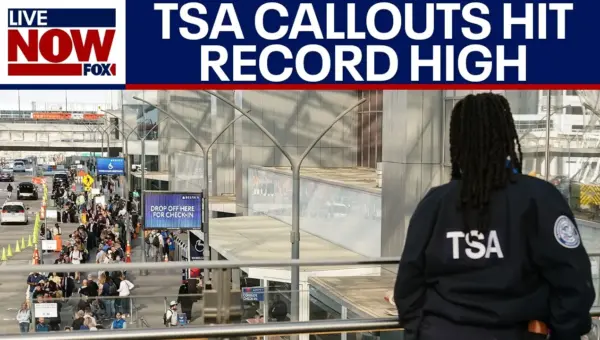
TSA Workers Get Paid After Record Absences
TSA agents will finally receive paychecks after working nearly six weeks without salary, following a directive from President Trump. Record high absences had strained airport operations and caused significant passenger delays. The situation has sparked calls for better protections for essential workers during government shutdowns.

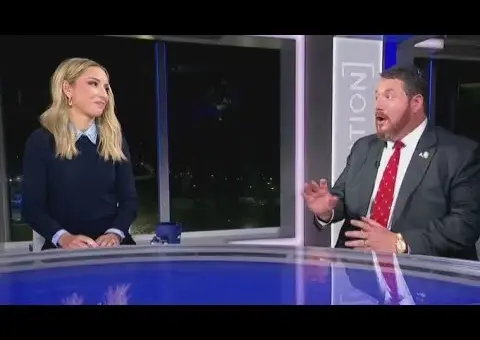
House Republicans Reject Senate Deal, Sparking Government Funding Clash
House Republicans have rejected a Senate bill to end the government shutdown, citing insufficient border security measures. Congressman Randy Fine called the Senate deal a "disgrace" and highlighted the ongoing fight for full government funding. President Trump's executive order to pay TSA agents offers temporary relief, but the core disagreement over border security continues to paralyze Washington.

House Rejects Senate Bill, Citing Border Security Funding Gaps
House Republicans are rejecting a Senate funding bill, arguing it lacks essential appropriations for ICE and CBP, threatening anti-trafficking efforts and border security. They plan to pass a short-term measure to force renewed negotiations.