Hungary Votes: Orban Faces Uphill Battle After 16 Years
Hungary is heading to the polls with Prime Minister Viktor Orban facing his toughest challenge in 16 years. Trailing in polls, Orban's campaign focuses on war fears and EU criticism, while opposition leader Peter Módor promises a return to Western values and economic reform. The election outcome could significantly alter Hungary's direction.

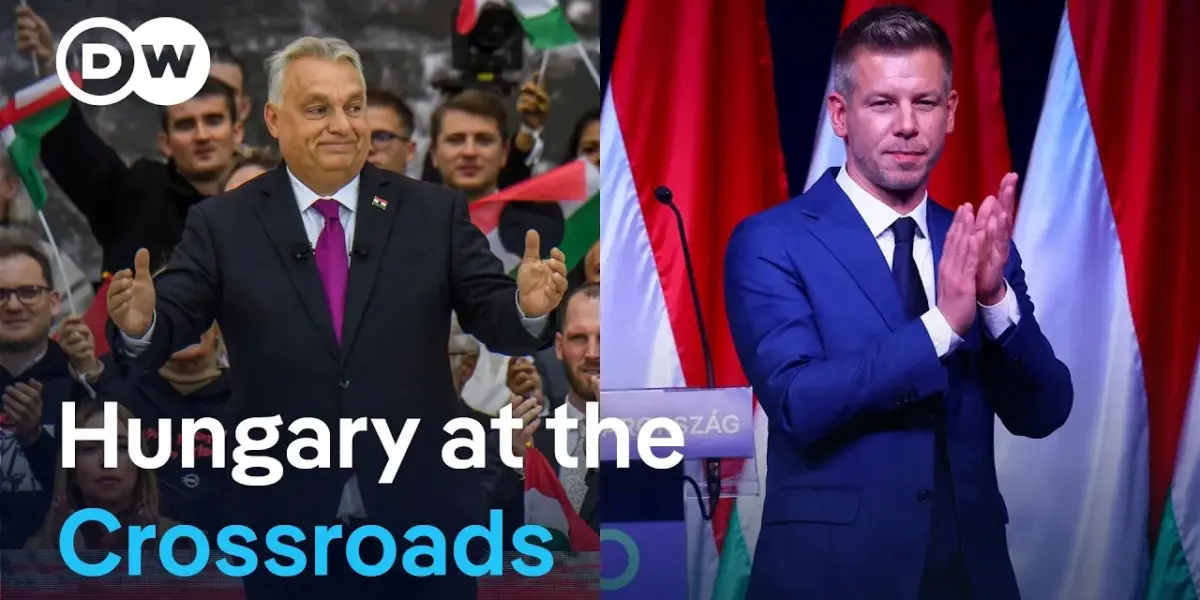
Hungary at a Crossroads: Election Looms as Orban Trails in Polls
Hungary is on the brink of a significant political shift as it prepares for a general election on Sunday. Prime Minister Viktor Orban, who has led the nation for 16 years, is seeking a record fifth term. However, for the first time in his long tenure, Orban is trailing in opinion polls, facing a strong challenge from the united opposition.
Opposition Rallies, Orban Seeks Foreign Support
The election has sharply divided the nation. On one side, Orban rallies his supporters, framing the election as a choice between peace and war. He criticizes the European Union, accusing Brussels of withholding funds and attempting to sabotage Hungary’s economy. Orban also targets Ukraine, calling for an end to Western support and a greater distance from the EU.
“They are blocking what rightfully belongs to us. Our money from Brussels and our oil from Ukraine. They are blackmailing, threatening and intimidating us. The bureaucrats in Brussels and the war mafio in Kiev,” Orban stated, reflecting his confrontational stance.
Meanwhile, across town, large crowds gather to support Peter Módor, the leader of Hungary’s largest opposition party, Tisza. Módor offers a contrasting vision for Hungary, emphasizing its place within the West and the European community. “Our homeland is part of the West, part of the European community. Our homeland is part of NATO,” Módor declared to enthusiastic supporters.
US Backing for Orban Amidst Economic Woes
In a notable development, US Vice President JD Vance campaigned in Budapest for Orban, a move that has drawn attention. Vance denied any intention to influence the election, instead echoing Orban’s criticism of the EU. This support comes as Orban’s economic policies face increasing scrutiny.
Orban’s promised “rocket start” economy has faltered. Forecasts for 2025 growth were between 3% and 6%, but the reality has been less than half a percent. Salaries in Hungary remain about half the EU average, and living standards are among the lowest in the bloc. This economic stagnation fuels frustration, particularly in the capital, Budapest, where many long for change.
“I dream of voting Victor Orban and his government out so we can rebuild democracy,” said one Budapest resident. Another added, “It would be good if there wasn’t so much corruption and they didn’t plunder the country.”
Orban’s Strategy: Fear and Propaganda
Instead of directly addressing corruption concerns, Orban’s government has employed a campaign strategy that relies heavily on fear and propaganda. Billboards across Hungary depict EU officials and Ukrainian President Volodymyr Zelenskyy as warmongers. The government’s narrative claims that these figures, along with opposition leader Peter Módor, intend to drag Hungary into the war in neighboring Ukraine.
This tactic appears to be effective with some voters. “We don’t want to go to war. We don’t want our young people sent to war,” a voter holding a sign that read “Stop the war” with crossed-out images of Zelenskyy and Módor explained. Another voter observed, “I see this across the EU. Everyone else says let’s go to war except him.”
The Rise of Peter Módor and Tisza
For the first time in 16 years, Fidesz, Orban’s party, could face defeat. The opposition, galvanized by Peter Módor and his Tisza party, represents a significant challenge. Módor, a former Fidesz supporter, took over Tisza in 2024. He has transformed the previously minor party into a force capable of competing at the national level.
Módor’s platform includes promises to unlock frozen EU funds and tackle corruption. He aims to appeal to a broad range of voters, seeking to unite the country. At Tisza’s final major rally, a palpable sense of hope filled the air. “I’m just happy to be here. I’m so hyped,” one attendee expressed. “It’s hope,” another added, “They hope for a European Hungary.”
Expert Analysis: Economic Woes and Opposition Unity
Susanna Ve, a program officer with the German Marshall Fund of the United States specializing in Central and Eastern Europe, discussed the factors contributing to Orban’s current difficulties. “One thing that he no longer can show is an economic leg,” Ve stated. “Over the past several years, we have seen the economy stagnating, inflation being high, living standards dropping.”
Ve also highlighted the shift in the opposition’s strength. “Instead of a very fragmented opposition that under the system that Fidesz could not effectively challenge the governing party, now we see a new movement and a new party led by Peter Módor who managed to channel this very widespread frustration into one movement that can now effectively challenge the governing party,” she explained.
Regarding the impact of JD Vance’s and Donald Trump’s endorsements, Ve believes they will have little effect on undecided voters. “The undecided voters who still may go to the polls on Sunday are much more concerned about cost of living, economic questions than Hungary’s foreign relations,” she noted. The support from the US administration is already widely known and offers little added value to Orban’s campaign.
Potential Post-Election Scenarios
The prospect of an Orban loss raises questions about the transition of power. Ve anticipates some level of contestation if the results are close. “I expect that there will be some level of contestation in the aftermath of the election day,” she said. “If the results are close, this is in the cards.” However, the key question is whether these challenges will remain within legal boundaries.
Orban has been strategic in consolidating power over his 16 years. He has rewritten the constitution and appointed loyalists to key institutions, including the presidency, the constitutional court, and the national bank. These appointments could create obstacles for a new government, potentially slowing or blocking legislation and budgets, especially if the opposition does not secure a constitutional majority.
If Orban wins, Ve predicts continued radicalization. “I would not only expect more of the same but actual continued radicalizations in the domestic field,” she warned. This could mean a move from intimidation of critics to further repression.
Should Peter Módor win, the transition will not necessarily be smooth. Módor, coming from a conservative background within Fidesz, faces the challenge of fundamentally reforming the system. His success will depend on his ability to gain a two-thirds majority in parliament, which would allow him to enact significant changes and re-establish democratic norms. His pledges to prosecute corruption and join the European Public Prosecutor’s Office are key policy aims.
Looking Ahead
As Hungary approaches Sunday’s election, the nation stands at a critical juncture. The outcome will determine whether Orban’s long rule continues or if a new political era, focused on Western integration and democratic reform, will begin. The coming days will reveal whether the widespread frustration with economic stagnation and concerns about democratic erosion translate into a decisive victory for the opposition.
Source: Can Viktor Orbán lose power after 16 years in charge of Hungary? | DW News (YouTube)

Related Articles

US Shifts Alliances, Aligns With Russia, Alarming Europe
The United States is undergoing a significant foreign policy shift, moving closer to Russia and distancing itself from European allies. This change, highlighted by US support for Hungary's Victor Orban, signals a potential reshaping of global alliances and economic relationships.

Hungary’s Election: Can Péter Magyar End EU’s Orbán Stalemate?
Hungary's upcoming election presents a potential turning point for its relationship with the European Union, with challenger Péter Magyar emerging as a serious rival to Prime Minister Viktor Orbán. Magyar, a former insider, promises to restore trust and tackle corruption, potentially easing EU tensions. However, his foreign policy may be more pragmatic than a complete reset, leaving Brussels to weigh the degree of change.

Orban’s Hungary: Corruption Allegations Rock PM’s Inner Circle
Hungary is facing serious allegations of corruption within Prime Minister Victor Orban's inner circle. Reports suggest billions of euros in EU funds may have been siphoned off by Orban's family and close associates. This has led to a difficult business environment and an upcoming election that could decide the country's path.