Hungary Election: Vance Visit Aims to Boost Orban Amidst Controversy
Hungarian Prime Minister Viktor Orban faces a tight election, with polls showing his challenger ahead. Amidst controversy, including an alleged bomb incident blamed on Ukraine, Orban seeks international backing, notably from U.S. Senator JD Vance. Vance's visit aims to bolster Orban's image as an internationally respected leader, though its impact on voters is uncertain.

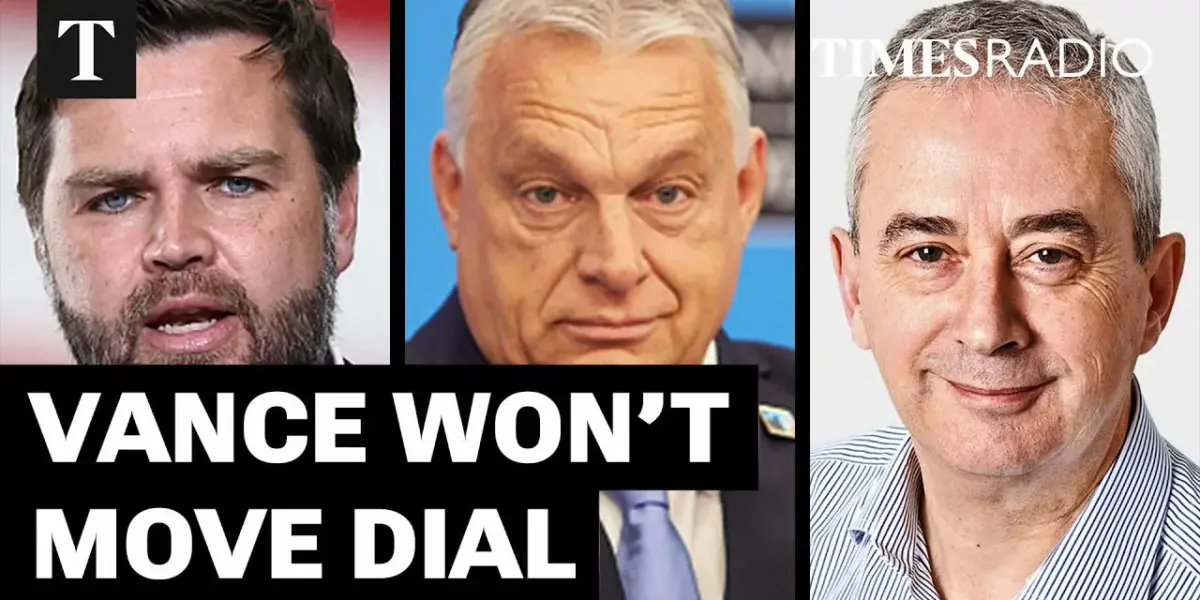
Orban Faces Tight Election, Seeks International Backing
Hungarian Prime Minister Viktor Orban is facing a critical election this coming weekend, hoping to secure another term in power. However, recent polls suggest his challenger, Peter Madar, is ahead. In a move to bolster his standing, Orban has courted international support, including a visit from U.S. Senator JD Vance.
Alleged Bomb Incident Rocks Campaign Trail
The election campaign has been marked by controversy, including an alleged incident involving a bomb found near a gas pipeline. Orban quickly blamed Ukraine, suggesting the country was attempting to disrupt Russian energy supplies to Europe. Opposition leaders immediately decried the event as a “false flag operation” designed to boost Orban’s popularity, a tactic they had warned about.
“What we have got instead is this rather fishy sounding bomb or piled bag of explosives which was supposedly found just over the border in Serbia by a gas pipeline,” said Peter Conradi, Europe editor for The Sunday Times. “And this was announced by Victor Orban.” Conradi noted that the opposition immediately cried foul, calling it a tactic to improve Orban’s ratings.
Challenger Leads in Polls, But Election System Favors Incumbent
While Peter Madar, described as a center-right candidate, appears to be leading Orban by a significant margin in most opinion polls, the election system itself may favor the long-serving prime minister. “The election system is set up, one could even say rigged in such a way that Orban needs to get fewer votes in order to get more seats,” Conradi explained. “He’s sort of been merrily gerrymandering away for the last 16 years that he’s been in power.” Despite this, the expectation is that if the election is fair, Madar could emerge victorious.
Vance’s Visit: A Token of Support or Political Stunt?
Senator JD Vance’s visit to Hungary is intended as a show of support for Orban. Vance, a prominent figure on the American right, has been a vocal critic of foreign intervention and U.S. funding for Ukraine. This stance aligns with Orban’s own position as a consistent critic of EU policies, particularly regarding aid to Ukraine and his perceived closeness to Russian President Vladimir Putin.
However, the impact of Vance’s support on Hungarian voters remains uncertain. “It’s not clear how much that support really counts for with his supporters,” Conradi observed. He recalled attending an Orban rally where he expected a strong mention of support from international conservative figures, but found that Orban did not mention Donald Trump or related events at all. “I don’t think his own supporters are particularly bothered or particularly interested,” Conradi added.
Orban’s International Alliances and “Nationalist Realism”
Orban has cultivated relationships with various international figures, including Donald Trump, Vladimir Putin, and Chinese President Xi Jinping. His government has welcomed significant Chinese investment. This strategy aims to portray him as an internationally respected statesman, even while leading a relatively small country.
Balant Dumur, a Hungarian international affairs journalist, suggested that Orban uses these international connections to his advantage. “Orban is trying to portray himself to Hungarian voters as an internationally respected statesman,” Dumur said. “A politician who is in good relations with Donald Trump, Vladimir Putin, Xi Jinping, all the big players.” Vance’s visit, along with previous endorsements from figures like Marine Le Pen and Matteo Salvini, fits into this narrative.
Broader Implications for NATO and European Politics
The alignment between Orban, Vance, and other right-wing European leaders raises questions about the future direction of NATO and the European Union. Orban’s pro-Russia stance and obstruction of aid to Ukraine have been a consistent challenge for the EU. Vance’s skepticism about foreign aid could signal a shift in U.S. policy, potentially impacting the broader geopolitical landscape concerning Russia and the conflict in Ukraine.
This dynamic is often framed within a concept of “nationalist realism,” a political approach emphasizing national interests and skepticism towards international cooperation. The warming of relations between figures like Vance and Orban could influence how NATO addresses the ongoing conflict and its relationship with Russia.
What’s Next?
As Hungary heads to the polls, the outcome remains uncertain. While polls favor the opposition, the electoral system and Orban’s strategic use of events, both domestic and international, make the race unpredictable. The effectiveness of JD Vance’s visit in swaying voters, along with the true impact of the alleged bomb incident, will become clearer in the coming days. Observers will be watching closely to see if Orban can overcome the polling deficit and maintain his long tenure in power, and what this means for Hungary’s role in Europe.
Source: Why JD Vance’s Visit To Hungary Won’t Help Viktor Orban’s Election Chances | Peter Conradi (YouTube)

Related Articles

Iran Strikes Spark Regional Fears; Diplomacy Urged
Explosions have been reported in Iran, with concerns rising over potential strikes on vital infrastructure. Qatar has warned of a regional "spiral out of control." Experts urge a diplomatic solution, fearing the blowback of military escalation on allies and global markets.

US Strikes Kharg Island, Escalating Iran Tensions
U.S. forces have reportedly struck military targets on Kharg Island, escalating tensions with Iran as a critical deadline approaches. While diplomatic channels remain open, the kinetic action signals a potential shift in strategy. President Trump faces domestic pressure amid the conflict.

Global Allies Reject US War Plans, Shun Trump’s Aggression
Key global allies are rejecting U.S. requests to use their bases and airspace for potential military actions against Iran, citing concerns over war crimes. This widespread defiance signals a major shift in international relations and a potential weakening of traditional alliances like NATO.