Humans May Return to the Moon by 2030, Experts Predict
As humanity gears up for a return to the Moon by 2030, new technologies promise unprecedented broadcast experiences. Meanwhile, scientists ponder the survival of planets near supernovae and the intriguing possibility of 'shadow life' deep within Earth.

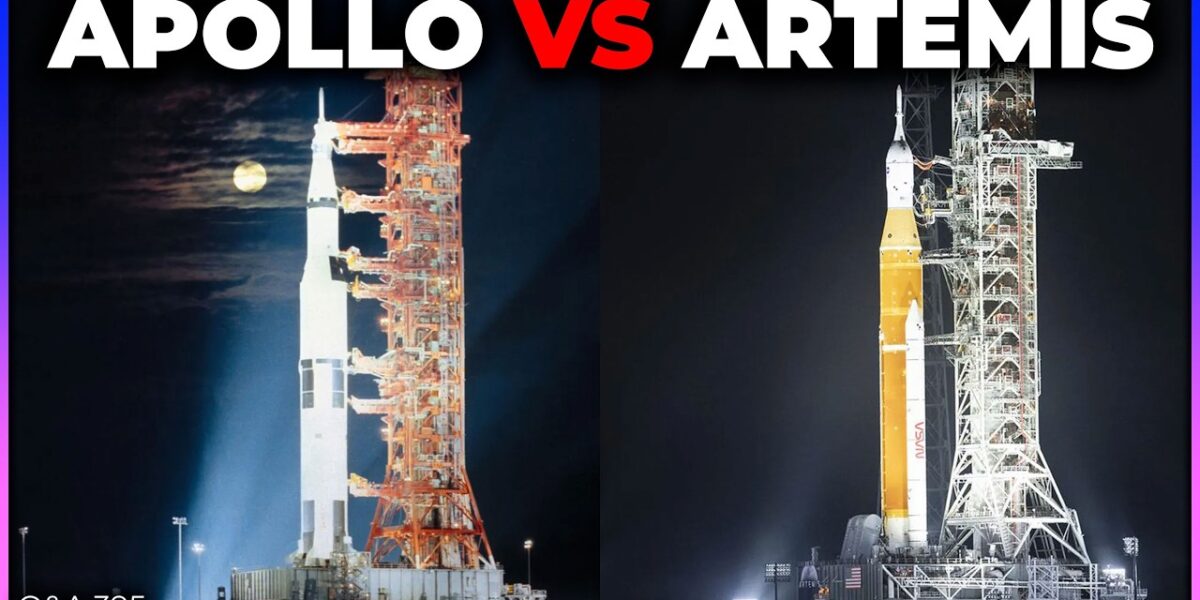
Humans Poised for Lunar Return by 2030 Amidst International Race
The dream of humans once again setting foot on the lunar surface is closer than ever, with experts predicting a return by the year 2030. While the Artemis 2 mission, slated for a near-future launch, will send astronauts on a journey around the Moon, the actual landing is still a few years away. Current projections place the Artemis 3 mission, which aims to land humans on the Moon, between 2027 and 2028. However, this timeline is contingent on the successful development and testing of crucial hardware, particularly the lunar lander, which is expected to be SpaceX’s Starship. Should Starship encounter further delays or challenges, an alternative lander from Blue Origin could be on standby.
International Competition Accelerates Lunar Ambitions
Adding a significant dynamic to the lunar race is China’s ambitious space program. The nation has a stated goal of landing astronauts on the Moon by 2030 and has a remarkable track record of hitting its milestones. China’s previous lunar missions, including the Chang’e program, and its Mars sample return missions have all been executed with precision, suggesting they are on track to meet their human lunar landing target. This parallel ambition from China is likely to spur NASA and its international partners to maintain their aggressive schedule, creating a compelling race to the Moon that mirrors the historical Space Race.
Artemis Broadcasts: A New Era of Lunar Connectivity
The broadcast experience of future lunar missions, like those under the Artemis program, is set to be a significant leap from the grainy, black-and-white images of the Apollo era. While the Apollo missions were groundbreaking, relying on complex radio telescope alignments to transmit live feeds to a captivated global audience, modern technology offers unprecedented possibilities. The engineering feat of broadcasting the Apollo landings live was immense, a testament to the ingenuity of the time, enabling humanity to witness history in the making.
Technological Advancements Promise Richer Lunar Views
Today, advancements in miniature high-definition cameras and high-bandwidth communication systems promise a far more immersive experience. However, the sheer distance to the Moon still presents a challenge for live 4K broadcasts, requiring substantial data throughput. While hard drives will undoubtedly store vast amounts of high-resolution footage for later release, live feeds will likely be constrained by bandwidth limitations. This is a stark contrast to the multi-camera, real-time coverage seen from recent SpaceX launches, where views from rocket fins and landing zones have become commonplace.
The potential use of laser communication technology, demonstrated by NASA’s Psyche mission for deep-space broadband data transmission, offers a promising avenue for future lunar broadcasts. Such systems could enable the transmission of significantly more data from the Moon, potentially allowing for a richer live viewing experience than previously thought possible. While not confirmed for Artemis missions, the successful testing of laser communications in deep space suggests it could be a key technology for future lunar endeavors.
Supernovae: A Cosmic Threat to Planetary Systems
The destructive power of a supernova, the explosive death of a star, poses a significant threat to any nearby planetary systems. While the direct vaporization of planets is possible if the supernova occurs extremely close, the more likely scenario involves severe atmospheric stripping and intense radiation. A supernova within approximately 25 light-years of Earth could deplete our ozone layer, drastically increasing harmful radiation levels at the surface.
If a star explodes closer, within 5-8 light-years, the sheer force of the blast could begin to tear away at a planet’s atmosphere itself. Even if a planet miraculously survives the initial cataclysm, its future would be bleak. The remnant of the supernova is typically a neutron star or a black hole, neither of which provides the necessary conditions for life as we know it. Neutron stars emit radiation, albeit less efficiently than their progenitor stars, while black holes radiate nothing. Therefore, survival for planets within a supernova’s direct vicinity is highly improbable, and their long-term habitability is virtually impossible.
The Enigma of Subterranean Life: Beyond Earth’s Familiar Biosphere
The question of whether life, entirely unrelated to Earth’s known biology, could exist deep underground touches upon profound astrobiological concepts. Theoretically, life could persist in extreme subsurface environments. Earth’s own biosphere is incredibly resilient, with extremophile bacteria capable of surviving temperatures up to 130 degrees Celsius. Calculations suggest that life might be sustainable down to depths of approximately six kilometers, where temperatures reach around 150 degrees Celsius, provided water is present within the rock strata.
Exploring the Possibility of ‘Shadow Life’
However, the notion of life being *completely* unrelated to Earth’s lineage is where the scientific speculation becomes more intriguing. All known life on Earth shares a common ancestor, tracing back to a single abiogenesis event around 4.1 billion years ago. This shared ancestry means all terrestrial life is fundamentally based on similar biochemical processes and genetic material (DNA/RNA).
The concept of ‘shadow life’ proposes that abiogenesis might have occurred multiple times on Earth. If a second, independent origin of life occurred, it’s possible that this alternative life form could be biochemically incompatible with our own. Such an ecosystem might not be perceived as food by Earth life, and our methods of detecting life are heavily reliant on recognizing the chemical signatures and processes of DNA/RNA-based organisms. Therefore, a ‘shadow biosphere’ could exist undetected, utilizing different chemical energy sources and processes deep within the Earth’s crust. While macroscopic ‘shadow organisms’ like trees or animals would likely be noticed, microbial life with unique biochemistry could remain hidden, evolving independently and posing a fascinating frontier for scientific discovery.
Source: Streaming Artemis Landings, Planets VS Supernovae, Life Deep Inside Earth | Q&A 395 (YouTube)

Related Articles

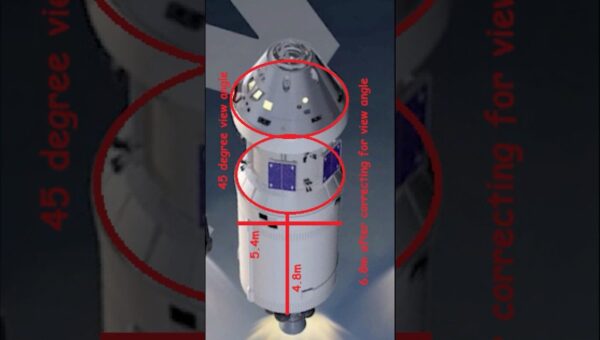
NASA’s Evolving SLS Rocket Hints at New Upper Stage
NASA's Artemis program may be adopting a new upper stage for its Space Launch System (SLS) rocket, potentially utilizing the commercially available Centaur V. An updated infographic reveals design changes and hints at evolving mission strategies, including advanced lunar lander operations.


SpaceX Starship V3 Nears First Flight Amidst Major Artemis Shakeup
SpaceX eyes March for Starship V3's maiden flight as new testing reveals design improvements. Meanwhile, NASA's Artemis program faces delays and strategic shifts, with Artemis III repurposed as a LEO test mission.

NASA Revises Artemis Moon Landing Goal to 2028
NASA is revising its Artemis program, targeting a 2028 lunar landing amidst a new space race with China. The plan includes preparatory missions in 2027 and focuses on exploring lunar poles for resources. International collaboration remains key, though funding questions persist.