How to Make Your Content Visible to AI Search Engines
Learn how to make your content visible to AI search engines by understanding and defining 'entities'. This guide explains why keywords aren't enough and how to structure your content so AI can find and cite it.


Understand How AI Sees Your Content
In today’s digital world, search engines and AI tools are changing how they find information. They’re moving beyond simple keywords to understand the real meaning behind your content. This means you need to know how AI decides what’s important. If your content isn’t clear to AI, it’s like you don’t exist in their search results. This guide will show you how to make your content stand out so AI can find and use it.
What You Will Learn
This article explains what an ‘entity’ is in the eyes of AI and search engines like Google. You will learn why simply using keywords is no longer enough. We’ll cover how to structure your content so AI can easily identify the main subject. By following these steps, you can ensure your website appears in AI-powered searches and knowledge graphs.
Prerequisites
- Basic understanding of how websites and search engines work.
- Access to your website’s content for editing.
Step 1: Understand What an ‘Entity’ Is
AI and search engines like Google use a concept called an ‘entity’ to organize information. Think of an entity as a specific, unique ‘thing’ or idea. Google defines an entity as something that is singular, unique, well-defined, and easily told apart from other things. Examples include people, places, specific products, or even well-defined concepts like ‘artificial intelligence’ itself.
Step 2: Why Keywords Aren’t Enough Anymore
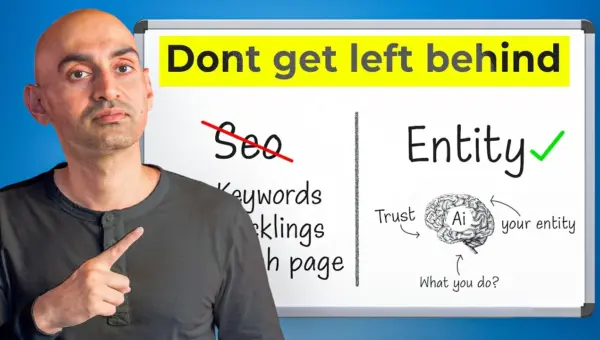
In the past, search engines focused heavily on how many times you used certain keywords. Now, AI looks deeper. It wants to know what the main subject of your page is. Your content’s success isn’t measured by keyword density alone. Instead, search engines check if your page clearly explains what specific entity it’s about. If Google can’t figure out the main subject, AI systems won’t show your page.
Analogy: The Library Card Catalog
Imagine a library. In the past, you might look for a book by finding all the books with the word ‘history’ in the title. That’s like using keywords. But a better way is to go to the card catalog (or computer system) and look up ‘World War II’ as a specific subject. The catalog tells you exactly where to find books on that topic. AI is now like that detailed catalog, looking for specific subjects (entities) rather than just words.
Step 3: Define Your Main Entity Clearly
To make your content visible to AI, you must clearly define the main entity your page discusses. This means making it obvious what the central topic is. Use the entity’s name frequently and consistently throughout your text. Explain what it is, what it does, and why it’s important right away.
Expert Tip: Use a Primary Entity Name
Always try to use the most common and well-known name for your entity. For example, if you’re writing about the company, use ‘Alphabet Inc.’ if that’s its official name, rather than just ‘Google’s parent company’ throughout the entire piece. Consistency helps AI pinpoint your subject.
Step 4: Provide Unique and Distinguishable Information
An entity needs to be unique and distinguishable. This means your content should offer specific details that set your entity apart. Don’t just repeat general information. Provide facts, figures, dates, and unique characteristics that make your entity stand out from similar ones. This helps AI understand that your page is about a specific thing, not just a general topic.
Example: A Specific Product Page
If you’re selling a specific smartphone model, like the ‘Pixel 8 Pro’, don’t just talk about smartphones in general. Clearly state ‘Pixel 8 Pro’ and then list its unique features: the camera specs, the processor, the screen size, and any special software it has. This makes the ‘Pixel 8 Pro’ a clearly defined entity on your page.
Step 5: Structure Your Content for AI Understanding
Organize your content logically. Use headings, subheadings, and bullet points to break up information. This makes it easier for both readers and AI to scan and understand the main points. Start with a clear introduction that states the entity and its purpose. Then, use subsequent sections to provide supporting details, facts, and context about that entity.
Warning: Avoid Ambiguity
Be careful not to use language that could refer to multiple things. If you mention a common word that can be an entity itself (like ‘Apple’), make sure it’s clear from the context whether you mean the fruit or the company. Often, using the full, unique name helps avoid confusion.
Step 6: Connect Your Entity to Related Concepts
AI systems, especially Google’s Knowledge Graph, link entities together. Show how your entity relates to other known entities. For example, if your entity is a specific software program, mention the company that developed it, the operating systems it runs on, or other related software. This creates a web of connections that helps AI understand your entity’s place in the larger information landscape.
Analogy: Building a Social Network Profile
Think of it like building a profile on a social network. You list your name, where you work, who your friends are, and what your interests are. All these connections help others understand who you are. Similarly, connecting your entity to other known entities helps AI understand your subject.
Step 7: Ensure Your Content is Indexed
Even if your content is perfectly structured, AI can’t see it if it’s not indexed by search engines. Make sure your website’s settings allow search engines to crawl and index your pages. Use tools like Google Search Console to check if your pages are being found and indexed. If your page isn’t in Google’s index, it won’t be in the entity database that AI tools query.
Conclusion: Be an Entity, Be Seen
By focusing on clearly defining your main subject as a unique entity, providing specific details, and structuring your content well, you can significantly improve your visibility. AI search tools rely on this clarity. When AI can identify your content’s entity, it gets cited and surfaces in search results. Make sure your content exists for AI by being a well-defined entity.
Source: You Don't Exist to AI If You're Not an Entity (YouTube)

Related Articles


Tell Google Exactly What Your Business Does
Learn how to use schema markup to explicitly tell search engines like Google what your business offers. This guide explains how structured data can improve your website's visibility and search rankings.

Boost Your AI Visibility: Become a Recognized Brand Entity
Learn how to make your brand visible to AI search engines by becoming a recognized "entity." This guide explains the shift from keyword SEO to defining your brand's unique identity for AI understanding. Discover how to use schema markup and focus on complex topics to ensure your brand is cited and trusted in the AI-driven search landscape.


Clarify Your Business Entity to Boost Google Rankings
Learn how Google uses 'entity context' to rank websites and how to clarify your business's identity. This guide explains how fixing your website's schema markup can help Google understand your specialty, leading to better search rankings and increased traffic.