How a $3,000 Drone Destroyed Putin’s $300 Million Shadow Empire Deal
A Ukrainian drone strike on an oil facility in Rostov, Russia, has exposed the intricate web of Russia's shadow economy that connects intelligence services with international cartels and sanctioned regimes. The attack disrupted a $300 million transaction, revealing how Putin's regime has merged state power with organized crime to circumvent sanctions.

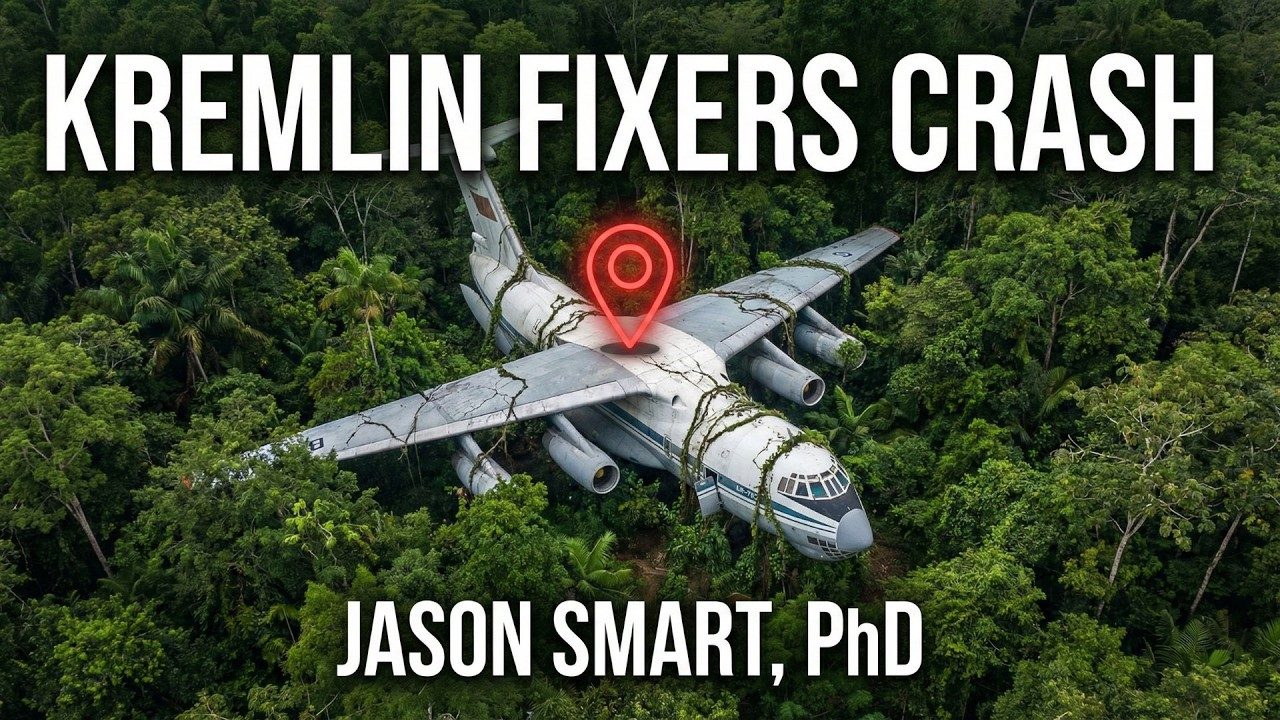
The Domino Effect: From Rostov to the Mid-Atlantic
In a dramatic illustration of modern warfare’s ripple effects, a $3,000 Ukrainian drone strike on an oil facility in Rostov, Russia, has exposed the vast criminal network that underpins Vladimir Putin’s sanctions-evasion empire. The attack on 10,000 tons of Siberian crude oil created a chain reaction that stretched 4,000 miles to Bogotá, Colombia, and ultimately caused a ghost tanker in the Mid-Atlantic to cut its engines and disable its GPS, effectively killing a $300 million microchip transaction.
This incident has pulled back the curtain on what national security experts call the “shadow pipeline” – a global network that fuses Russian intelligence services with international criminal organizations, sanctioned regimes, and terrorist groups. The system represents what one expert describes as “the most dangerous protection racket in history.”
The Architecture of State-Crime Fusion
The foundation of Russia’s current criminal-state hybrid was laid during the chaotic collapse of the Soviet Union. According to national security analyst Jason Smart, the USSR’s disintegration “shattered enforcement, courts and basic financial trust,” creating an environment where “violence and intimidation became a business service, not an exception.”
Former KGB and military veterans, unable to find legitimate employment in the collapsed state structure, entered the private security and protection markets. Some worked alongside criminal groups, others competed with them, but the result was consistent: criminals gained access to intelligence tradecraft and networks, while businesses gained access to coercion, surveillance, and “deniable muscle.”
Vladimir Putin emerged from this environment as a KGB officer who entered city power just as this “racket economy” was solidifying. Rather than dismantling the criminal ecosystem, Putin’s administration absorbed parts of it, disciplined other segments, and utilized it strategically. The Russian concept of “krysha” (protection umbrella) became the operational model – promising safety from rivals and police, often because the police and the umbrella were connected.
The Global Criminal Marketplace
Today’s Russian shadow network operates not as a traditional alliance but as a marketplace of shared corridors. The system connects several key players, each contributing essential services:
Mexican Cartels: The Cash Generators
The Sinaloa cartel and Jalisco New Generation cartels represent the cash generation engine of this network. These organizations, dominant in synthetic drug trafficking, create massive cash flows that require conversion to usable value. This cash needs laundering, laundering needs brokers, and brokers need protection – services that Russia’s intelligence apparatus is well-positioned to provide.
Venezuela: The Permissive Corridor
Venezuela serves as a critical transit corridor, offering protected passage for narcotics, cash, sanctioned cargo, and gold. The country’s permissiveness and controlled transit capabilities make it invaluable for high-risk procurement operations. Importantly, as experts note, “corridor states matter far more than ideology” in this criminal marketplace.
Iran: The Sanctions Evasion Expert
Iran brings decades of sanctions evasion expertise to the network. Facing hard currency scarcity and banking restrictions, Iran has developed sophisticated systems for moving value through intermediaries without traditional banking. Iran’s proxy ecosystem, including Hezbollah, extends this logic globally through deniable movement of funds and logistics.
Hezbollah: The Latin American Connector
Surprisingly, one of Hezbollah’s strongest operational bases is Latin America, not the Middle East. The US Treasury has documented Hezbollah’s operations through facilitators, commercial fronts, and trade-based schemes, with particular intersections with Venezuela-linked finance nodes. This creates a bridge between Middle East proxy finance and Latin American corridor geography.
Intelligence Services: The Orchestrators
Russian intelligence services don’t run these corridors directly – they manage access to them. The Federal Security Service (FSB) handles corridor management within Russia, deciding which facilitators receive protection and which are sacrificed. The service polices rivals more aggressively than the system itself because the system funds the regime.
The Foreign Intelligence Service (SVR) manages recruitment and operational cover internationally, identifying brokers, fixers, and intermediaries who can provide routing, paperwork, and settlements while maintaining plausible deniability. This approach reduces attribution by keeping the state one step removed from transactions.
The Victor Bout Model
The archetype of this system is Victor Bout, the arms dealer convicted in the United States for conspiring to sell weapons to Colombia’s FARC guerrillas. Bout represents the model of post-Soviet deniable logistics: Russian-linked operations selling industrial-scale supplies to designated insurgent organizations through networks that operate where normal banks and shipping cannot.
The shadow market succeeds by selling three services simultaneously: distance between the state and the act, logistics that bypass normal controls, and settlement systems that can survive enforcement pressure.
Corporate Camouflage and Trade-Based Laundering
The network relies heavily on corporate camouflage to hide ownership, facilitate procurement, and move elite wealth. Shell firms, nominee directors, and layered ownership structures create delays sufficient to move value before detection. When one company is compromised, another replaces it, ensuring corridor survival.
Trade-based laundering serves as the paperwork service that turns commerce into settlement mechanisms. Value moves through manipulated invoices, adjusted cargo descriptions, and mispriced goods. Prices, quantities, and origins can be modified to transfer hidden value, with the goal being plausibility long enough to settle transactions and repeat the process.
The Cryptocurrency Factor
The rise of digital currencies, particularly stablecoins, has provided new avenues for anonymous value transfer. These tools allow sanctioned actors to move money without easily traceable ownership, creating natural synergies between cash-rich cartels and foreign currency-hungry sanctioned states.
Drug cartels possess houses full of foreign currency – dollars and euros they struggle to utilize effectively. Russia and other sanctioned nations are willing to exchange these physical currencies for cryptocurrency, creating mutually beneficial arrangements that circumvent traditional banking systems.
The Beneficiaries of Sanctions
Paradoxically, while sanctions create challenges for Russia, they also generate enormous profits for those managing the evasion networks. The FSB, which oversees Russia’s shadow fleet operations, has enriched Putin’s core constituency through these activities. For Putin, whose primary objective is maintaining power rather than improving life for ordinary Russians, the sanctions regime creates opportunities to reward loyalty among security services personnel.
This dynamic reinforces the fusion of state and criminal interests. Putin maintains power by ensuring FSB happiness, which he achieves by allowing their participation in global organized crime networks. As one analyst concluded, “Every country has a mafia, but in the case of Russia, the mafia has a country.”
Implications and Future Outlook
The Rostov drone incident reveals both the sophistication and vulnerability of Russia’s shadow economy. While the network demonstrates remarkable adaptability and global reach, it also shows critical dependencies. The disruption of a single oil facility cascade into the collapse of a major international transaction, suggesting that despite its complexity, the system has identifiable choke points.
For Western policymakers, understanding this criminal-state fusion is crucial for developing effective countermeasures. Traditional state-to-state diplomatic and economic tools may prove insufficient against a hybrid system that deliberately blurs the lines between legitimate governance and organized crime.
The incident also highlights the strategic value of targeted, low-cost military operations. A $3,000 drone achieved what might have required much more expensive traditional military assets, demonstrating how modern conflict can exploit the vulnerabilities of even sophisticated criminal networks.
As this shadow economy continues to evolve, the international community faces the challenge of developing responses that can effectively counter a system designed from its inception to evade traditional enforcement mechanisms.
Source: Putin’s Fixers: $300M Deal FAILED (YouTube)

Related Articles
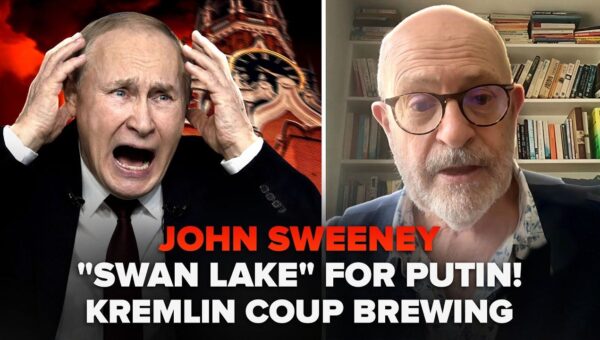
Putin’s Grip Weakens: Journalist Sees Russia’s Endgame
British journalist John Sweeney asserts that Vladimir Putin cannot afford to end the Ukraine war, as doing so would expose its futility and threaten his rule. He calls for stronger Western sanctions and increased aid to Ukraine, predicting a gradual erosion of Putin's power driven by economic pressures and internal dissent.
West Targets Russian Oil: A New Era of Sanctions
New Western sanctions directly target Russia's oil revenue, aiming to cripple the financial engine of its war effort. This strategic shift, previously delayed, now pressures the Kremlin's budget and undermines Putin's image of control. The move forces global companies to choose between U.S. financial access and Russian oil trade, signaling a potentially severe economic and political blow.
Russia’s Duma: Putin Consolidates Absolute Power, Silence Speaks Volumes
Russia's State Duma recently passed its federal budget without a single amendment, highlighting President Putin's consolidation of absolute control. The absence of debate and opposition signals a profound erosion of institutional power, where lawmakers prioritize self-preservation over legislative function.