Houthis Escalate: Yemen Group Threatens Global Trade Routes
Yemen's Houthi rebels have launched missiles targeting Israel, escalating regional tensions and threatening global shipping. The group's actions could further disrupt trade and worsen the energy crisis, as experts warn of potential chokeholds on vital waterways like the Bab al-Mandab strait. Regional partners are seeking de-escalation amid fears of a wider conflict.

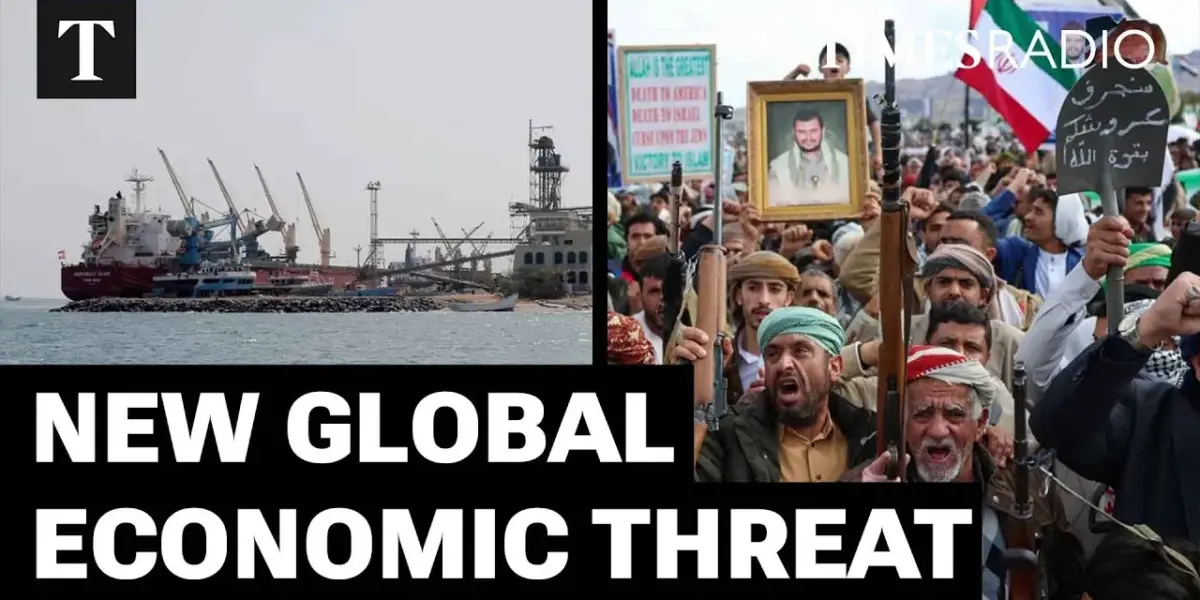
Yemen’s Houthi Group Attacks Israel, Risks Global Shipping
Yemen’s Houthi rebels have launched missiles targeting Israel, marking a significant escalation in regional tensions. The group, which controls much of northern Yemen, stated its actions were in response to perceived aggression in the region. While Israeli media reported the missiles were intercepted with no reported damage, the Houthis have vowed to continue their attacks until the United States and Israel cease their actions. This move risks further disrupting global trade and exacerbating the ongoing energy crisis.
Expert Analysis: A Strategic Escalation
Nicholas Hopton, former UK ambassador to Iran and Yemen, described the Houthi missile launch as a significant escalation. He noted that this action comes exactly one month after the start of the current conflict and marks a shift from the group’s previous restraint. Hopton pointed out that Houthi leader Abdul Malikal Houthi had recently indicated a reluctance to join the wider war. This recent move may be a gesture of solidarity with Iran, potentially influenced by discussions about the war’s potential end and Iranian outreach.
“This is significant. It’s interesting because Abdul Malikal Huti, who is the leader of the Houthi, um made a big annual speech just this week when he didn’t really commit to joining the war at all. And I think there may be something related to the fact that yesterday, of course, the G7 ministers met in France and Secretary of State um Rubio came out of that meeting and was talking in terms of the war ending in in weeks.”
The former ambassador also raised concerns that Israel might use the Houthi attack as a justification to strike Yemen, potentially opening a new front in the conflict.
Iran’s Proxy Influence and Global Economic Leverage
The Houthi’s actions highlight Iran’s continued influence through its regional proxies. While not entirely controlled by Tehran, the Houthis have received substantial support from Iran’s Revolutionary Guard over the past decade. Hopton suggested that the Houthis might feel compelled to show solidarity with Iran, especially as Iran itself has faced significant attacks and losses. Despite these pressures, the Iranian regime remains in control domestically and continues to demonstrate its ability to impact global markets.
Iran effectively holds global energy, food, and fertilizer supplies to ransom by controlling the Strait of Hormuz. The Houthis’ actions now threaten a similar chokehold on the Bab al-Mandab strait, further compounding economic pressures worldwide. This dual threat to critical shipping lanes could severely impact global logistics and trade.
A History of Conflict and Shifting Alliances
The Houthi movement rose to prominence in the 1990s and has historically been linked to Iran, though their branch of Islam is not identical to Iran’s Shiism. A decade ago, they seized control of Yemen, following a series of inconclusive wars with Saudi Arabia. This takeover disrupted the political process that followed the fall of dictator Ali Abdullah in 2011. Since 2015, a military campaign led by Saudi Arabia and the UAE, with support from the US and UK, has been ongoing. However, the Houthis maintain control in the capital, Sanaa, though Yemen remains a divided country with various factions and terrorist groups also holding territory.
Recent months had seen a fragile ceasefire between Saudi Arabia and the Houthis, with hopes for a peace deal and potential compensation for Yemen. However, the wider Middle East conflict has stalled these efforts. The Houthi attack on Israel now risks drawing them deeper into the war, complicating regional stability.
The Strategic Importance of Bab al-Mandab
The Bab al-Mandab strait, located between East Africa and the Arabian Peninsula, is a critical global shipping route. Although not as narrow as the Strait of Hormuz, a vast amount of international trade passes through it. Ships heading to the Suez Canal and the Mediterranean Sea must navigate this waterway. For years, the strait has faced threats from pirates and, more recently, Houthi missile attacks targeting commercial vessels, including those flagged by the US or Israel.
Both the European Union and the United States have deployed naval missions to ensure the safe passage of shipping through the Bab al-Mandab. If the Houthis, under Iranian influence, were to successfully close this strait, it would create a crippling stranglehold on global trade, adding to the pressure already exerted by Iran’s control over the Strait of Hormuz. This combined disruption could deliver a severe blow to the global economy, impacting everything from energy prices to the availability of essential goods.
Regional Partners Seek De-escalation
The Houthis’ actions are a cause for concern among Gulf regional partners. Relations between Saudi Arabia and the Houthis have been historically strained, marked by conflict. While a ceasefire has been in place, the recent escalation threatens to unravel progress toward stability. Oman, a neighboring country, maintains dialogue with the Houthis and has historically played a role in relaying messages and exerting some influence. Other Gulf nations, like the UAE, have been directly involved in fighting against the Houthis, making them less likely to mediate.
Despite the complexities, there is a shared desire among Gulf states to de-escalate the situation. Ambassadors and high commissioners from these nations have expressed hopes that ongoing talks will yield positive results, as the entire region suffers from the ongoing instability. The focus now is on preventing further involvement of the Houthis in the broader war and finding pathways to reduce regional tensions.
Looking Ahead: Economic Repercussions and Diplomatic Efforts
The coming weeks will be crucial in determining the extent of the Houthi escalation and its impact on global markets. Diplomatic efforts, particularly from nations like Oman, will be key in attempting to de-escalate the situation and prevent further disruption to vital shipping lanes. The world will be watching closely to see if the fragile ceasefire in Yemen holds and whether the Houthi actions lead to a wider conflict, further jeopardizing global economic stability.
Source: How The Houthis Escalation Could Further Impede The Global Economy (YouTube)

Related Articles

Iran War Escalates: Houthis Join Conflict as Civilians Suffer
The conflict involving Iran, the US, and Israel has escalated significantly in its fifth week, with Yemen's Houthi militia officially joining the war and launching missile attacks. Civilian populations in Iran and Lebanon are facing immense suffering, displacement, and destruction as attacks intensify across the region. Diplomatic talks are reportedly underway, but rising oil prices and divergent international goals cast a shadow over prospects for peace.

Houthis Join Mideast Conflict, Threaten Global Trade Routes
Yemen's Houthi rebels have joined the regional conflict, launching a missile at Israel and threatening to close the vital Strait of Mandeb. This escalation raises serious concerns about global trade disruptions. The Houthis' deep ties to Iran and the resilient structure of the Iranian regime add complexity to efforts to de-escalate the ongoing tensions.

War’s $6 Trillion Toll: Global Economy Reels
A month-long Middle East conflict has triggered a $6 trillion global stock market crash, surging oil prices to $101 per barrel, and threatening crucial trade routes. The war's expansion, now involving multiple nations, is causing severe damage to global supply chains and energy infrastructure, with long-term implications for inflation and economic growth.