Hormuz Blockade Threatens Global Fuel Supply, Experts Warn
A potential blockade of the Strait of Hormuz could cripple global energy markets, disrupting supplies of crude oil, jet fuel, and LNG. While some nations have limited reserves and alternative routes, countries like Iraq face severe export challenges, highlighting global energy security vulnerabilities.


Global Energy Markets Brace for Impact as Strait of Hormuz Faces Potential Blockade
A potential prolonged closure of the Strait of Hormuz, a critical chokepoint for global energy shipments, could trigger severe disruptions to the supply of crude oil, refined products, and liquefied natural gas (LNG), impacting regions worldwide, including Europe. The implications of such a scenario, driven by geopolitical tensions, are already being felt as the world grapples with the fragility of its energy infrastructure.
Far-Reaching Consequences Beyond Crude Oil
While much attention is often focused on crude oil shipments, a blockade of the Strait of Hormuz would extend its disruptive reach to a wide array of essential oil products. This includes jet fuel, vital for the aviation industry, and liquefied petroleum gas (LPG), commonly used for heating and cooking. Approximately 45% of the world’s jet fuel originates from the Middle East. A disruption to this supply chain would disproportionately affect regions like Europe, which heavily relies on these shipments for its aviation sector.
“We are already seeing the consequences. We’re not only talking about crude oil. We are talking about oil products. We’re talking uh oil products like jet fuel. Uh we’re talking about liqufied natural gas.”
Inventory Reserves: A Temporary Solace?
In the face of potential supply interruptions, nations often turn to strategic petroleum reserves and existing inventories. While some countries possess reserves that could last up to six months, others have significantly less. The efficacy of releasing these reserves is also limited, as they cannot fully compensate for the sheer volume of energy products that transit through the Strait of Hormuz. The Middle East’s role as a primary supplier makes its output irreplaceable in the short to medium term.
Exploring Alternative Routes: Limited Viability
The possibility of rerouting oil shipments to circumvent a blocked Strait of Hormuz is being considered, but with significant limitations. Saudi Arabia, for instance, has the capacity to redirect some of its crude oil exports from the Persian Gulf to the Red Sea via a pipeline connecting its eastern oil fields to the port of Yamu. This pipeline has a substantial capacity of 7 million barrels per day. The United Arab Emirates (UAE) also possesses a pipeline, though its capacity is considerably smaller than Saudi Arabia’s.
However, these alternative routes are not a panacea. They cannot accommodate the total volume of oil that typically passes through the Strait of Hormuz. Crucially, countries like Iraq would face severe export challenges. While Iraq has a pipeline extending to Turkey, it primarily transports crude from its northern oil fields and cannot facilitate exports from its southern terminals, which are heavily reliant on the Hormuz waterway.
The Stark Reality for Some Nations
The analysis suggests a bifurcated impact, with some nations possessing the infrastructure to mitigate the effects of a Hormuz blockade, while others face dire consequences. Iraq stands out as a nation that would be largely unable to export its oil if the strait remains closed for an extended period. This highlights the geopolitical vulnerabilities inherent in the current global energy distribution network.
Broader Implications and Future Outlook
The potential closure of the Strait of Hormuz underscores the precariousness of global energy security. Geopolitical tensions in the region, coupled with the concentration of vital energy infrastructure in a single maritime passage, present a persistent threat. The economic ramifications of such a blockade would be widespread, potentially leading to price spikes, supply shortages, and increased inflationary pressures globally. The reliance on a single chokepoint for such a significant portion of the world’s energy supply necessitates a re-evaluation of energy diversification and infrastructure resilience strategies.
Looking ahead, the international community will be closely monitoring the geopolitical situation in the Middle East. The development of alternative energy sources and the expansion of non-Hormuz dependent transportation routes will become increasingly critical. The ability of nations to weather such a crisis will depend on their strategic reserves, the flexibility of their energy infrastructure, and their diplomatic efforts to ensure the free flow of global commerce through this vital waterway.
Source: What if the Strait of Hormuz remains blocked? | DW News (YouTube)

Related Articles

G7 Allies Clash Over Iran War Strategy, Urge Focus on Russia
G7 foreign ministers met in Paris, revealing deep divisions over the U.S. war with Iran. European allies urged the U.S. to pressure Russia, linking its actions to the conflict and fearing support for Ukraine will wane.
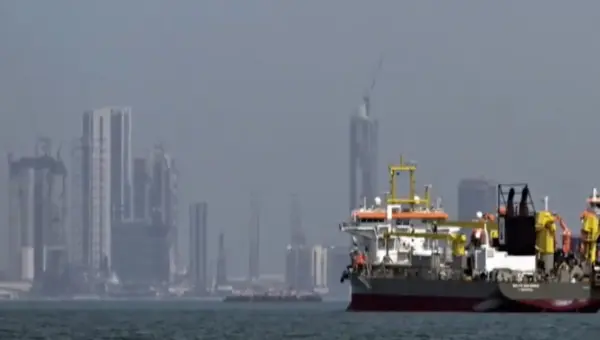
Iran Blocks China Ships, Exposing Beijing’s Weak Grip
Iran's recent decision to block Chinese ships at the Strait of Hormuz is exposing the limits of Beijing's influence in the Middle East. This action is causing delays and cancellations for Chinese manufacturers, turning a perceived geopolitical win into an economic strain.

Rubio: US Can Achieve Iran War Goals Without Troops
Senator Marco Rubio outlined a strategy to counter Iran without deploying U.S. ground troops, focusing on weakening the regime and enhancing maritime security. He also criticized Cuba's economic system and expressed concerns about West Bank violence.