Hormuz Blockade Sparks Global Oil Crisis, Prices Soar
The global oil market faces its most severe disruption in history as conflict intensifies in the Strait of Hormuz. Rising oil prices are expected to impact consumers through higher gas prices and influence mortgage rates, while geopolitical tensions complicate potential U.S. naval responses.

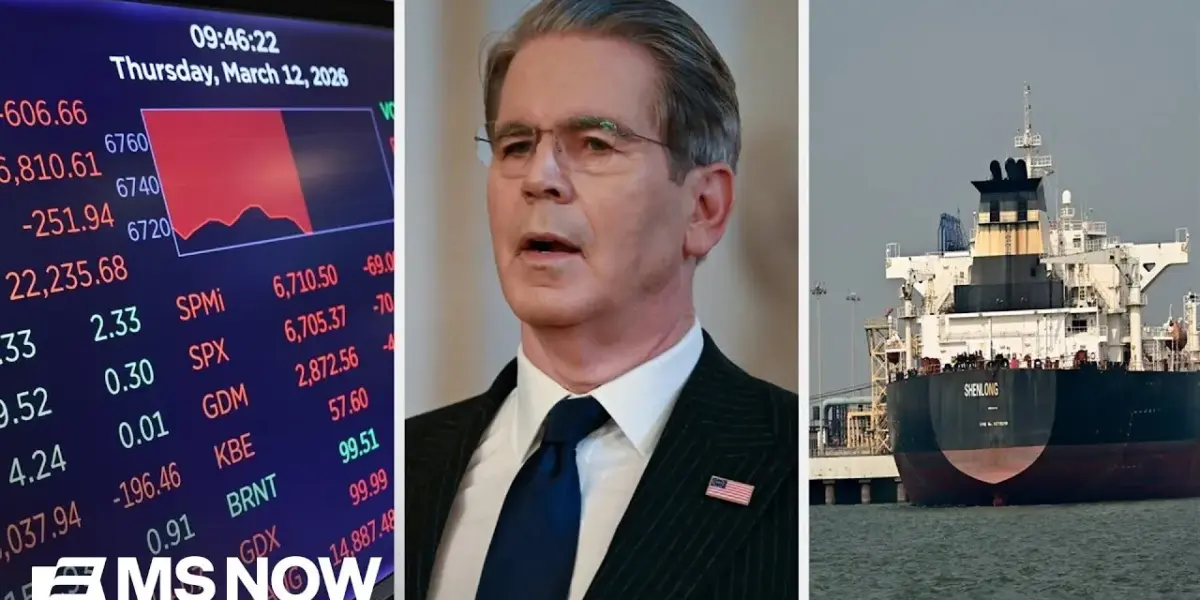
Global Oil Markets Reel as Hormuz Strait Blockade Creates Unprecedented Disruption
The global oil market is experiencing its most significant supply disruption in history, according to the International Energy Agency, as conflict in the Strait of Hormuz intensifies. Investors are no longer merely bracing for worst-case scenarios; they are living them. While President Trump has expressed confidence that the U.S. Navy would escort oil tankers and that the conflict would soon be resolved, his advisors have tempered these expectations, indicating that readiness for such operations will take time.
The Unfolding Crisis: Iran’s Leverage and Rising Oil Prices
The conflict, now nearing two weeks with no clear end in sight, has left the U.S. in a precarious position. Despite whispers from within the Trump administration to Wall Street about an impending withdrawal, the reality on the ground suggests a more complex situation. As veteran financial journalist Ron Insana notes, “The enemy has a voice and it can make decisions here.” Even with potential sanctions relief discussed by Treasury Secretary Besant, oil prices have continued to climb, exceeding $96 a barrel. This trend is likely to persist, as Iran may continue to target oil fields and maintain the closure of the Strait of Hormuz, a critical chokepoint for global energy supplies. The recent incident of a missile potentially entering Turkish airspace further complicates the geopolitical calculus.
“This really is the big one. It is the emergency scenario everyone feared.” – Former U.S. diplomat and energy department official
Economic Fallout: From Gas Pumps to Mortgage Rates
The ramifications of the Hormuz crisis extend far beyond the oil market itself. Dan Dicker, founder of The Energy Word and a seasoned energy futures trader, warns of a looming supply crunch. “There’s a hundred million barrels of oil that hasn’t gotten out of the Gulf that’s supposed to hit a refinery in the next two and a half weeks. Now, if that doesn’t hit the refinery, that lack of oil is going to mean a lack of gas that’s going to be immediate,” Dicker explains. While current gas prices may be influenced by speculation, the real pinch will come when these delayed shipments fail to reach refineries. Dicker predicts that even if a resolution is found quickly, the high prices will persist, and the likelihood of Iran abandoning its leverage over the Strait of Hormuz is slim, given its historical significance as a red line for the global oil community.
The energy crisis is also triggering an uptick in mortgage rates. “In the bond market where interest rates go up, inflation concerns with oil prices and then by extension gasoline prices, diesel fuel, heating oil, jet fuel all go up in price,” explains an analyst. This puts upward pressure on consumer prices and inflation rates, which the bond market is now reflecting. The yield on the 10-year note has risen to 4.25%, pushing mortgage rates above the crucial 6% mark, a level that historically dampens demand for home purchases and refinancing.
Challenges to Naval Escorts and Geopolitical Tensions
The prospect of U.S. naval escorts for oil tankers faces significant hurdles. The Strait of Hormuz, at its narrowest point, is only 21 miles wide, making it highly vulnerable. Dicker points out the logistical and security nightmares involved: “One tanker… It’s the most vulnerable ship in the world. You can take it out with a handheld rocket.” The potential for even a single successful attack could cause maritime insurers to withdraw coverage for months, effectively paralyzing shipping. Furthermore, the notion of an international coalition for escorts is met with skepticism, particularly given recent U.S. policies that have strained relationships with key allies through tariffs and trade disputes. The ability to rally international support for a military operation is questionable when diplomatic ties are weakened.
Russia’s Unintended Beneficiary?
In a surprising twist, Russia appears to be a significant beneficiary of the crisis. While the U.S. administration has considered allowing the temporary purchase of Russian oil already at sea to stabilize markets, the underlying reality is that Russia’s oil supply remains unhindered. As other nations scramble for alternative energy sources, they are increasingly turning to Russian oil, which is currently fetching a premium of approximately 50% per barrel. This translates to an estimated extra $150 million per day for the Russian government, a stark contrast to the intended impact of sanctions.
The Long Road Ahead
The current situation in the Strait of Hormuz presents a complex and potentially long-term challenge for global energy security and economic stability. The administration’s approach to navigating this crisis, particularly its reliance on tariffs and its strained relationships with allies, may hinder its ability to secure the necessary international cooperation. The coming weeks will be critical in determining the immediate trajectory of oil prices and the broader economic impact, but the underlying vulnerabilities exposed by this blockade suggest that the ripple effects will be felt for a considerable time.
Source: Strait of Hormuz blockade ripples through global economy (YouTube)

Related Articles

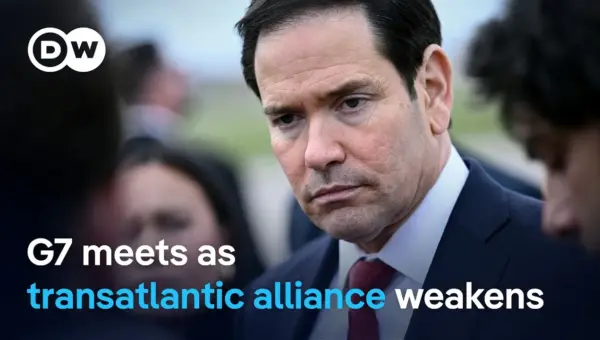
G7 Allies Clash Over Iran War Strategy, Urge Focus on Russia
G7 foreign ministers met in Paris, revealing deep divisions over the U.S. war with Iran. European allies urged the U.S. to pressure Russia, linking its actions to the conflict and fearing support for Ukraine will wane.
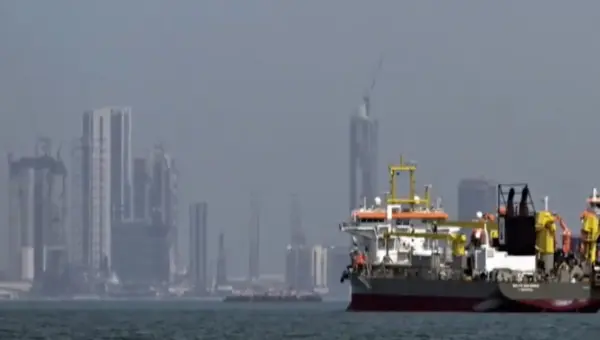
Iran Blocks China Ships, Exposing Beijing’s Weak Grip
Iran's recent decision to block Chinese ships at the Strait of Hormuz is exposing the limits of Beijing's influence in the Middle East. This action is causing delays and cancellations for Chinese manufacturers, turning a perceived geopolitical win into an economic strain.
Rubio: US Can Achieve Iran War Goals Without Troops
Senator Marco Rubio outlined a strategy to counter Iran without deploying U.S. ground troops, focusing on weakening the regime and enhancing maritime security. He also criticized Cuba's economic system and expressed concerns about West Bank violence.