Homeland Security Chief Faces Scrutiny Over Jets, Ad Spending
Homeland Security Secretary Kirstjen Nielsen faced tough questions on luxury jets, a $220 million ad contract, and citizen arrests during a Senate hearing. Senators scrutinized spending and operational practices, revealing deep concerns over accountability and resource allocation within the department.

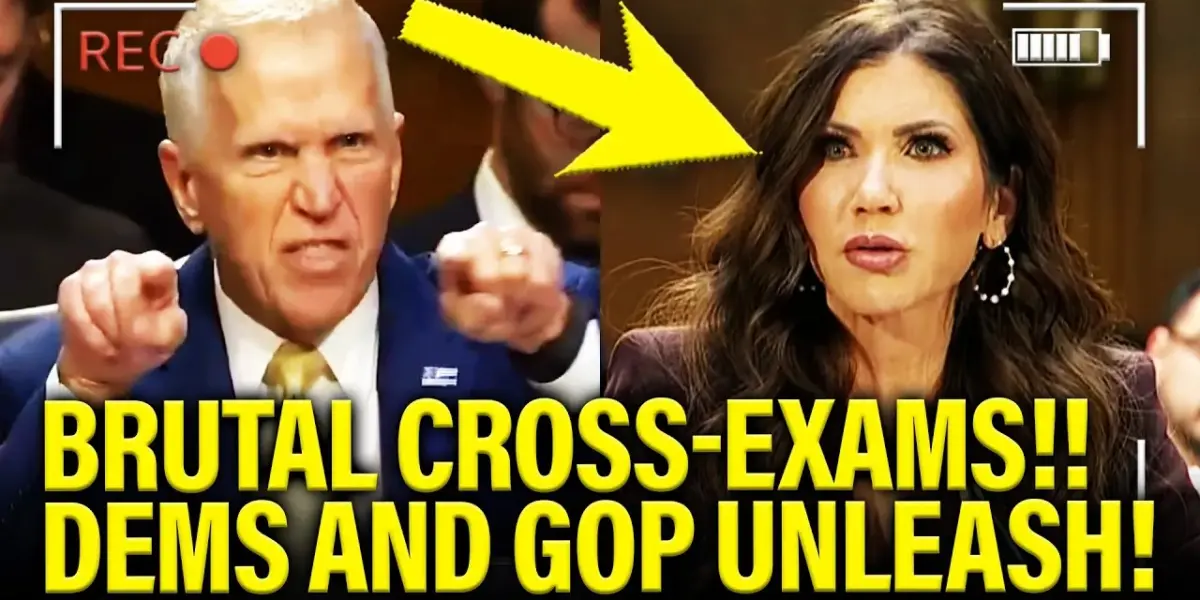
Homeland Security Chief Faces Scrutiny Over Jets, Ad Spending
A recent Senate hearing saw Department of Homeland Security Secretary Kirstjen Nielsen facing a barrage of questions from both Democratic and Republican senators, revealing significant concerns over agency spending, contract awards, and the handling of sensitive public statements. The cross-examination, described as intense, highlighted a perceived disconnect between the department’s actions and taxpayer interests, with Nielsen often deflecting direct answers or citing adherence to congressional mandates.
Luxury Jets and Taxpayer Dollars
One of the most prominent lines of questioning revolved around the department’s purchase of private jets, specifically a Boeing 737 reportedly outfitted with a bedroom and multiple flat-screen TVs. Senator Richard Blumenthal presented a photograph of the jet’s interior, asking Nielsen to explain its purpose. Nielsen defended the purchase, stating the aircraft were acquired for long-range command and control, a capability mandated by Congress for national security purposes. She claimed these purchases would ultimately save taxpayers hundreds of millions of dollars by replacing leased contracts.
However, the details of the jets’ configuration and intended use for deportations drew sharp criticism. When questioned about the luxury features, including a bedroom, Nielsen suggested the plane was being refurbished and may not have such amenities. She acknowledged that similar aircraft configurations had been used for deportations in the past, a practice that raised eyebrows among senators concerned about the optics and necessity of using such vehicles for expelling individuals from the country.
Adding to the controversy, reports cited senior administration officials anonymously describing these aircraft purchases as the “world’s worst deal” and an “abuse of federal funds.” When pressed by Republican Senator John Kennedy about whether lawmakers who approved the funding for these jets were aware of the plans to acquire luxury aircraft, Nielsen reiterated that the funds were appropriated by Congress and that the department was complying with statutory requirements for long-range command and control aircraft.
Questionable Advertising Contracts
Senator Kennedy also pressed Nielsen on a $220 million advertising contract awarded by the department. The ads prominently featured Nielsen, and Kennedy questioned how this spending squared with concerns about waste, especially given that the funds allegedly went to companies with ties to Nielsen’s former political work in South Dakota. Nielsen stated that the president had tasked her with getting the message out to deter illegal immigration and that the contracts went through a competitive bid process, with career officials making the final selections.
However, Kennedy countered with information suggesting that one of the selected firms, Safe America Media, was formed just 11 days before being awarded the contract, and its subcontractor, The Strategy Group, was headed by someone married to Nielsen’s former spokesperson. Nielsen maintained that she had no involvement in selecting the contractors and that the ads were due to end soon.
Statements on Domestic Terrorism and Citizen Arrests
The hearing also addressed Nielsen’s public statements following the deaths of two individuals, Renee Gude and Alex Prey, in Minneapolis. Senator Mazie Hirono questioned Nielsen about her characterization of the incident as an act of domestic terrorism, noting the distress this caused the victims’ families. Nielsen clarified that while she stated it *appeared* to be an incident of domestic terrorism based on information from a chaotic scene, she did not definitively label the individuals as such. She also pushed back against suggestions that she blamed former White House advisor Stephen Miller for her statements, attributing such claims to anonymous sources in news articles.
Later, Senator Blumenthal raised the case of Javier Ramirez, a U.S. citizen who was allegedly assaulted, detained for over four days, and denied necessary medical treatment by agents who reportedly mistook him for being Mexican. Nielsen denied that the department targets individuals based on race or ethnicity, asserting that operations are based on criminal backgrounds and intelligence. She committed to looking into Ramirez’s specific case regarding the denial of medical treatment.
The issue of U.S. citizens being wrongly arrested also surfaced. Blumenthal asked Nielsen if she agreed that lawful U.S. citizens should not be arrested. Nielsen stated that law enforcement operates on probable cause, and the department does not target people based on race or ethnicity. She also committed to investigating the case of Maribel Torres, who was reportedly detained and deported despite having a daughter with terminal cancer, after her daughter’s death, the court found she was treated unfairly.
ICE Operations and Quotas
Senator Dick Durbin questioned Nielsen about the deportation of DACA recipients who had undergone background checks. Nielsen stated that the department follows all applicable laws regarding detainment and deportations and committed to looking into specific cases. She also addressed concerns about ICE operations at polling places, stating there were no plans to deploy ICE officers to such locations, and affirmed that the department does not operate on quotas or numerical targets for immigration arrests, emphasizing targeted enforcement against “the worst of the worst.”
However, Durbin cited a public statement from Stephen Miller setting a goal of 3,000 ICE arrests daily. Nielsen reiterated that there are no quotas and that operations focus on public safety threats. She also discussed training for ICE officers, noting changes in the program format and duration, and addressed the handling of peaceful protesters, affirming that recruits are trained on First Amendment rights and de-escalation techniques.
Why This Matters
This Senate hearing illuminated critical oversight questions surrounding the Department of Homeland Security’s operations and expenditures. The scrutiny over the luxury jets and substantial advertising contracts raises concerns about fiscal responsibility and the prioritization of resources. Furthermore, the questioning regarding the handling of citizen arrests, the labeling of individuals involved in violent incidents, and the potential for quota-driven enforcement policies speaks to broader issues of civil liberties, due process, and public trust in law enforcement agencies.
Implications and Future Outlook
The persistent questions about resource allocation and operational practices suggest that oversight of the Department of Homeland Security will remain a key focus for Congress. The department’s reliance on congressional mandates for certain expenditures, such as aircraft, highlights the complex interplay between executive agency needs and legislative authority. Future legislative actions or departmental policy changes may arise from these hearings, particularly concerning transparency in contracting and the adherence to civil rights principles in enforcement actions. The department’s commitment to investigating specific cases, while often framed as standard procedure, also underscores the need for accountability and thorough review of alleged misconduct.
Source: Kristi Noem FALLS APART under CROSS-EXAM at SENATE HEARING!! (YouTube)

Related Articles

Noem’s $220M Ads: A Political Power Play or Wasteful Spending?
A GOP Senator grilled Governor Kristi Noem over $220 million spent on television ads featuring her prominently. The exchange raises questions about government waste, political self-promotion, and the procurement process for such massive campaigns.

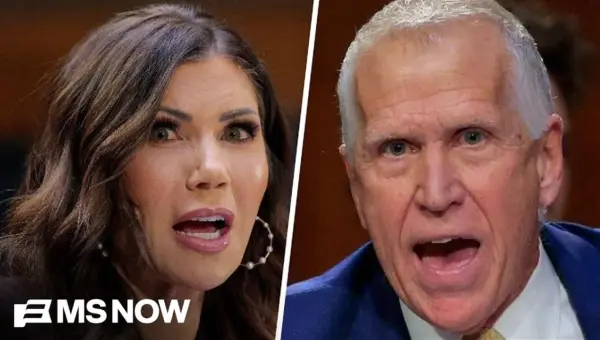
GOP Senator Dismantles Homeland Security Official in Fiery Hearing
Senator Tom Tillis delivered a sharp critique of a Homeland Security official in a recent hearing, a move observers called a "masterclass in dismantling." The Republican, not seeking reelection, questioned agency operations, funding, and controversial designations, highlighting broader GOP concerns.

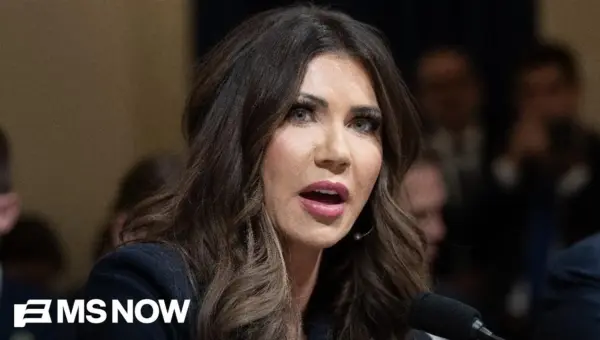
Noem’s Testimony on Immigration Crackdown Criticized
Homeland Security Secretary Kirstjen Nielsen faced sharp questioning on Capitol Hill regarding the Trump administration's immigration policies. Critics highlighted the controversial labeling of individuals involved in protests where deaths occurred and the handling of a father separated from his dying daughter, raising concerns about agency discretion and national safety.