Hollywood’s Production Plummets 16% Amid Tech Disruption
Hollywood faces an existential crisis as production plummets by over 16% and layoffs surge. Technological disruption, shifting consumer habits, and the aftermath of the streaming wars have led to a significant downturn, with many professionals struggling and production migrating overseas. Independent film offers a glimmer of hope amid the industry's profound reset.

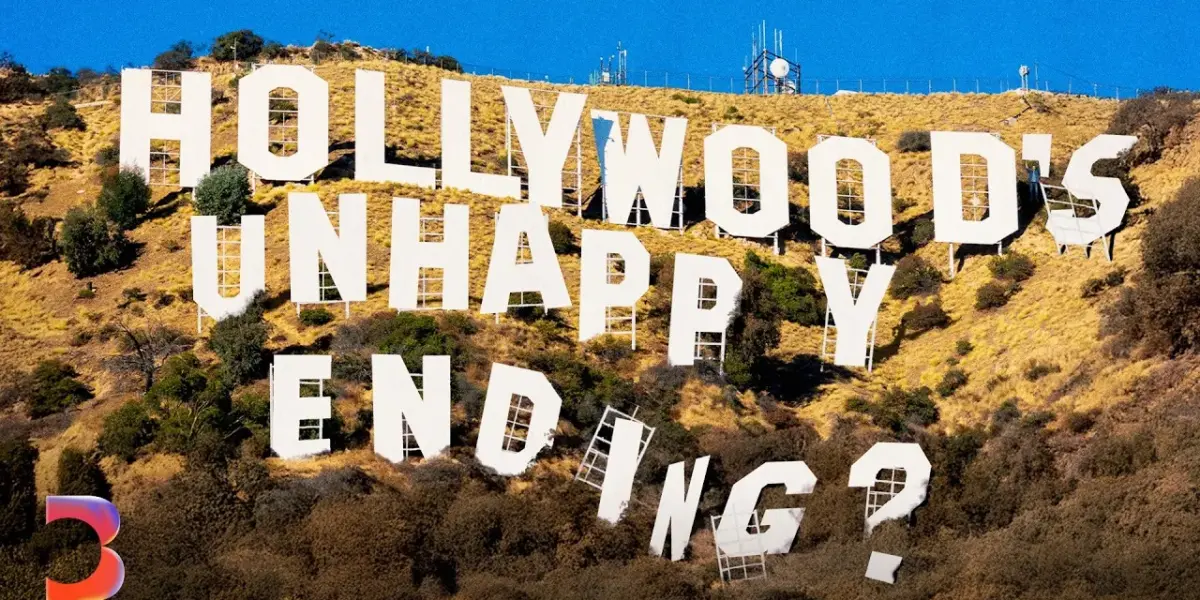
Hollywood Faces Existential Crisis as Production Halts and Layoffs Mount
Once a vibrant hub of creativity and a powerful economic engine, Hollywood is confronting an unprecedented period of disruption. The entertainment industry, often described as a ‘factory town’ for its output of films and television shows, is experiencing a significant downturn characterized by a dramatic reduction in production, widespread layoffs, and a palpable sense of existential dread among its workforce. The traditional cycles of pilot season, upfronts, and awards campaigns have slowed, leaving many questioning the industry’s future baseline.
Employment in California’s motion picture industries, which peaked in 2016, has been severely impacted. While the COVID-19 pandemic initially decimated the sector, the subsequent actors’ and writers’ strikes in 2023 further exacerbated job losses, with many roles showing no signs of returning. This downturn has visibly transformed Los Angeles into what some observers describe as a ‘ghost town,’ with a noticeable lack of activity on studio lots.
Production Declines and Capital Flight
The numbers paint a stark picture. Total Los Angeles shoot days for 2024 are projected to be down by over 16% compared to previous years, a significant drop from the recent peak in 2016. This decline is not merely a localized issue; production has increasingly moved out of California. While some of this activity has shifted to other U.S. states, the majority has migrated internationally, particularly to countries like the UK, Australia, and New Zealand, which offer more aggressive tax incentives. This capital flight has led to significant financial strain, exemplified by Goldman Sachs foreclosing on the historic Radford Studios in Los Angeles due to defaulted debt payments.
Box Office Blues and Shifting Consumer Habits
The struggles extend to the traditional box office. The movie business has been in a state of long-term stagnation, with fewer Americans attending cinema screenings. The average American now sees fewer than four movies per year, a decline from approximately five a decade ago. While ticket sales saw a temporary boost before the pandemic, they have not fully recovered, remaining nearly $3.5 billion lower than in 2018. This decline is attributed to a fundamental shift in consumer behavior, with audiences increasingly opting for home entertainment and binge-watching over theatrical releases.
“The numbers tell the story. Have a look at Total LA shoot days for 2024. Now look at 2025. It’s down over 16%.”
The Streaming Boom’s Aftermath and the Strike Turning Point
The decade-long boom fueled by the rise of streaming services like Netflix, Hulu, Amazon, Disney+, and HBO Max appears to be over. In their quest to capture market share, these platforms engaged in an unsustainable spending spree on content. However, by 2022, the financial toll became evident, with many services reporting billions in losses. The 2023 strikes served as a critical turning point. Studios realized they could operate with significantly reduced output, leading to widespread staff cuts and a drastic reduction in content spending. This has left many industry professionals, from writers and producers to grips and electricians, struggling to make ends meet, with some forced to take on assistant roles or part-time jobs outside the industry and dip into retirement savings.
Technological Disruption and the Rise of AI
The confluence of technological advancements, including the ubiquity of smartphones with cameras, more affordable editing software, and the looming specter of Artificial Intelligence (AI), is fundamentally reshaping content creation. AI, in particular, is poised to further automate processes, potentially reducing the need for traditional crews, sets, cameras, and even writers and actors. This technological wave is reminiscent of disruptions seen in other industries like newspapers, radio, Airbnb, and Uber, where new technologies have dismantled established business models.
Fragmented Audiences and the Power of Platforms
Audiences have become increasingly fragmented, with younger demographics, in particular, consuming content primarily through platforms like TikTok and YouTube. YouTube’s significant growth in connected TV viewership, capturing over 13% of the audience, underscores this shift. Movies, once the center of Western culture, are no longer the sole arbiters of entertainment. The traditional A-list star system that once guaranteed box office success is losing its efficacy. While technology has democratized content creation, enabling new storytellers to emerge, it has also led to an oversaturation of content and a struggle for creators to monetize their work. For every highly successful creator like Mr. Beast, millions of others struggle for visibility and compensation.
“People are really worried about too much consolidation. While Warner Brothers can still run, as Warner Brothers always ran, I’m losing places that I can take content to. Then you have job loss as well.”
Mega-Mergers and Industry Consolidation
In response to these pressures, major studios have pursued mega-mergers as a survival strategy. However, these consolidation efforts have often resulted in decreased profitability and stock price performance for the acquiring companies. This trend raises concerns about reduced competition and fewer outlets for content. The consolidation means fewer potential buyers for content, impacting the diversity of distribution channels.
The Future: Independent Film and Agile Storytelling
Despite the bleak outlook, there are glimmers of hope. The core of the business remains storytelling, and independent film is emerging as a potential bright spot. Companies like A24, valued at $3.5 billion, have proven that disciplined budgets and bold, original storytelling can achieve critical and commercial success, challenging the traditional studio model. While major studios continue to double down on existing franchises and pre-existing intellectual property (IP) – with the top 10 highest-grossing films in 2024 and an increased focus on IP in 2025 – there is a growing demand for fresh narratives. The future may lie in a more ‘scrappy’ industry where passionate creators leverage new tools and focus on compelling stories, potentially creating opportunities for those who are adaptable and innovative.
Market Impact and What Investors Should Know
The current Hollywood landscape presents a complex picture for investors. The decline in traditional box office revenue and the costly, often unprofitable, pursuit of streaming dominance have created significant financial headwinds. The increasing migration of production due to competitive tax incentives and the potential disruption from AI pose further challenges. Investors should closely monitor the financial health of major studios and streaming platforms, their strategies for content acquisition and production costs, and their ability to adapt to evolving consumer preferences and technological advancements. The rise of independent film and alternative content platforms suggests a potential shift in market dynamics, where innovation and audience-centric storytelling may offer new avenues for growth, albeit with potentially lower overall revenue scales compared to past blockbusters.
Source: Why Hollywood Is Facing a Very Unhappy Ending (YouTube)

Related Articles


Finland Tops Happiness Chart, UK Falls to 29th
Finland has once again been named the world's happiest country, while the UK dropped to 29th in the latest World Happiness Survey. The report explores the complex ways happiness is measured and highlights unique Finnish concepts of well-being, alongside concerning trends in youth happiness.


US Spy Agency Seeks Hollywood Influence
A U.S. intelligence officer reportedly offered producers inside information in exchange for specific narrative inclusions in their shows. This alleged quid pro quo, discussed in relation to the TV series 'Dark Skies,' suggests a new strategy for intelligence agencies to influence public perception through popular culture.


ChatGPT Adds Library Tab, Google Overhauls AI Studio
This week's AI news highlights significant updates from major players. ChatGPT now features a Library tab for easier document management, while Google has overhauled its AI Studio, merging it with an app builder to simplify the creation of multiplayer experiences. We also look at Midjourney V8's performance, user hopes and fears about AI from an Anthropic study, and quick updates from Gamma, OpenAI, and Claude.