High Castle: PKD’s Fascist Future Rings True Today
Philip K. Dick's 'The Man in the High Castle' presents a chilling alternate history where the Axis powers won WWII. The novel, featured in the Velshi Banned Book Club, explores fascism's psychological impact and its unsettling relevance today. It delves into complicity and the nature of reality under oppressive regimes.

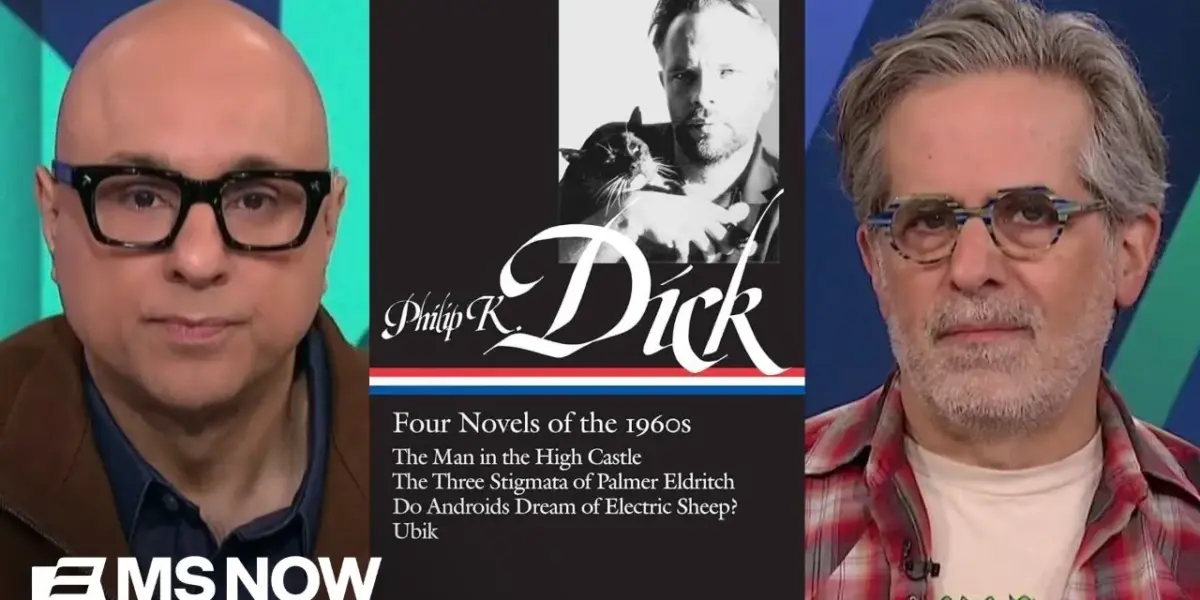
‘The Man in the High Castle’ Explores Haunting Alternate History
In an eerily plausible alternate reality, Philip K. Dick’s 64-year-old science fiction classic, ‘The Man in the High Castle,’ forces readers to confront a chilling ‘what if’ scenario. The novel, first published in 1962, posits a world where the Axis powers won World War II, fundamentally altering the course of history and leaving the United States fractured and under oppressive rule. This seminal work, now featured in the Velshi Banned Book Club, delves into the psychological depths of humanity, morality, and creativity in the face of overwhelming evil, resonating with profound relevance in contemporary times.
A World Divided: The Axis Victory
The novel’s central premise hinges on a catastrophic historical divergence: the successful assassination of President Franklin Delano Roosevelt in 1933. This event triggers a domino effect, leading to the reversal of the New Deal, a prolonged and debilitating Great Depression, and an isolationist United States that never joins the Allied forces. The narrative of ‘The Man in the High Castle’ unfolds over a decade after the war’s conclusion, revealing a United States partitioned between the Nazi-ruled American Reich in the East and the Japanese-occupied Pacific States of America to the West. Life under this dual occupation is characterized by enslavement, corruption, and pervasive censorship, yet society has adapted to the violent rhythm of fascism, with the war’s specter still looming large.
Intertwined Narratives and a Forbidden Text
Dick masterfully weaves together multiple storylines, primarily focusing on three characters: an antique dealer specializing in pre-war American artifacts, a skilled metalworker concealing his Jewish identity, and a high-ranking Japanese trade official who is a devout Buddhist. The characters’ development and the narrative’s progression are intricately linked to the existence of a banned book titled ‘The Grasshopper Lies Heavy.’ This novel-within-a-novel presents a different alternate history, one where the Allied powers did win World War II. However, it offers not our reality, but a third potential outcome of the global conflict, serving as a mirror to the occupied world.
Beyond Sci-Fi: Psychological Depth and Scholarly Rigor
‘The Man in the High Castle’ is far from a simple adventure. Its enduring appeal lies not only in its compelling conceit and intricate world-building but also in Philip K. Dick’s profound ability to capture psychological depth. Jonathan Lethem, author and editor of a compilation of Dick’s works, emphasizes the novel’s intellectual and research-driven foundation. “This is not the daydream of someone who’s just wondered, what if the Nazis had won the war?” Lethem states. “All of the minor Nazi characters are thoroughly researched. Dick has written this almost scholarly alternate reality.” This meticulous attention to detail imbues the fictional world with a disturbing authenticity.
“The Man in the High Castle is also a work of extraordinarily passionate and scrupulous scholarship.” – Jonathan Lethem
The Metaphysical and the Human Condition
Devotees of Philip K. Dick often describe his work, including ‘The Man in the High Castle,’ as ‘weird’ – a term of endearment that acknowledges his penchant for exploring the metaphysical and psychological. Dick’s broader oeuvre, which has inspired films like ‘Blade Runner,’ ‘Total Recall,’ and ‘Minority Report,’ consistently probes the essence of humanity and the nature of reality. In ‘The Man in the High Castle,’ however, Dick pushes further, questioning what humanity, morality, and creativity look like when confronted with profound evil. He forces readers to consider the complicity inherent in living a seemingly normal life under a fascist regime and to evaluate the moral acceptability of inaction when the greater good is at stake.
Echoes of Fascism in the Present Day
The novel’s exploration of complicity is particularly striking. Lethem notes that the fascism depicted is not monolithic but composed of various elements: opportunistic individuals, idealistic racists, and Christian apocalyptic fantasists. “This muddle of different elements amalgamating into a fascism is something I should think we would look at and see ourselves in the mirror right now,” he observes. Dick suggests that the seeds of American fascism might be subtly encoded within the post-war consensus, the rise of corporatism, and the commercialism of Madison Avenue. This perspective challenges the notion that fascism was definitively defeated, implying that its core tenets could be lurking beneath the surface of seemingly democratic societies.
A Timeless Warning
Jonathan Lethem argues that ‘The Man in the High Castle’ has never failed to be relevant since its publication. He describes the book as a “brave and almost bizarre gesture” at a time of post-war optimism. Dick, often decades ahead of his time, anticipated the evolution of media and societal anxieties. The novel serves as a potent reminder that the day when the evils of fascism might resurface is not a future possibility but a present reality. The book’s enduring power lies in its ability to make readers question their own perceptions of reality and their place within it, especially when confronted with the persistent specter of authoritarianism.
Looking Ahead
As ‘The Man in the High Castle’ continues to spark conversation and critical analysis, its themes of historical revisionism, political oppression, and the resilience of the human spirit remain acutely relevant. Readers are encouraged to engage with Dick’s work not just as a piece of science fiction, but as a profound meditation on the nature of power, resistance, and the enduring struggle for truth and freedom in a world where reality itself can be a fragile construct.
Source: Velshi Banned Book Club: ‘The Man in the High Castle’ by Philip K. Dick (YouTube)

Related Articles


German Warning to America: Fascism’s Shadow Looms Large
A German warning about fascism sparks a deep dive into America's democratic health. From eroded election trust to the nature of populism and the U.S. Constitution's relevance, this transatlantic dialogue reveals shared anxieties and urgent calls for action.


German “Grannies” Warn Americans: “Democracy in Grave Jeopardy”
A German civil society network, including "Grannies Against the Far Right," has issued an urgent warning to Americans, stating that democracy is in "grave jeopardy." Drawing on Germany's history with fascism, they implore citizens to defend their freedoms, highlighting historical parallels and expressing profound gratitude for past US intervention.


Nairobi Floods: 23 Dead as Extreme Rains Submerge Capital
Nairobi is grappling with severe flash floods that have claimed at least 23 lives, submerged homes, and crippled infrastructure. As rescue efforts continue and more rain is forecast, anger rises over the city's inadequate drainage and flood management systems.