Hidden Skeletons and Spooked Nobility: Unearthing Dark Secrets
Three chilling tales of the unexplained: a ghost demanding justice in Milwaukee, a noble family terrorized by a masked figure in Hungary, and a fateful house swap in Vermont. These stories delve into the darkness that can lie beneath the surface of everyday life.

Hidden Skeletons and Spooked Nobility: Unearthing Dark Secrets
The veil between the living and the dead can sometimes feel thin, blurring the lines between inexplicable events and chilling realities. Across history, stories have emerged of restless spirits, vengeful entities, and unexplained phenomena that defy rational explanation. This article delves into three such accounts, exploring the unsettling circumstances that led ordinary people to confront the extraordinary, and the dark truths that lay buried beneath the surface.
The Milwaukee Haunting: A Spirit’s Plea for Justice
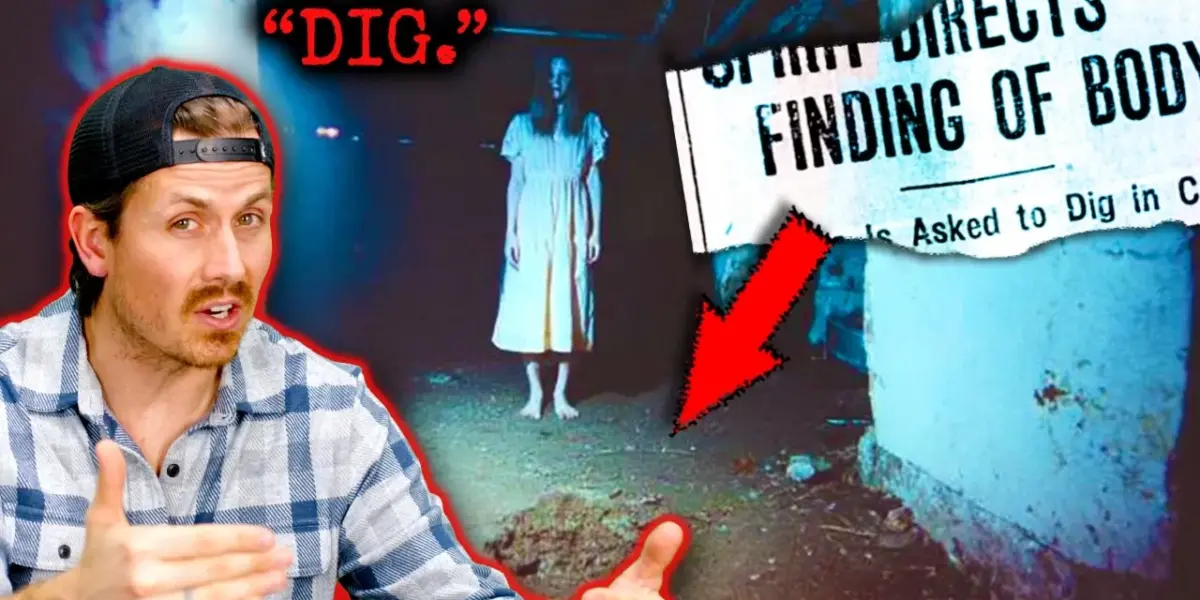
In April 1919, Milwaukee resident Eric Marth was jolted awake by his wife, Margaret, thrashing violently in her sleep. This was not an uncommon occurrence; since moving into their new home weeks prior, Margaret had been plagued by intense, terrifying nightmares. While Eric, a skeptic of the spiritualist movement Margaret had embraced, believed her nightmares were psychosomatic manifestations of her beliefs, Margaret felt their house was haunted by a vengeful spirit attacking her nightly.
One particular night, Margaret refused to be soothed. Determined to confront the entity, she insisted on seeking answers. A week later, the couple, with Eric resignedly accompanying, consulted a medium. During a seance, Margaret was suddenly overcome, her body seemingly possessed. Guided by an unseen force, she led Eric and the medium to the cellar and, in a hollow, vacant voice, commanded Eric to dig at a specific spot on the floor. Skeptical but unnerved by his wife’s bizarre behavior, Eric complied. His shovel soon struck something hard: a rotten wooden box. Upon opening it, they recoiled at the sight of a human skeleton.
Margaret, unfazed, revealed the grim truth: the skeleton was not the ghost haunting her, but evidence of a past crime. The spirit, it was believed, belonged to a doctor who had once occupied the house. Eighteen years earlier, he had performed an illegal surgery that resulted in a young woman’s death. To conceal his crime and avoid arrest, the doctor had dismembered the body, sealed it in a lime-filled box, and buried it in the cellar. His restless spirit, burdened by guilt, had apparently sought to expose the truth through Margaret, ensuring his confession would finally be heard.
Hungary’s Noble Estate: A Demon’s Deception
In April 1925, Lacy, the son of a wealthy baron in rural Hungary, chafed under his father’s strict control. After a heated exchange with a field worker over riding his horse through the estate gardens, Lacy defiantly trampled the flowerbeds. That same night, his father died suddenly of a heart attack. His mother, the baroness, refused to accept the natural cause, convinced her husband had been “scared to death” by a murderer, her belief fueled by his horrified expression.
In the six months following the baron’s death, the baroness became a recluse, obsessively searching her late husband’s bedroom for clues. Lacy, increasingly frustrated by his mother’s mental state and the estate’s neglect, longed for his inheritance. One night, he was awakened by his mother’s screams. Rushing to her room, he found her pointing at the foot of the bed, claiming a demon had appeared and threatened her. Lacy and the servants dismissed it as a delusion, but the baroness remained convinced. For three consecutive nights, she screamed about the demon, prompting Lacy to ask his mother to join him for breakfast and act normally. Instead, he was met by police detectives, whom his mother had summoned to help catch the demon she believed responsible for her husband’s death.
The situation escalated when, on the third night, Lacy witnessed one of the detectives tackle what appeared to be a demon. The truth, however, was far more grounded, yet equally sinister. Lacy discovered he was not his father’s eldest son. The baron had a secret son with a peasant woman, a son who was none other than the field worker Lacy had argued with. Enraged by Lacy’s disrespect and the baron’s abandonment, the half-brother donned a cloak and a terrifying mask, impersonating a demon. He succeeded in terrifying the baron to death. He continued to stalk the baroness, intending to scare her as well, but his plan was ultimately thwarted when the detectives intervened, exposing the “demon” as Lacy’s vengeful half-brother.
Vermont Farmhouse Swap: A Deadly Premonition
In early August 1927, Enz Perry returned to her family’s rural Vermont farmhouse to find her father striking a deal with a stranger, Clarence Sinclair. The agreement: a house swap. Enz’s parents, aging and finding the farm too much to manage, would move into Clarence’s house in a neighboring town, while Clarence and his family would take over the farmhouse. Enz, though saddened by the prospect of leaving her childhood home, accepted the arrangement as a practical solution for her parents.
Weeks later, while helping her parents settle into their new home, Enz was startled by a wagon’s arrival. It was Clarence, looking disheveled and desperate, begging Enz’s father to reverse the swap, claiming he had made a “horrible mistake.” He offered no specific reason, only a desperate plea. Enz’s father, citing his failing health and the satisfactory condition of the farmhouse, refused. Clarence’s repeated visits ceased, but the unsettling events surrounding the farmhouse were far from over.
On November 4th, after days of heavy rain, Enz read in the newspaper that historic flooding had devastated their old neighborhood, washing away the farmhouse and tragically killing the family residing there. This family, however, was not Clarence’s. It emerged that after moving into the farmhouse, Clarence had been tormented by recurring dreams of his dead mother warning him to leave, that something terrible would happen. Initially dismissing them, the dreams intensified, driving him to seek the house swap. When refused, Clarence ultimately sold the farmhouse to escape the premonition, a decision that saved his own family but sealed the fate of the unsuspecting new residents.
These narratives, spanning different eras and circumstances, highlight a shared human experience: the confrontation with the unknown. Whether a spirit seeking justice, a deception born of familial resentment, or a chilling premonition of disaster, these stories serve as potent reminders of the mysteries that can lie just beyond our understanding, the dark secrets that can haunt the most ordinary of lives.
Source: These hauntings were completely real (YouTube)

Related Articles

Decades-Long Mysteries Finally Solved: True Crime Shockers Revealed
From the unsolved disappearance of Elisa Lam to the decades-long hunt for the BTK killer, some of the most notorious true crime mysteries have finally found their chilling conclusions. This article delves into the shocking breakthroughs that brought long-awaited justice.


Mysterious Woman in Black Saves Man’s Life on Indiana Highway
On June 28th, 1980, Robert Davidson was revived from clinical death on an Indiana highway after a mysterious woman in black intervened. First responders witnessed an inexplicable event tied to the site's 1800s history.


Deceitful Host Poisons Family With Death Cap Mushrooms
A seemingly ordinary lunch turned deadly when Erin Patterson served Death Cap mushrooms to her former in-laws and sister-in-law. Her calculated deception and subsequent attempts to cover her tracks led to a national scandal and her conviction for murder.