Herzog Criticizes UK Stance on Iran, Cites Cyprus Attack
Israeli President Isaac Herzog criticized the UK's initial response to Iranian attacks, particularly the strike on a British base in Cyprus, calling it potentially weak. Herzog outlined Israel's war aims focused on degrading Iran's missile capabilities and nuclear program, while also seeing a unique opportunity for regional peace.

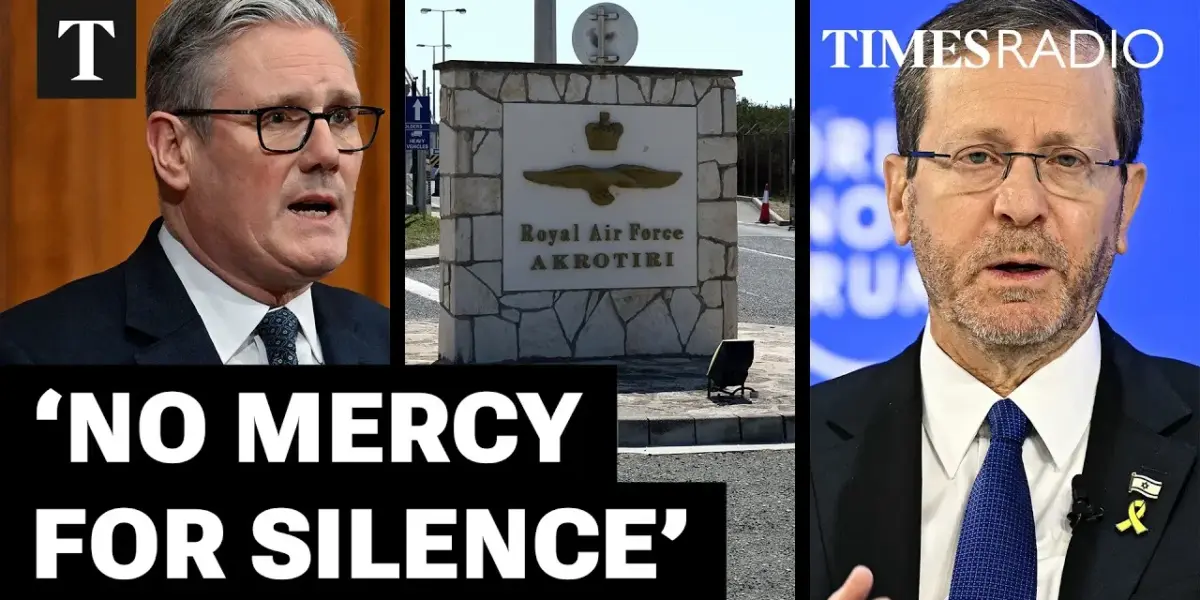
Herzog Slams UK’s Initial Reaction to Iran Attacks
President Isaac Herzog of Israel has voiced strong criticism regarding the United Kingdom’s initial response to recent Iranian attacks, particularly highlighting the strike on a British base in Cyprus. Herzog stated that the silence or lack of a firm stance from the UK could be interpreted as a sign of weakness by Iran, a nation he described as a “source of evil” in the region and a threat to the wider world.
Speaking in an interview, Herzog expressed his bewilderment at the UK’s initial assessment that the attack on the British base in Cyprus was not in line with international law. “Attacking a British base in British soil, by the way, Aotir is British soil is mind-boggling and quite shocking,” Herzog remarked, emphasizing the direct threat to British territory. He added, “And I think definitely think that at least I can tell you from the viewpoint from the Middle East. In the Middle East, there’s no mercy for those who don’t make it clear that it’s unacceptable.” He expressed a hope that Iran would not misinterpret the UK’s initial position as a sign of weakness.
Israel’s War Aims and Iran’s Destabilizing Influence
Addressing Israel’s objectives in the ongoing conflict with Iran, President Herzog outlined a focus on degrading Iran’s long-range missile capabilities and its ability to develop nuclear weapons. While not explicitly stating a goal of toppling the Iranian regime, Herzog indicated that such a change is a natural consequence of the regime’s weakening internal position and the Iranian people’s desire for change. He pointed to the violent suppression of internal dissent as evidence of the regime’s oppression and fragility.
Herzog characterized Iran as the primary driver of instability in the Middle East and a significant challenger to Europe and the free world. He cited numerous potential terror threats originating from Iran in Britain alone over the past year, underscoring Iran’s global reach through its extensive funding of terrorist activities. “It’s about time that there’s a coalition of nations which tells them enough is enough. We’re fed up,” Herzog declared, commending Middle Eastern allies who are facing direct challenges from Iran’s aggression.
Regime Change and the Future of Iran
When questioned about how a change in the Iranian regime might come about, particularly without direct imposition of leadership, Herzog suggested that such transformations are driven by societal decisions. He described the current Iranian regime as “onerous on its people and by the way dysfunctional,” citing economic hardship and infrastructure failures. He expressed sympathy for the Iranian people, whom he described as “brilliant people and talented people,” contrasting them with their leadership.
Herzog highlighted the solidarity shown by Iranian expatriates and Israelis protesting together, seeing it as a symbol of the potential for peace and positive change in the region. He believes that a transformed Iran could become a force for good globally. However, he acknowledged the complexity of predicting the timeline for military actions, noting his role as head of state without executive powers.
Challenges to International Law and Regional Security
President Herzog strongly defended Israel’s actions, asserting they are conducted in accordance with international law, a stance he contrasted with Iran’s consistent disregard for such norms. He criticized Iran’s use of proxies, such as Hezbollah in Lebanon, to carry out attacks against Israel, noting that Lebanon itself had recently issued orders against the entry of Iran’s Revolutionary Guards. “They have these proxies all over the world. They’re operating them. And I want to tell you something. There comes a moment where decent nations rise up and say enough is enough is enough,” Herzog stated, framing the current situation as such a moment.
He also addressed concerns about settler violence in the West Bank, condemning such acts and assuring that they are under thorough investigation by Israel’s legal system. Regarding Gaza, Herzog reiterated that Hamas, a proxy of Iran, initiated the conflict on October 7th and must be disarmed. He mentioned that only a portion of the extensive tunnel infrastructure used by Hamas has been dismantled, indicating the ongoing challenge.
A Window of Opportunity for Regional Transformation
Despite the ongoing conflict and its terrible facets, President Herzog expressed a belief that the world can emerge into a more positive direction. He sees the current situation as a “unique opportunity” to reconfigure the Middle East, foster peace with Palestinian neighbors, and establish broader peace across the region. He suggested that Iran has consistently worked to derail such peace efforts, potentially even orchestrating the October 7th attacks to disrupt normalization with Saudi Arabia.
Herzog emphasized the need to undermine extremists who are dedicated to creating terror and destabilizing moderate forces. He concluded by stating that while the establishment of an independent Palestinian state is a future discussion point, the immediate focus is on undermining extremism and creating a more secure and peaceful future for all inhabitants of the region.
Source: Israel’s Herzog Criticises Starmer: Silence On Cyprus Attack Could Signal ‘Weakness’ (YouTube)

Related Articles

Iran: The Geopolitical Lever in the US-China Tech Race
Geopolitical insights reveal Iran's pivotal role in the US-China tech race, acting as a lever that challenges China's influence. A historical memo outlining targeted countries underscores the strategic depth of this competition.
Iran Appoints Hardliner’s Son as New Supreme Leader
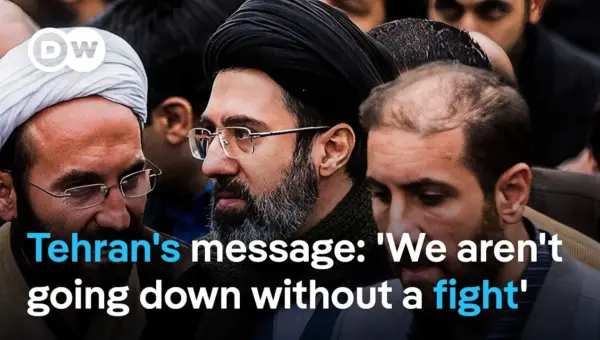
Iran has appointed Mojtaba Khamenei, son of the former Supreme Leader, as its new spiritual and political leader. The move is seen as a message of defiance to adversaries and signals continuity in hardline policies, though it raises concerns about hereditary rule and dims hopes for internal reform.
Scarborough Slams WH: Russia-Iran Intel Sharing ‘Matters a Great Deal’
Joe Scarborough strongly criticized the White House for downplaying reports of Russia sharing intelligence with Iran to target U.S. assets. He argued that such cooperation "matters a great deal" and raises serious national security concerns.