Helium Crisis Threatens AI Chip Production
A critical shortage of helium, essential for manufacturing advanced AI microchips, is threatening the global artificial intelligence boom. Geopolitical events and supply chain disruptions have severely impacted helium availability, leading to fears of production halts and a potential repricing of tech valuations.

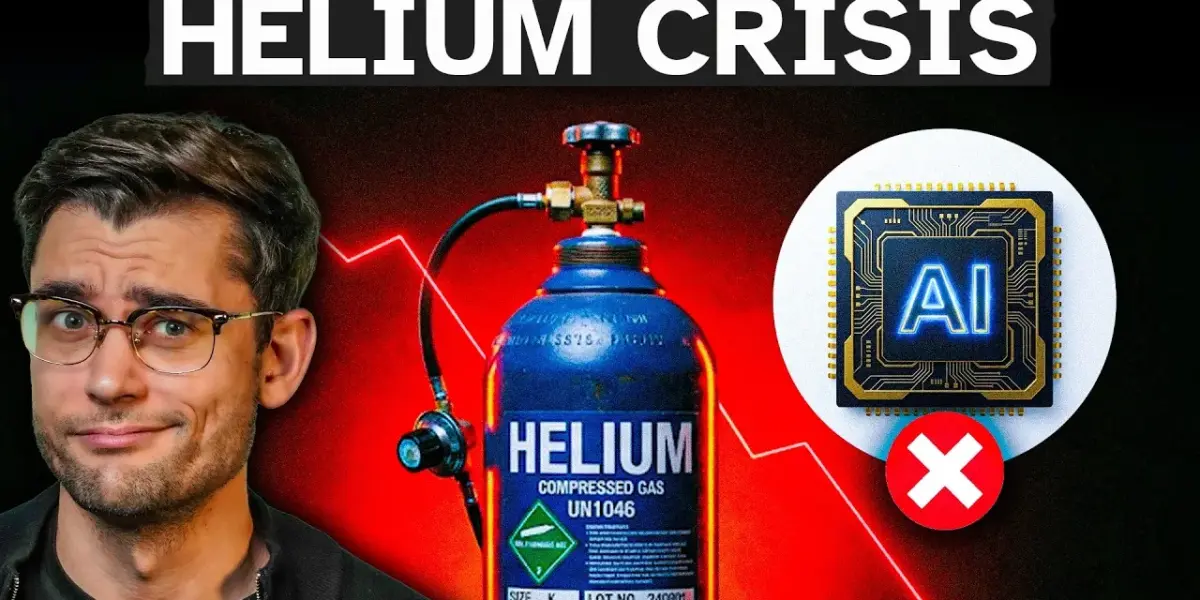
Helium Shortage Sparks AI Chip Production Fears
The artificial intelligence revolution, often described as an unstoppable force, faces a critical physical limitation: a severe shortage of helium. This vital, non-renewable gas is essential for manufacturing the advanced microchips powering AI, creating a potential bottleneck for the booming technology sector.
The Hidden Plumbing of Chip Manufacturing
Semiconductor fabrication plants, or ‘fabs,’ are incredibly complex facilities. Creating the silicon chips needed for AI involves processes like extreme ultraviolet lithography, which requires super-cooled environments. These delicate operations depend on a single element that cannot be made or replicated: helium.
ASML’s Machines and Helium’s Crucial Role
ASML, a Dutch company, holds a global monopoly on the extreme ultraviolet lithography machines needed for sub-7 nanometer chips. These machines, costing around $400 million each, use lasers to create plasma hotter than the sun’s surface. To manage the extreme temperatures and maintain the precise optical mirrors, these machines rely entirely on superconducting magnets cooled by liquid helium.
Liquid helium, boiling at -269°C (just 4° above absolute zero), is the only substance with the thermal conductivity to maintain these superconducting environments. If the cooling fails, even for a moment, the magnets can release energy in an event called a ‘quench,’ which damages the machine. Helium’s inert nature also makes it perfect for maintaining the ultra-clean vacuum required for chip production, and it’s used to prevent warping during precise etching processes.
Simply put, there is no substitute for helium in these high-tech manufacturing steps. Without it, chip production halts completely.
A Global Supply Chain Under Strain
The helium we use on Earth is not manufactured; it’s a byproduct of radioactive decay trapped in underground rock formations. It’s extracted only when processing natural gas, meaning helium supply is directly tied to liquefied natural gas (LNG) infrastructure. If an LNG plant stops, helium extraction stops too.
Historically, the U.S. Federal Helium Reserve provided a crucial global buffer. However, in 2024, this reserve was sold to a private corporation for about $423 million. This move left the market vulnerable to geopolitical events, particularly concerning Qatar, a major helium producer.
Geopolitical Events Disrupt Supply
In early March 2026, attacks on Qatar’s industrial city reportedly damaged 14% of its helium export capacity. Qatar Energy declared force majeure, halting deliveries. Repairing these facilities is estimated to take three to five years, effectively removing 30-33% of the global seaborne helium supply from the market.
This disruption is worsened by ongoing shipping issues in the Strait of Hormuz. Liquid helium must be transported in specialized cryogenic containers that can only maintain their temperature for about 35-48 days. With around 200 of these containers stranded near the Persian Gulf due to regional conflicts, the helium inside is evaporating and escaping into the atmosphere, lost forever.
Impact on Key Manufacturing Hubs
This situation poses a significant threat to semiconductor manufacturing hubs in Taiwan and South Korea, which rely heavily on imported helium. South Korea, for example, sourced 64.7% of its helium from Qatar last year. This is critical as South Korea is home to SK Hynix, a leading producer of high bandwidth memory (HBM) chips essential for AI accelerators like Nvidia’s.
The 3D chip stacking process for HBM requires intense cooling, making it very helium-intensive. Without HBM from SK Hynix, Nvidia cannot produce its AI chips. Taiwan’s TSMC, which manufactures 90% of the world’s advanced logic chips, also relies on Qatar for about 30% of its helium.
Chipmakers Face Production Halts
Major South Korean chipmakers currently have an estimated 4-6 month supply of helium. While they built emergency reserves, their just-in-time manufacturing models are struggling. Even if Qatar’s production resumed immediately, restoring the full supply chain could take another six months.
This creates a countdown for multi-billion dollar facilities, which may be forced to shut down to prevent equipment damage. Restarting a fab after a shutdown costs billions in lost production and requires extensive re-certification. Spot prices for industrial helium have already doubled, with warnings of further 200% increases. The South Korean government has officially classified helium as a critical material needing emergency monitoring and rationing.
Market Disconnect and Smart Money Moves
Despite these physical constraints, financial markets have largely ignored the helium shortage, with Wall Street continuing to value AI companies based on software growth narratives. The combined market capitalization of semiconductor manufacturers and hyperscale cloud providers is around $18.7 trillion. The global helium market, before the crisis, was valued at only $5.5 billion annually.
Nvidia’s market cap alone often exceeds $4 trillion, assuming continuous scaling. Hyperscalers plan to spend up to $700 billion on AI infrastructure in 2026. This massive spending, fueled by corporate bonds, mirrors the speculative bubble seen during the dot-com era.
When chip manufacturers are forced to declare force majeure on deliveries due to helium shortages, the AI financing structure could collapse. If SK Hynix can’t cool its memory, Nvidia can’t ship chips, and hyperscalers’ revenue projections will falter, potentially making their accumulated debt unserviceable.
While retail investors focus on software, ‘smart money’ is moving towards industrial gas suppliers like Linde and Air Products, which have outperformed the market. These companies hold pricing power over a structurally undersupplied market and can pass increased costs directly to chip manufacturers who have no alternative sourcing options. This situation echoes past shortages of neon and rare earth elements, but the current economic sensitivity makes the impact potentially far greater.
A Physical Reality Check for AI
The current geopolitical crisis is not just disrupting oil or shipping; it’s threatening the foundation of the next technological revolution. The financial system has become disconnected from the physical realities of manufacturing. Every AI algorithm requires a physical microchip, and every microchip requires finite elements like helium, extracted from the earth and transported through vulnerable routes.
With a third of the world’s helium supply gone, the AI hardware boom faces a mathematical reality check that venture capital cannot solve. The question remains whether the industry can find a solution or if the AI hardware expansion will hit an unbreakable wall.
Source: Catastrophic Helium Shortage: AI & Crypto at Risk? (YouTube)

Related Articles


Oil Prices Surge as Iran Talks Collapse, Global Economy at Risk
Peace talks between the U.S. and Iran have collapsed after 21 hours, dashing hopes for de-escalation. Key disagreements over Iran's nuclear program and the Strait of Hormuz remain unresolved. The breakdown is expected to push oil prices above $100 per barrel and worsen global inflation.
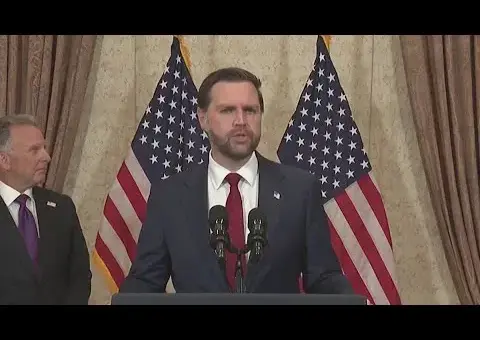
US-Iran Nuclear Talks Collapse, Raising Regional Tensions
High-level U.S.-Iran nuclear talks have collapsed due to significant differences on key issues, leaving diplomatic channels strained. Both sides remain prepared for military action, while the security of the Strait of Hormuz remains a critical concern for global energy markets.


US-Iran Peace Talks Collapse: What’s Next for Global Stability?
Peace talks between the United States and Iran have collapsed in Islamabad, with both sides blaming each other for the failure. Key sticking points included Iran's nuclear program and the ongoing blockade of the Strait of Hormuz, raising fears of renewed conflict and continued global economic disruption.