Heisenberg’s 1925 Quantum Leap Still Puzzles
In 1925, Werner Heisenberg's groundbreaking work laid the foundation for quantum mechanics, a theory that revolutionized physics but whose fundamental implications remain a profound mystery 100 years later. This exploration delves into the birth of this strange new physics.

Quantum Mechanics at 100: A Revolution That Defies Explanation
As the international year of quantum science and technology draws to a close, we reflect on a monumental shift in our understanding of reality that occurred exactly a century ago. In 1925, quantum mechanics transformed from a collection of peculiar experimental observations into a robust theoretical framework, fundamentally altering our perception of the universe. This year marks the centenary of that profound intellectual revolution, a testament to the enduring strangeness and power of quantum theory.
The Pre-Quantum World: Determinism Reigns Supreme
Before 1925, the scientific landscape was dominated by the towering achievements of Albert Einstein. His general theory of relativity, published in 1915, had overthrown the centuries-old Newtonian mechanics. While revolutionary, Einstein’s theories largely reinforced a deterministic worldview. In the Newtonian paradigm, the universe was seen as a colossal, predictable machine. If one knew the precise state of all particles at a given moment, the entire past and future could, in principle, be calculated. Einstein’s relativity, though it redefined space, time, and gravity into a dynamic, interconnected spacetime, maintained this fundamental determinism. The equations of general relativity allowed for no uncertainty; the distribution of matter and energy perfectly dictated the geometry of spacetime, which in turn dictated the motion of all matter and energy, ad infinitum.
Despite this overarching determinism, a few nagging inconsistencies remained, such as the anomalous orbit of Mercury and certain aspects of electromagnetism. Yet, the prevailing belief was in a self-consistent, knowable universe. Einstein’s genius lay in leveraging these minor glitches into a grand new theory. However, even with the introduction of relativity’s subjective simultaneity and the concept of a ‘block universe’ where past, present, and future are equally real, the universe remained, at its core, measurable and predictable, albeit dependent on the observer’s perspective.
The Atomic Enigma: Bohr, de Broglie, and the Electron’s Dance
The early 20th century, however, was captivated by a different, smaller-scale mystery: the atom. Experiments had revealed a dense nucleus, surrounded by electrons. Early models, like the Rutherford model, depicted electrons orbiting the nucleus like planets around a sun. But this picture raised critical questions. Why were only specific electron orbits allowed? And why didn’t these electrons, according to classical physics, spiral into the nucleus, radiating away their energy?
Tentative steps were made to unravel this atomic puzzle. Niels Bohr, building on Max Planck’s and Einstein’s work on energy quantization, proposed a model where electrons occupied discrete energy levels, jumping between them by absorbing or emitting specific amounts of energy. Louis de Broglie later hypothesized that all matter, including electrons, possessed wave-like properties. Bohr then ingeniously connected these ideas, suggesting that allowed electron orbits corresponded to standing waves, where an integer number of wavelengths fit perfectly around the nucleus. While this explained the quantization of electron orbits, it primarily worked only for the simplest atom: hydrogen.
Heisenberg’s Breakthrough: Embracing the Unobservable
It was in this fertile ground of unanswered questions that a young Werner Heisenberg, then just 20 years old, began his groundbreaking work. Tasked by his mentor Arnold Sommerfeld to explain the anomalous Zeeman effect (distortions in hydrogen energy levels in strong magnetic fields), Heisenberg, unburdened by the established dogma of his time, experimented with mathematical forms involving half-integers, rather than the expected whole numbers. This unconventional approach yielded a crucial insight into the electron’s quantum spin.
By 1925, Heisenberg, studying under Max Born and closely collaborating with Niels Bohr, sought to push the boundaries further. Inspired by Einstein’s principle of rejecting unfounded assumptions, Heisenberg resolved to build a theory based *only* on observable quantities. He realized that the concept of an electron’s precise orbit within an atom was not directly observable. What *is* observable is the light (photons) emitted when an electron transitions between energy states, along with the frequency and intensity of that light.
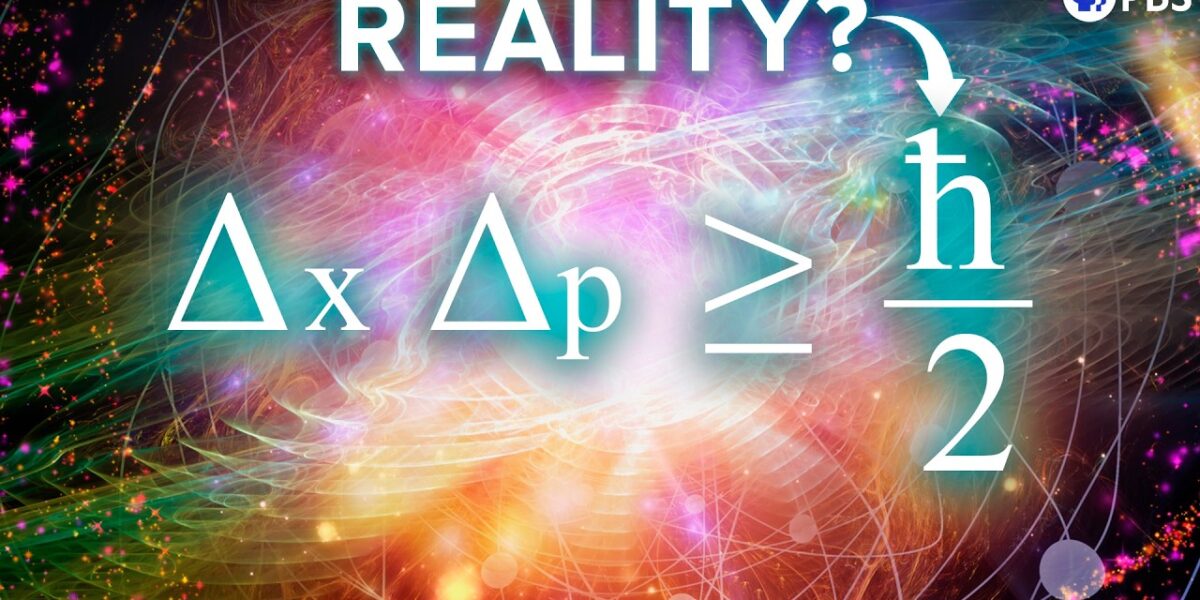
Heisenberg’s radical idea was to construct a mathematical framework that described these observable transitions, rather than trying to model the unobservable internal states of the atom. This led him to develop a system of mathematics that, unbeknownst to him at the time, was matrix algebra. He discovered that in this system, the order of operations mattered: A multiplied by B was not necessarily equal to B multiplied by A. This non-commutativity became a cornerstone of quantum mechanics and directly led to Heisenberg’s most famous contribution: the uncertainty principle.
Helgoland’s Revelation and the Birth of Matrix Mechanics
Working intensely, often in seclusion, Heisenberg sought to ensure his new theory adhered to fundamental principles like energy conservation. In May 1925, suffering from severe hay fever, he retreated to the barren island of Helgoland in the North Sea. There, amidst the rugged cliffs, he spent ten days calculating pages of matrices. On the night of June 9th, 1925, he achieved a breakthrough. He later recounted the profound moment: “The energy principle had held… I had the feeling that, through the surface of atomic phenomena, I was looking at a strangely beautiful interior, and felt almost giddy at the thought that I now had to probe this wealth of mathematical structures nature had so generously spread out before me.”
Upon returning to Göttingen, his work, recognized by Max Born as matrix algebra, was further developed with collaborators like Pascual Jordan and later refined by Wolfgang Pauli and Paul Dirac. This formulation, known as matrix mechanics, was the first complete theory of quantum mechanics. However, its abstract nature and departure from intuitive classical physics made it a challenging concept for many physicists to embrace.
Schrödinger’s Wave Mechanics: A More Intuitive Approach
While Heisenberg’s matrix mechanics laid the foundation, Erwin Schrödinger, working in parallel during a Christmas holiday in the Swiss Alps, developed an alternative formulation based on de Broglie’s wave nature of matter. By adapting classical wave equations, Schrödinger formulated the famous Schrödinger equation. Published in early 1926, wave mechanics proved to be more immediately accessible and intuitive than matrix mechanics, largely due to its familiar wave imagery. It seemed to offer a more tangible picture of what was happening within the atom.
Schrödinger’s wave mechanics described the evolution of a ‘wavefunction.’ However, the exact nature of this wavefunction remained a subject of debate. Max Born proposed that the wavefunction represented probability amplitudes, the square of which yielded the probability of observing a particle in a certain state. This probabilistic interpretation, while mathematically sound, troubled Schrödinger himself, who famously stated, “I don’t like it, and I’m sorry I ever had anything to do with it.” The wave picture, despite its apparent realism, ultimately revealed the same fundamental unpredictability as matrix mechanics.
Unification and Enduring Mystery
By 1927, Paul Dirac demonstrated the mathematical equivalence of Heisenberg’s matrix mechanics and Schrödinger’s wave mechanics, showing they were two different representations of the same underlying quantum reality. While wave mechanics offered a more intuitive starting point, matrix mechanics proved more robust, being perfectly consistent with Einstein’s special relativity, a feat that Schrödinger’s initial equation did not achieve due to its treatment of time and space. Heisenberg’s focus on observables ultimately paved the way for quantum field theory and the Standard Model of particle physics.
A century after Heisenberg’s pivotal work, quantum mechanics underpins much of our modern technology, from smartphones and satellites to advanced materials and nuclear power. Yet, the profound philosophical implications of quantum theory continue to puzzle us. The deterministic, observer-independent universe envisioned by Newton and Einstein has been replaced by a reality that, at its most fundamental level, appears probabilistic and intrinsically linked to the act of observation. As Heisenberg himself noted, “What we observe is not nature itself but nature exposed to our method of questioning.” The quantum revolution of 1925, while unlocking unprecedented technological advancements, also opened a Pandora’s Box of questions about the nature of reality, existence, and our ability to truly comprehend the universe we inhabit. The journey into the quantum realm, initiated a century ago, continues to inspire both profound insight and deep, enduring mystery.
Source: Heisenberg Made a Discovery in 1925. We Still Can't Explain It (YouTube)

Related Articles


Dirac’s Equation: The Accidental Discovery of Antimatter
In 1928, Paul Dirac's relativistic electron equation unexpectedly predicted the existence of antimatter. Initially met with skepticism, the discovery of the positron in 1932 confirmed this groundbreaking concept, revolutionizing our understanding of the universe.


Spinning Wonders: Unraveling Gyroscopic Precision’s Mysteries
An experimental approach using analogies to linear momentum helps demystify the counterintuitive behavior of spinning objects known as gyroscopic precision. This phenomenon, where a spinning object reacts to force at a 90-degree angle, is crucial for understanding everything from frisbees to spacecraft.


Quantum Entanglement Defies Speed of Light Limit
Einstein's critique of quantum mechanics led to the EPR paradox, suggesting faster-than-light correlations. Bell's theorem and subsequent experiments confirmed this apparent non-locality, challenging our understanding of reality.