Hegseth’s War Rhetoric: A Confusing Defense of Policy
Pete Hegseth's tense exchange with a reporter reveals a struggle to articulate U.S. foreign policy objectives. His defense of 'finishing' a war, rather than starting one, is met with skepticism regarding current outcomes and past actions.

Hegseth’s War Rhetoric: A Confusing Defense of Policy
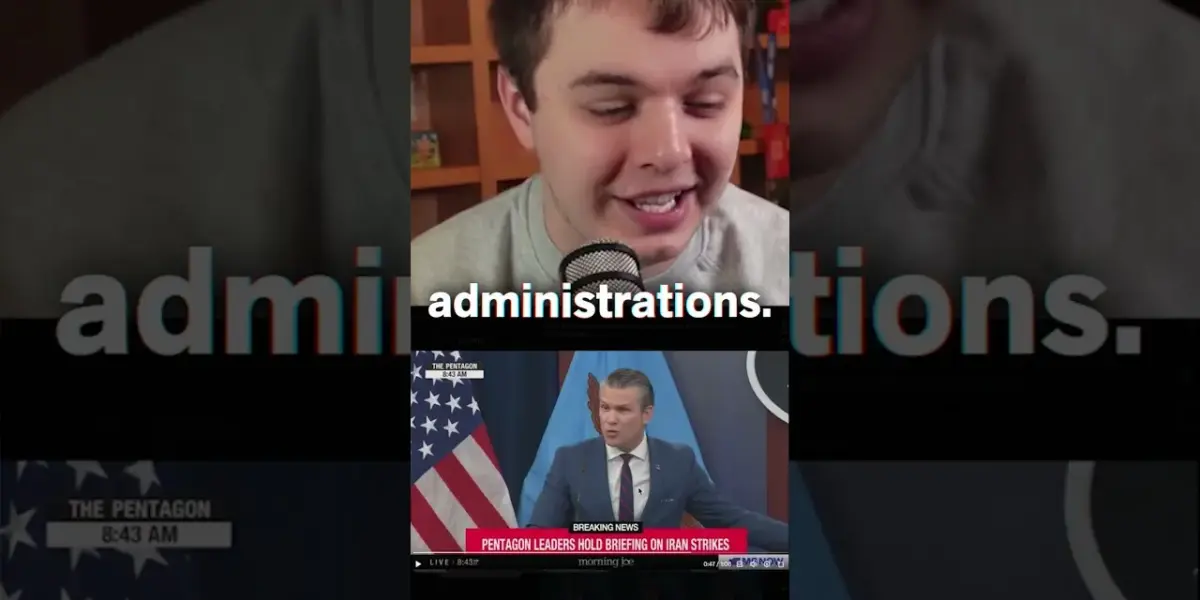
In a recent exchange that has sparked considerable debate, Pete Hegseth found himself in a tense confrontation with a reporter over the United States’ involvement in ongoing conflicts. The core of the disagreement lies in Hegseth’s assertion that the current administration is “finishing” a war, not starting one, a claim met with skepticism and pointed questions from the journalist. This interaction, captured and shared widely, highlights a broader struggle to articulate clear objectives and justify military actions in a complex geopolitical landscape.
The Reporter’s Challenge
The exchange began with a direct question about the potential for the conflict to “spiral into a longer war.” Hegseth’s initial response was to question whether the reporter had heard his previous remarks, implying that the answer was already provided. He stated, “I mean, we’re ensuring the mission gets accomplished, but we are very cleareyed as the president has been, unlike other presidents uh about the foolish policies of the past that recklessly pulled us in to things that were not tethered to actual clear objectives.” This framing immediately seeks to differentiate the current administration’s approach from that of its predecessors, painting past decisions as impulsive and lacking strategic foresight.
The reporter, however, was not satisfied. They pressed further, directly challenging Hegseth’s assertion that the current administration did not start the war. The reporter pointed to the loss of four U.S. service members, the killing of individuals deemed “next best candidates to help the country move forward,” and the involvement of three U.S. fighter jets in friendly fire incidents. These specific, grim details served as a counterpoint to Hegseth’s more abstract defense, suggesting that the current actions, regardless of their origin, have led to significant negative consequences.
Hegseth’s Defense and the “Finishing” Narrative
Hegseth’s response, as interpreted by the video’s narrator, was to “blatantly patronize the reporter” and reiterate the administration’s stance. The key phrase that emerged was: “We didn’t start this war, but under President Trump, we are finishing it.” This is a critical distinction Hegseth attempts to draw. The implication is that the current conflict is a legacy issue, inherited and being managed, rather than initiated. The narrative of “finishing” a war suggests a focus on resolution and withdrawal, a stark contrast to the idea of escalating or prolonging engagement.
The mention of having “plans, generals, chairmans, commanders, sentcom commanders, admiral” was presented by Hegseth as evidence of a competent and prepared military leadership. However, the reporter’s sarcastic retort, “Oh, good. You have plans and generals. You’re so different than the prior administrations,” underscores the skepticism. The implication here is that having plans and generals is a baseline expectation for any military operation, and not necessarily a sign of unique or superior strategy, especially when coupled with negative outcomes.
Analysis of the Exchange
The exchange, while brief, encapsulates a common tension in political discourse surrounding foreign policy and military intervention. On one hand, Hegseth attempts to position the administration as pragmatic and strategic, learning from the “foolish policies of the past.” This approach aims to reassure the public that current actions are deliberate and aimed at achieving specific, achievable goals, unlike what he suggests were the unfocused interventions of previous administrations.
On the other hand, the reporter’s line of questioning highlights the difficulty in separating current actions from their immediate consequences. The loss of life, friendly fire incidents, and the killing of key individuals are tangible realities that challenge any narrative of control or successful management. The reporter’s frustration, articulated as “Anybody who heard your remarks is going to leave more confused, not understand what the hell you’re saying,” points to a communication breakdown. The core issue seems to be the disconnect between the administration’s stated intentions and the on-the-ground realities and perceived failures.
Historical Context of War Justification
Discussions around the origins and justifications of wars are as old as warfare itself. Historically, administrations have often sought to frame their military engagements in terms of necessity, self-defense, or the advancement of vital national interests. The language of “finishing” a war, as employed by Hegseth, can be seen as a rhetorical strategy to distance the current leadership from the initiation of hostilities while still asserting control and responsibility for the outcome.
This strategy is not new. Leaders have frequently inherited conflicts and framed their involvement as an effort to bring them to a responsible conclusion, often criticizing the decisions of their predecessors. The challenge lies in convincing the public and international observers that the current approach is indeed leading towards a positive resolution, especially when faced with evidence of setbacks and casualties. The reference to “foolish policies of the past” is a classic political tactic to create an “us vs. them” dynamic, where “us” is the rational, competent actor and “them” is the impulsive, misguided one.
Why This Matters
This interaction is significant because it underscores the critical need for clarity and accountability in foreign policy. When military actions are undertaken, especially those involving significant human and financial costs, the public has a right to understand the objectives, the strategy, and the rationale. Hegseth’s attempt to pivot to past mistakes, while a common political maneuver, does little to address the immediate concerns raised by the reporter about current failures and the potential for escalation.
The effectiveness of any foreign policy hinges not only on its strategic soundness but also on its public perception and communication. A narrative that is perceived as confusing, evasive, or dismissive of negative outcomes risks eroding public trust and support. The reporter’s pointed questions, though perhaps unwelcome, serve as a vital check, demanding concrete answers and acknowledging the gravity of the situation.
Implications, Trends, and Future Outlook
The trend towards increasingly complex and protracted conflicts, often involving non-state actors and asymmetric warfare, makes clear communication and well-defined objectives more crucial than ever. Administrations face the dual challenge of navigating these intricate environments while simultaneously managing domestic political pressures and public opinion.
The “finishing the war” narrative, if not backed by demonstrable progress and a clear exit strategy, can quickly lose its potency. The future outlook suggests that a more transparent approach, one that openly acknowledges challenges and provides tangible evidence of progress towards defined goals, will be more effective in building and maintaining support for prolonged or complex military engagements. The reliance on historical criticism as a primary defense is unlikely to be sustainable in the long run, especially when current events present their own set of difficult questions.
Ultimately, the exchange between Hegseth and the reporter serves as a microcosm of the broader challenges in communicating foreign policy. It highlights the tension between strategic messaging and the often harsh realities of conflict, and the enduring importance of journalistic inquiry in holding power accountable.
Source: Pete Hegseth Snaps At Reporter #politics #fyp #new (YouTube)

Related Articles


Drapes Over Diplomacy: Trump’s Priorities Under Fire
Donald Trump's focus on drapes and building aesthetics over the human cost of military action against Iran has drawn sharp criticism. The lack of a consistent narrative from his administration regarding foreign policy raises concerns about leadership priorities and accountability.
Pentagon Hints at Iran Ground Troops: ‘Go As Far As We Need’
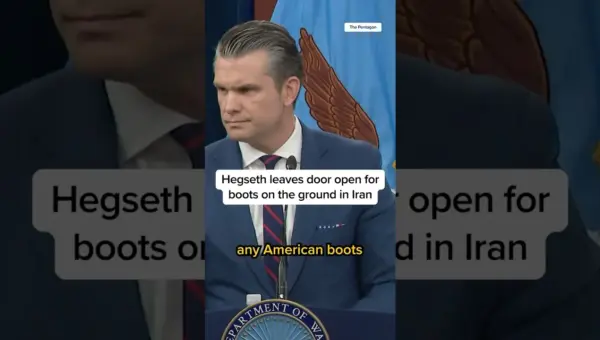
Defense Secretary Pete Hegseth has refused to rule out deploying U.S. ground troops into Iran, stating "We'll go as far as we need to go." The ambiguous comment from the Pentagon raises concerns about potential military escalation in the volatile Middle East region.
Dem Rep: Trump Ignores Congress on Iran War
Democratic Congressman Gregory Meeks criticizes President Trump's unilateral approach to the military conflict in Iran, demanding transparency and adherence to congressional oversight. Meeks questions the administration's unclear objectives and draws parallels to past failed military interventions.