Harvard Professor Challenges NASA on Mars Object
Harvard Professor Avi Loeb is questioning NASA's explanation of a 'party hat'-shaped object on Mars. While NASA calls it a natural rock, Loeb believes it warrants further investigation and highlights the importance of curiosity-driven science.

Harvard Professor Challenges NASA on Mars Object
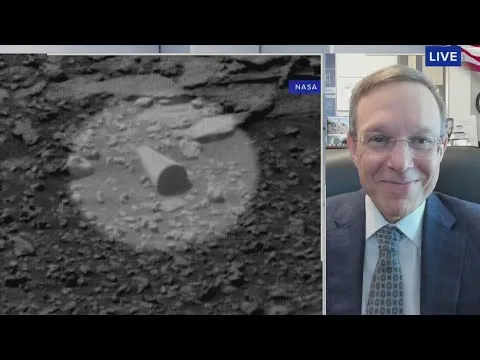
A recent image from NASA’s Curiosity rover on Mars has sparked debate among scientists. The photo shows a peculiar object with a cylindrical shape, resembling a party hat. While NASA states it is a natural rock formation, Harvard Professor Avi Loeb suggests otherwise. He believes the object warrants further investigation, questioning the agency’s quick conclusion.
Loeb’s Arguments for Further Study
Professor Loeb points out that the object’s appearance is unlike anything else found in its Martian environment. He notes its smooth, cylindrical shape and suggests it doesn’t look like typical rock formations. Loeb argues that if it were a natural rock, there should be similar examples nearby. He believes the burden of proof lies with NASA to show it is indeed a naturally occurring rock.
Loeb also draws a connection to the Curiosity rover’s very name, which implies a drive for exploration and discovery. He feels that dismissing unusual findings too quickly goes against this spirit. He suggests the rover could return to the location to gather more data or that another mission could be tasked with examining the object more closely.
NASA’s Stance and Potential Motivations
NASA’s explanation that the object is a natural rock formation is based on their analysis of the images. The agency has not provided further details on why they believe it is natural, other than its appearance in the context of the surrounding landscape.
Professor Loeb speculates that NASA might be hesitant to label the object as anything other than natural to avoid potential errors. He suggests that the agency is trying to protect its reputation by taking fewer risks. However, Loeb believes this cautious approach might hinder true scientific discovery, which he argues should be driven by curiosity.
Broader Context: Artemis Missions and the Search for Life
The discussion about the Mars object comes at a time when NASA is focused on its Artemis missions. These missions aim to establish a lunar base and eventually pave the way for human missions to Mars. The search for life beyond Earth is a significant part of these long-term goals.
Loeb connects this event to a broader discussion about humanity’s place in the universe. He highlights the question of whether we are alone and emphasizes the importance of exploring such mysteries. He also mentions a recent directive from President Trump to declassify information about Unidentified Aerial Phenomena (UAP), suggesting a potential shift towards greater transparency regarding unusual observations.
Future Scenarios and the Path Forward
When asked if NASA could eventually send a crew to Mars to investigate the object, Professor Loeb expressed doubt. He believes that if NASA lacks enthusiasm for checking unusual findings with current resources, it’s unlikely they would prioritize such a mission in the future. He hopes that new leadership at NASA might bring a renewed spirit of curiosity and exploration.
Loeb’s perspective is that science should be a learning process driven by evidence. He encourages approaching such mysteries with an open mind, similar to how children explore the world. He believes that investigating objects like the one on Mars could lead to profound discoveries about potential extraterrestrial intelligence and our understanding of the cosmos.
Global Impact
This debate touches upon fundamental questions about scientific inquiry and the exploration of space. NASA’s conclusions are often seen as definitive, but Professor Loeb’s challenge highlights the importance of questioning and seeking further evidence. If the object were proven to be artificial, it would have profound implications for humanity’s understanding of life in the universe and our place within it. The scientific community’s response to such findings will shape future exploration strategies and public perception of space science.
Source: Avi Loeb questions NASA's explanation of 'party hat'-shaped object on Mars | NewsNation Live (YouTube)

Related Articles

US Reclaims Moon Lead, Igniting New Space Race
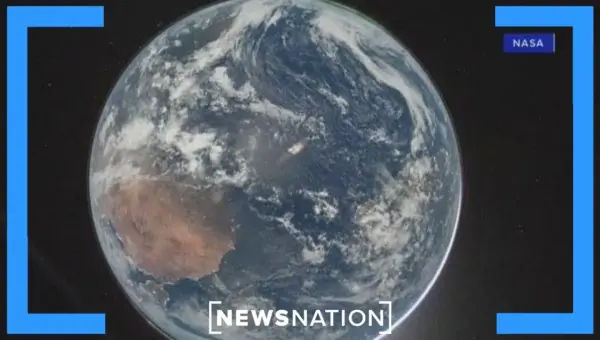
The Artemis II mission marks humanity's return to the Moon's vicinity after 50 years, showcasing stunning Earth views and global participation through the "Send Your Name to Space" campaign. This journey reignites US lunar ambitions, potentially sparking new international cooperation or competition in space exploration.

Astronauts Head to Moon Amidst Divided Nation
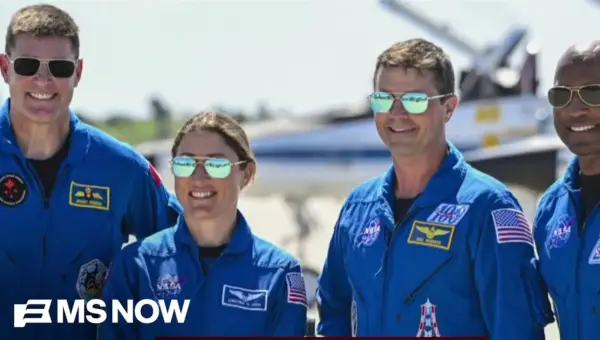
The Artemis II mission has launched, sending four astronauts towards the Moon in a journey that highlights both humanity's drive for exploration and the current divisions within society. While the launch captured global attention, it also sparked conversations about how fragmented media impacts shared national experiences.

Artemis II Fuels New Space Race Era
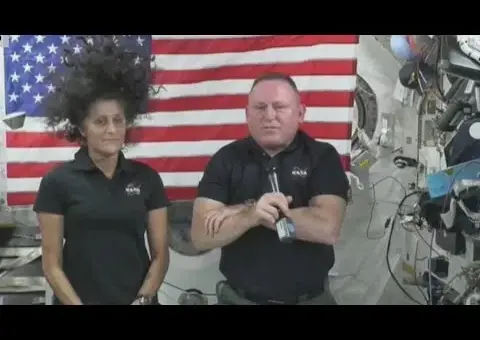
NASA's Artemis II mission, sending astronauts beyond the Moon for the first time in 50 years, signals a new era of space exploration. Astronaut Butch Wilmore's insights from past challenges and the mission's pristine progress highlight renewed ambition amidst global space competition. This journey is poised to reshape international relations and technological leadership.