Gulf States Shift Against Iran, Analysts Say
Key Gulf Arab nations, including Saudi Arabia, are shifting their stance and leaning towards joining the U.S. and Israel in confronting Iran. This significant change is largely attributed to Iran's recent missile strikes on civilian targets, altering regional alliances.

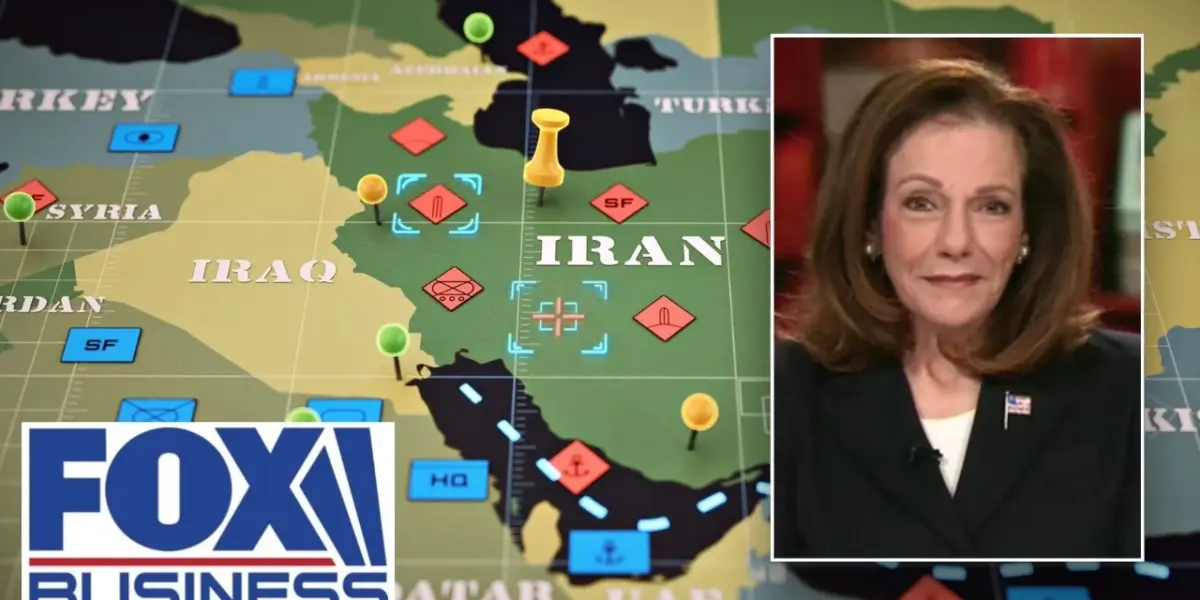
Gulf States Pivot Toward U.S. Against Iran
Recent events in the Middle East have dramatically reshaped regional alliances, with key Gulf Arab nations like Saudi Arabia moving closer to the United States and Israel in a united front against Iran. This significant shift, largely driven by Iran’s own actions, marks a major change in the region’s long-standing political dynamics.
Historically, these Gulf states have been hesitant to openly criticize or confront Iran. They often preferred to address their concerns privately with the U.S., asking American forces to handle the situation while maintaining a public stance of neutrality. However, Iran’s recent missile strikes changed this calculus.
Instead of targeting military sites, Iran’s missiles struck civilian areas, including hotels in Dubai. This move prompted a strong reaction from the Gulf Arab countries. They collectively decided that Iran’s actions crossed a line, leading them to publicly criticize Iran and consider joining the fight alongside the U.S. and Israel.
Saudi Arabia on the Brink of Joining the Conflict
The potential involvement of Saudi Arabia is particularly noteworthy. A year ago, the idea of Saudi Arabia fighting alongside the U.S. and Israel against Iran seemed improbable. Yet, the current situation has led to this unexpected alignment, altering the strategic map of the Middle East.
These nations have made substantial investments in American military equipment, including advanced aircraft, bombers, and fighter jets. They possess the necessary hardware to engage in military operations. Furthermore, many of them have already been supporting U.S. efforts by allowing American planes to fly over their territory and by hosting U.S. military bases.
This level of cooperation was not possible just five or ten years ago. The question now is how offensive these operations will become. Analysts point to Iran’s miscalculations as the primary driver behind this escalation. Iran may have believed that by bombing these areas, they could pressure the U.S. to withdraw from the conflict, but the opposite has occurred.
U.S. Strategy: A ‘Venezuelan Model’ for Iran?
The White House is reportedly considering a strategy for Iran that resembles what is sometimes called a ‘Venezuelan model.’ This approach focuses on supporting potential opposition figures within Iran, rather than direct military intervention or occupation.
One individual mentioned is Mohammad Bagher Ghalibaf, the Speaker of Iran’s Parliament. Ghalibaf has a background in Iran’s Islamic Revolutionary Guard Corps (IRGC), which includes its defense industrial complex. While some express caution due to his past, others see him as a potential figure who could negotiate with the U.S.
Unofficial contacts are being made with mid-level officials in Iran. The U.S. strategy appears to be identifying individuals who could potentially work with the United States. President Trump has emphasized that the U.S. does not seek to send troops to Iran, occupy the country, or necessarily impose regime change. Instead, the goal is to find leaders who will cooperate with the U.S. on key issues like maritime security, preventing nuclear proliferation, and stopping proxy wars.
Naval Deployments and Strategic Options
The departure of the USS Gerald R. Ford aircraft carrier from the Middle East has drawn attention, leaving only one carrier in the region. However, officials suggest not to overemphasize this move. The USS Ford had been at sea for an extended period, approximately nine to ten months, and requires refitting and repairs. Sailors on board need a break and time for maintenance.
Meanwhile, another aircraft carrier, the USS Bush, is en route to the region. More significantly, two vessels carrying U.S. Marines, the USS Tripoli and another unnamed ship, are scheduled to arrive soon. These deployments are expected to provide the U.S. with enhanced options in the region.
These reinforcements are not indicative of an invasion or occupation. They are intended to provide the U.S. with the flexibility to conduct specific operations if needed. For example, if the U.S. decides to take control of strategic locations like Kharg Island, these additional assets would be crucial.
Market Impact
The shifting alliances and potential for increased conflict in the Middle East can create market volatility. Energy prices, particularly oil, are sensitive to geopolitical tensions in this oil-rich region. Any escalation or de-escalation of conflict can lead to significant price swings.
Investors should monitor developments closely. The involvement of major oil-producing nations like Saudi Arabia in any conflict could disrupt global oil supply chains, impacting economies worldwide. Defense industry stocks may also see increased interest as geopolitical tensions rise.
What Investors Should Know
- Geopolitical Risk: The Middle East remains a critical region for global energy supply. Increased tensions or conflict can lead to higher oil prices and broader market instability.
- Shifting Alliances: The alignment of Gulf Arab states with the U.S. and Israel against Iran is a major geopolitical development. This could lead to prolonged regional instability or a new balance of power.
- Energy Markets: Oil prices are highly susceptible to events in the Middle East. Investors should be aware of how supply disruptions or the threat of them can affect energy markets.
- Defense Sector: Companies involved in defense manufacturing may benefit from increased military spending or heightened geopolitical tensions.
Source: Iran war has 'changed the constellation' in the Middle East: KT McFarland (YouTube)

Related Articles
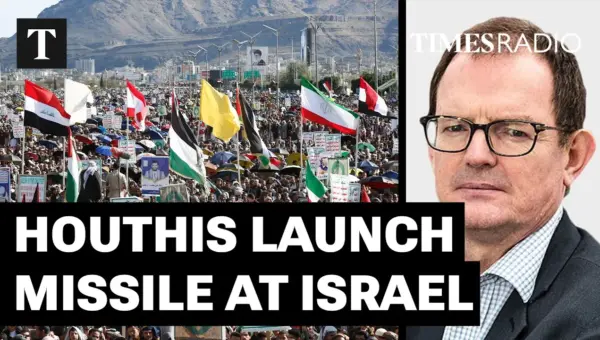
Houthis Fire Missile at Israel, Iran’s Guard Takes Center Stage
Yemen's Houthi group has fired a missile at Israel, signaling a potential escalation of the regional conflict. Meanwhile, Iran's powerful Islamic Revolutionary Guard Corps (IRGC) appears to be consolidating its control over the country's leadership following reported strikes. This shift places hardline figures at the forefront of decision-making.


Stocks Ignore War Risks, Focus on “Taco Moments”
Stock markets appear to be overlooking the severe supply chain risks stemming from the Iran conflict, focusing instead on potential diplomatic de-escalations. While the S&P 500 shows resilience, bond and commodity markets signal deep concern over disruptions to critical resources like LNG, helium, and fertilizers.

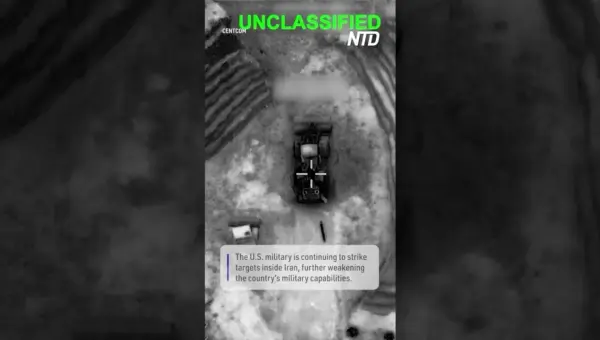
US Strikes Cripple Iran’s Military Might, CENTCOM Reports
U.S. Central Command reports ongoing strikes inside Iran are significantly weakening its military power. This direct action aims to reshape regional security dynamics, but carries risks of escalation. The long-term impact depends on Iran's response and ability to adapt.