Gulf States Must Act Amid US-Iran Uncertainty, Expert Urges
Gulf states must take a more active role in shaping regional security due to unclear US objectives regarding Iran, argues historian Bader Al-Saif. He stresses the need for comprehensive negotiations involving all regional players and warns against the chaotic consequences of regime change.

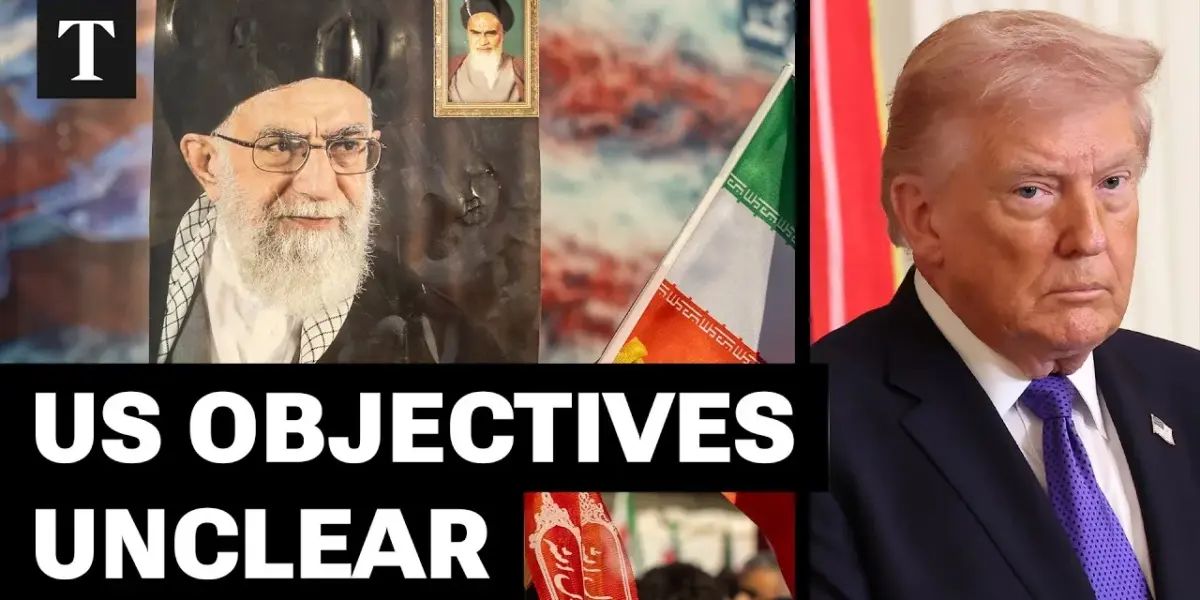
Gulf States Must Take Reins Amid Unclear US Objectives on Iran
In a volatile geopolitical climate, Gulf states must proactively shape their own security and regional outcomes, as uncertainty surrounds the United States’ objectives regarding Iran. This call to action comes from Bader Al-Saif, a professor of history at Kuwait University and an associate fellow at Chatham House, who argues that a clear, unified strategy is lacking, leaving regional stability at risk.
Regional Instability and the Specter of Escalation
The current situation in the Persian Gulf is fraught with tension, exacerbated by a perceived lack of clarity in the objectives of major international players, particularly the United States and Israel, in their dealings with Iran. Al-Saif highlights that while regime change in Iran might be an aspiration for some, the potential consequences could be chaotic and far-reaching, impacting neighboring countries and beyond.
“It doesn’t seem that the decapitation of certain individuals including the Supreme Leader will lead to the end of this regime,” Al-Saif stated, cautioning against a strategy that could unleash unpredictable instability. “And I am not sure if I mean the call is for regime change by Israel and and sometimes by the US but you’re going to get a chaotic uh result and that will not be contained within Iran. It will touch the neighbors and beyond.”
The United Kingdom, while not involved in initial strikes by the US and Israel, has agreed to the use of its military bases for defensive strikes against Iranian missile sites, aiming to protect Gulf states. However, Prime Minister Rishi Sunak emphasized the UK’s commitment to a negotiated settlement, stating, “But it is my duty to judge what is in Britain’s national interest. That is what I’ve done and I stand by it.” This reflects a divergence in approach, underscoring the need for regional actors to forge their own paths.
Kuwait’s Measured Response Amidst Rising Tensions
Speaking from Kuwait City, Al-Saif described the atmosphere as “quiet and measured,” with the government implementing proactive measures to manage the crisis. These include reducing government office capacity, shifting to online education, and transparently communicating about food and water stockpiling, as well as reporting on casualties. Tragically, Kuwait has reported a death as a result of one of the strikes originating from Iran, highlighting the direct impact of the escalating conflict on its citizens.
“Unfortunately, we just had heard of one death, another death today in Kuwait as a result of one of the strikes from Iran,” Al-Saif reported. “It was a sailor, wasn’t it? I think who was killed during an operation.” This grim reality underscores the urgency for de-escalation and a return to diplomatic solutions.
The Need for a Unified Diplomatic Front
Al-Saif stressed the critical need for a return to the negotiating table, emphasizing that the conflict cannot be resolved on the battlefield. He asserted that negotiations must be comprehensive, involving not only the US and Iran but also Israel, due to divergent objectives. While the US has presented various objectives, from blocking nuclear ambitions to curbing missile capacities and proxy activities, Israel has long been seen as pursuing regime change.
“I think everything is up for negotiation and it needs to not only involve the US and Iran, but frankly to also involve Israel because the the objectives are not clearly aligned between the US and Israel, even though it seems to be the case, but that’s not really the case,” Al-Saif explained. “We’ve known for the longest time that Israel has had regime change in mind and this was the opportunity given to them to focus on this objective.”
The fluctuating and sometimes contradictory messaging from the US, including President Trump’s evolving stance on regime change, further contributes to the confusion and uncertainty. “So there is in there from US side,” Al-Saif noted, referring to the varied objectives being articulated.
Gulf States Must Assert Agency
Given the ambiguity in international objectives, Al-Saif urged Gulf states to “take matters into our own hands” and actively influence regional outcomes. He advocated for a diplomatic approach, even with a difficult neighbor like Iran, emphasizing the importance of maintaining composure and seeking a way forward.
“This regime has been around for 47 years. It’s the business of the Iranian people to decide who they want there,” Al-Saif stated, suggesting that external powers should not dictate Iran’s internal political structure.
He acknowledged that Iran’s actions, such as attacks on Gulf states, might be an attempt to pressure regional actors into influencing the US to return to negotiations. However, he cautioned that such tactics are unlikely to yield the desired results. “But I think they need to understand that they they’re trying to raise the ante to apply pressure and they’re not going to be able to get results that way.”
Al-Saif also pointed out that decades of American security guarantees have not always delivered, citing past attacks on Saudi oil installations and Abu Dhabi airport as examples. This historical context reinforces the need for Gulf states to bolster their own defensive capabilities.
The Strait of Hormuz: A Critical Flashpoint
The recent news of Iran closing the Strait of Hormuz, a vital oil export route, represents a significant escalation. Al-Saif described this as one of the worst-case scenarios, noting that such a move impacts Iran as much as it does the Arab Gulf states and the international community.
“This is one of the worst case scenarios that was in place when when the you know scenario planning was designed for war in there that they would limit or close off the straight of hormones which by the way impacts them as much as it impacts the other side of the Gulf, the Arab Gulf states and the international community. This is something that will increase the escalation until they can find a way forward to avoid those navigation issues.”
He drew parallels to the Houthi actions in the Bab el-Mandeb strait, but emphasized the far greater global economic implications of disrupting the Strait of Hormuz, through which a significant portion of global oil passes.
Diplomatic Efforts and Missed Opportunities
Al-Saif suggested that Gulf states have, in the past, successfully de-escalated potential conflicts. He recalled instances, such as in January, where Saudi Arabia and Oman reportedly influenced the US to delay military action.
He also raised concerns about the US withdrawal from negotiations, suggesting that Iran had been willing to make significant concessions, even potentially halting enrichment altogether, a position that went beyond the terms of the Joint Comprehensive Plan of Action (JCPOA).
“According to the Omani foreign minister’s latest interview, he said that the Iranians were ready to let go of enrichment altogether where there would be no stockpiling in their own country,” Al-Saif revealed. “So to get to that position is something that we didn’t even see during the JCPOA discussions in 2014 2015 after they were signed.”
Al-Saif advocated for a holistic approach to Iran, which should include addressing its missile arsenal and proxy activities, while also considering Israel’s regional role and its own nuclear capabilities. He lamented that such comprehensive discussions have not been the focus of recent diplomatic efforts.
Looking Ahead: The Imperative for Dialogue
The current trajectory suggests a dangerous escalation if diplomatic channels are not actively pursued and strengthened. The onus is on all parties, particularly the US and Iran, to return to meaningful dialogue. Gulf states, while enhancing their own defenses, must continue to advocate for de-escalation and find avenues for constructive engagement. The potential for regional conflict remains high, making sustained diplomatic efforts and a clear, unified strategy not just desirable, but essential for peace and stability.
Source: Iran: US Objectives Unclear, So Gulf States Must Take Matters Into Their ‘Own Hands’ | Bader Al-Saif (YouTube)

Related Articles
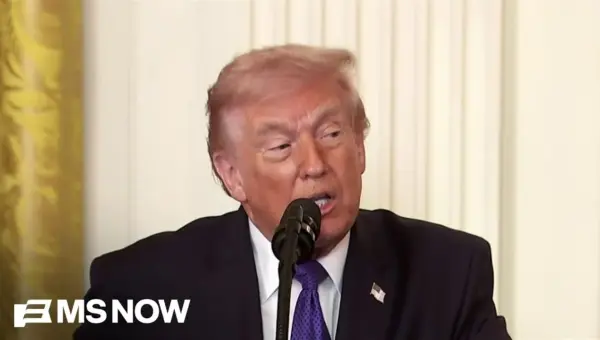
Conflicting Messages Emerge on Iran Conflict Goals, Duration
The Trump administration is facing scrutiny over conflicting messages regarding the ongoing conflict with Iran. Varying timelines for the duration of operations and divergent stated objectives, from destroying missile capabilities to regime change, are creating confusion. The human cost is also rising, with six U.S. service members killed in action.

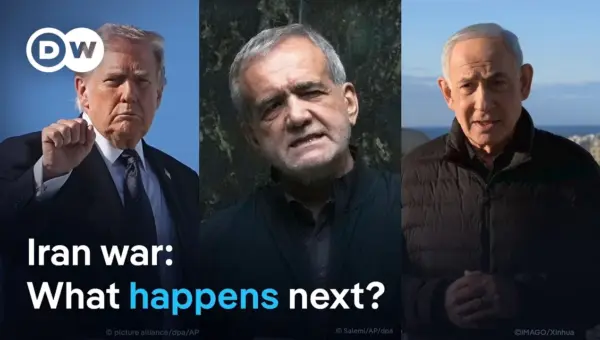
Iran, US, Israel: Analyzing Goals Amidst Escalating Middle East Conflict
As the Middle East teeters on the brink of wider conflict, this analysis delves into the strategic goals and limitations of Iran, the US, and Israel. Iran prioritizes regime survival amidst leadership losses, employing a strategy of attrition through missiles and drones. The US faces unclear objectives and domestic constraints, while Israel focuses on neutralizing Iranian threats and preventing nuclearization.

US Strikes Iran to Neutralize Missile Threat, Official Says
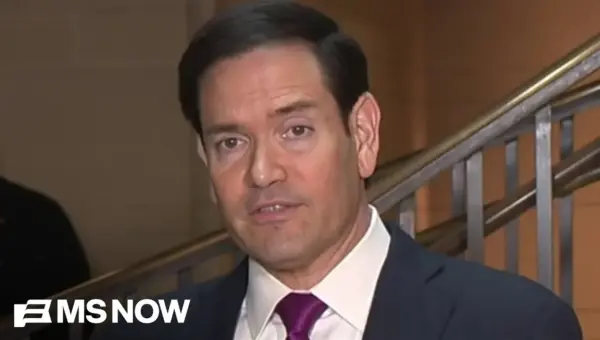
U.S. Secretary of State Marco Rubio confirmed a proactive military operation against Iran, aimed at dismantling its ballistic missile capabilities. The strike was deemed necessary to prevent Iran from acquiring the power to threaten global security, with officials emphasizing a defensive posture to avert future escalation and casualties.