Grok 4.20 Agents: A New Era for AI Reasoning
Grok 4.20 beta introduces a groundbreaking multi-agent system, moving beyond single AI models to a collaborative framework of specialized agents. This system enhances reasoning capabilities and accuracy, particularly for complex and open-ended questions. Access requires a premium subscription, and users are advised to be mindful of computational limits.

Grok 4.20 Agents: A New Era for AI Reasoning
The artificial intelligence landscape is constantly evolving, with new models and capabilities emerging at a rapid pace. Among the latest significant developments is the beta release of Grok 4.20, a model that departs from traditional single-entity AI by introducing a multi-agent system designed for more nuanced and robust reasoning.
Accessing Grok 4.20
For users eager to explore Grok 4.20, it’s important to note that this advanced model is not available on the free tier. Access is currently limited to subscribers of the premium tier, priced at $30 per month. This subscription model reflects the increased computational resources required to run Grok 4.20.
Understanding the Computational Demands
Grok 4.20 is described as the most computer-intensive model to date. This means that users may quickly encounter usage limits if they are not mindful of how they deploy its capabilities. Early reports indicate that even with fewer than 10 messages, some users have reached their limits, underscoring the need for strategic use, particularly for its advanced reasoning functions.
The Power of the Agent Framework
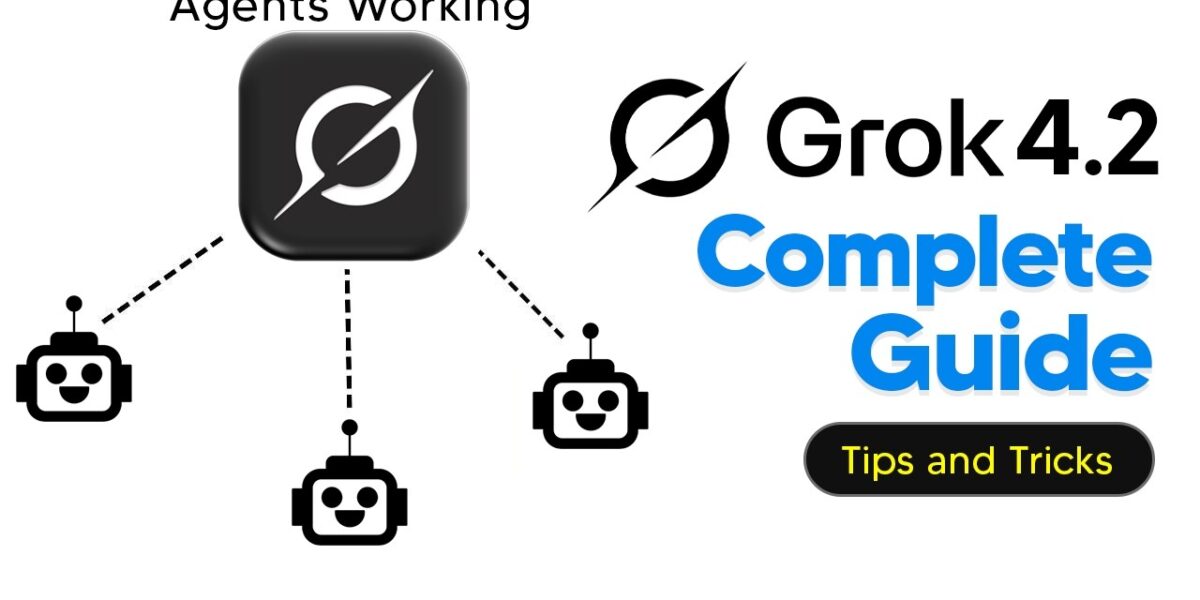
What sets Grok 4.20 apart is its underlying architecture. Instead of a monolithic AI model, it operates as a collection of specialized agents, each with a distinct role. This multi-agent approach aims to enhance accuracy and reduce the likelihood of AI hallucinations, a common issue in large language models.
Meet the Grok 4.20 Agents:
- Captain Grok: The coordinator. This agent directs the other agents, assigning tasks and managing the overall workflow.
- Harper: The research and fact expert. Harper is responsible for gathering information and providing factual data.
- Lucas: The creativity and balance expert. Lucas contributes by exploring different perspectives and ensuring a balanced output.
- Benjamin: The math, code, and logic specialist. Benjamin handles quantitative analysis, coding tasks, and logical problem-solving.
Optimizing Prompts for Agent Collaboration
To harness the full potential of Grok 4.20, users must learn to structure their prompts effectively to leverage the collaboration between these agents. The most advantageous use cases often involve open-ended questions or scenarios with conflicting opinions, where diverse perspectives and rigorous fact-checking are beneficial.
A Structured Prompting Strategy
A highly effective prompting strategy involves guiding the agents through a structured process:
- Gather Supporting Views: Instruct an agent (e.g., Harper) to research information that supports a particular argument or perspective.
- Incorporate Opposing Views: Direct another agent (e.g., Lucas) to research and present counterarguments or opposing viewpoints, ideally drawing from credible sources.
- Fact-Check and Validate: Assign an agent (e.g., Benjamin) to fact-check the information gathered by the other agents, verifying data and methodologies.
- Synthesize and Conclude: Finally, task the coordinator (Captain Grok) to summarize all the findings, present a balanced overview, and provide a logical conclusion based on the evidence.
This method ensures that the AI considers multiple facets of an issue, critically evaluates information, and provides a more comprehensive and reliable output. The parallel processing of tasks by different agents is key to this efficiency and accuracy.
Demonstrating the Agent Framework
Consider the question, “When should I buy Bitcoin?” A simple prompt might yield a basic answer. However, a structured prompt leveraging the agents could look like this:
“Harper, please research information on the best time to buy Bitcoin. Lucas, consider opposing views via research too. Benjamin, fact-check their results. Captain Grok, please summarize and give me a final output.”
In this scenario, Harper might present bullish indicators, Lucas could highlight bearish trends or market risks, Benjamin would verify the data sources and claims, and Captain Grok would synthesize these into a nuanced recommendation, potentially discussing long-term investment strategies, lump-sum versus dollar-cost averaging, and risk management.
Another example could involve a complex economic question, such as a user’s belief that “universal basic income will lead to a 20% decrease in GDP.” A prompt could be:
“Benjamin, find the strongest data supporting my claim. Harper, find the strongest data refuting it using certain economic reports. Lucas, create a synthesis that explains the middle ground theory. Then, ask Lucas to fact-check all information. Finally, Captain Grok, act as a judge and tell me which agent presented the more logically sound argument based on evidence provided and reach a logical conclusion.”
This structured approach allows Grok 4.20 to not only present information but also to critically analyze it, weigh evidence, and arrive at a more reasoned judgment, even identifying which argument is more logically sound based on the provided evidence.
Why This Matters
The introduction of Grok 4.20’s multi-agent system represents a significant step towards more sophisticated AI reasoning. By mimicking a team of experts, it can tackle complex problems that require diverse viewpoints and rigorous validation. This capability is invaluable for tasks such as:
- In-depth research and analysis: Providing balanced perspectives on controversial topics.
- Complex problem-solving: Breaking down multifaceted issues and evaluating potential solutions.
- Reducing AI bias: By actively seeking and presenting opposing viewpoints, the system can mitigate the tendency of LLMs to be overly agreeable or biased.
- Enhanced accuracy: The fact-checking and cross-validation among agents can significantly reduce the rate of hallucinations.
While not designed for coding or simple task execution like some other models, Grok 4.20 excels in scenarios demanding critical thinking and nuanced understanding. Its agent-based framework, reminiscent of a “model council,” offers a powerful new way to interact with and benefit from AI technology for complex decision-making and analysis.
Future Implications
As AI models become more specialized and collaborative, we can expect to see systems that are not just information retrieval tools but sophisticated reasoning engines. Grok 4.20’s agent framework is a compelling glimpse into this future, offering a more robust and reliable AI assistant for users who need to delve deeper than surface-level answers.
Source: Grok 4.2 Agents For Beginners – Grok 4.2 Full Guide With Usecases (YouTube)

Related Articles

AI Agents: Niche Markets Trump Broad Reach
A new strategy for AI agent developers emphasizes focusing on niche markets first. This approach, mirroring the early days of tech giants like Facebook and Amazon, allows for hyper-specific marketing, reduced competition, and deeper user understanding, ultimately leading to more sustainable success.

AI Agent Progress Accelerates Dramatically
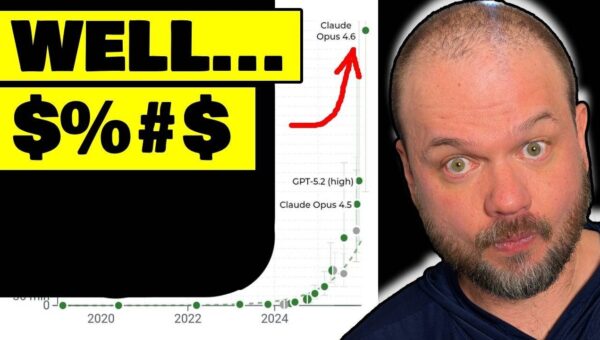
A recent chart from Meter Research reveals AI agents are accelerating their progress at an unprecedented rate, replacing significant hours of human labor. With models like Claude Opus 4.6 demonstrating remarkable capabilities, industry leaders and researchers are grappling with the implications for the future of work and society.

AI Agents Disrupt Markets as Safety Nets Disappear
AI agents capable of complex task execution have emerged, leading to significant market disruptions and a debate over safety protocols. As capabilities accelerate, industries face upheaval and investors grapple with unprecedented valuation challenges amid regulatory uncertainty.