Greenland PM Rejects Trump’s Hospital Ship Offer
Greenland's Prime Minister has firmly rejected an offer from former U.S. President Donald Trump to send a hospital ship, citing the territory's robust universal healthcare system. The Prime Minister emphasized Greenland's self-sufficiency and preference for structured diplomatic dialogue over public pronouncements.

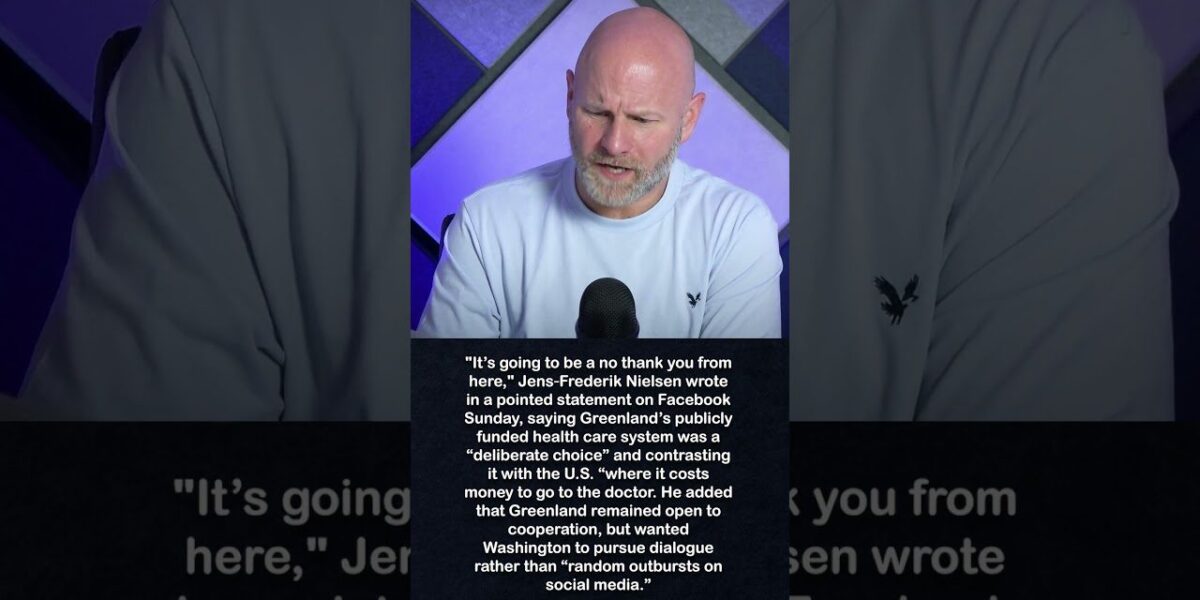
Greenland Prime Minister Publicly Declines US Hospital Ship Offer
Nuuk, Greenland – In a swift and decisive response, the Prime Minister of Greenland has publicly rejected an offer from former U.S. President Donald Trump to send a hospital ship to the autonomous Danish territory. The offer, which Trump reportedly framed as aid for underserved populations, was met with a polite but firm refusal, highlighting significant differences in healthcare approaches and international relations between the two entities.
Trump’s Offer and Greenland’s Response
The situation began over the weekend when Donald Trump announced his intention to dispatch a U.S. hospital ship to Greenland. According to reports, Trump stated that the vessel was intended to assist individuals in Greenland who were allegedly not receiving adequate care from their own government. This assertion appears to have been based on a misunderstanding or misrepresentation of Greenland’s healthcare system and current public health status.
In a direct response, the Prime Minister of Greenland issued a clear statement. “It’s going to be a no thank you from here,” the Prime Minister stated, effectively dismissing the offer. This response was not merely a rejection but was accompanied by a pointed explanation that underscored the capabilities and philosophy of Greenland’s healthcare infrastructure.
“We have universal healthcare, and there’s no epidemic or pandemic in Greenland or in Denmark or really anywhere in Europe,” the Prime Minister elaborated, questioning the premise of Trump’s offer. “So, we’re not even sure why you’re saying you’re going to send this here, but uh, thanks, but no thanks.”
Contrasting Healthcare Systems
A core element of the Prime Minister’s response was the stark contrast drawn between the Greenlandic (and by extension, Danish) public healthcare system and that of the United States. The Prime Minister emphasized that Greenland operates on a publicly funded healthcare model, a deliberate choice that ensures access to medical services for all citizens without direct cost at the point of service.
This stands in sharp contrast to the U.S. system, where accessing medical care often involves significant costs, including insurance premiums, deductibles, and co-pays. The Prime Minister alluded to this difference by noting that in the U.S., “it costs money to go to the doctor.” This highlights a fundamental divergence in the philosophy of healthcare provision: universal access versus a market-based or insurance-dependent model.
Call for Dialogue Over ‘Random Outbursts’
Beyond the specific rejection of the hospital ship, the Prime Minister also addressed the manner in which such offers were communicated. The statement suggested that while Greenland remains open to constructive international cooperation, it prefers a structured approach based on dialogue rather than what was described as “random outbursts on social media.” This implies a critique of Trump’s communication style, which often involves public pronouncements on platforms like Twitter (now X) without necessarily following established diplomatic channels.
The Prime Minister’s preference for dialogue indicates a desire for respectful and organized engagement between nations, particularly on sensitive matters like healthcare and international aid. The implication is that unilateral, publicly announced offers, especially those based on potentially inaccurate premises, are not conducive to productive international relations.
Broader Implications and Context
This exchange touches upon several broader themes relevant to international relations and public health policy. Firstly, it highlights the varying approaches to healthcare provision globally. Greenland, as part of the Kingdom of Denmark, benefits from a robust social welfare system that prioritizes universal healthcare, a model adopted by many developed nations but differing significantly from the U.S. system.
Secondly, the incident underscores the complexities of international aid and the importance of accurate needs assessments. Sending resources like a hospital ship without a clear, verified need or established request from the recipient nation can be perceived as patronizing or even intrusive. The Prime Minister’s response suggests that Greenland is self-sufficient in managing its public health and does not require external intervention of this nature.
Furthermore, the context of the offer, coming from a former U.S. President known for his unconventional diplomatic style, adds another layer. Trump’s past dealings with international partners have often been characterized by direct, sometimes provocative, statements. This incident can be seen as another instance where his approach clashed with more traditional diplomatic norms and the established systems of other countries.
Future Outlook
The rejection of the hospital ship offer serves as a clear message from Greenland regarding its healthcare system and its preferences for international engagement. It reinforces the value Greenland places on its publicly funded, universal healthcare system and its commitment to diplomatic dialogue. Moving forward, it will be important to observe how future interactions between the U.S. and Greenland, particularly concerning matters of health and cooperation, are conducted. The incident sets a precedent for clear communication and mutual respect in diplomatic exchanges.
Source: Greenland Prime Minister destroys Trump (YouTube)

Related Articles

Trump Open to Iran Talks After Attacks, Shifts on Regime Change
President Trump has agreed to negotiate with Iran's new leadership following recent U.S. and Israeli attacks, signaling a potential shift from his regime change objective. The move has drawn scrutiny from former officials who question the strategic coherence of U.S. policy.

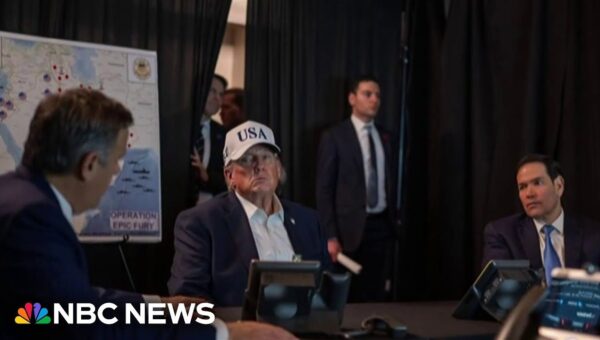
Trump: Iran Strikes Ahead of Schedule, Expects ‘Great Deal for World’
Three U.S. service members have been killed amid escalating conflict with Iran, President Trump confirmed. He stated that strikes are ahead of schedule, with senior Iranian leaders killed, and expressed optimism for a "great deal for the world" despite ongoing talks with Iranian officials.
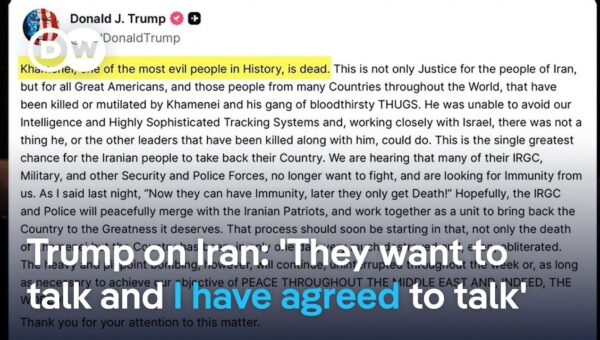
Trump Agrees to Talks with Iran After Major Strikes
President Donald Trump has agreed to talks with Iran's leadership following coordinated strikes that reportedly killed key figures, including the Supreme Leader. While Trump claims significant military successes, U.S. strategy remains unclear, and public opinion shows limited support for the actions amid rising American casualties.