Greene Demands GOP Burning; Trump Followers in Cult?
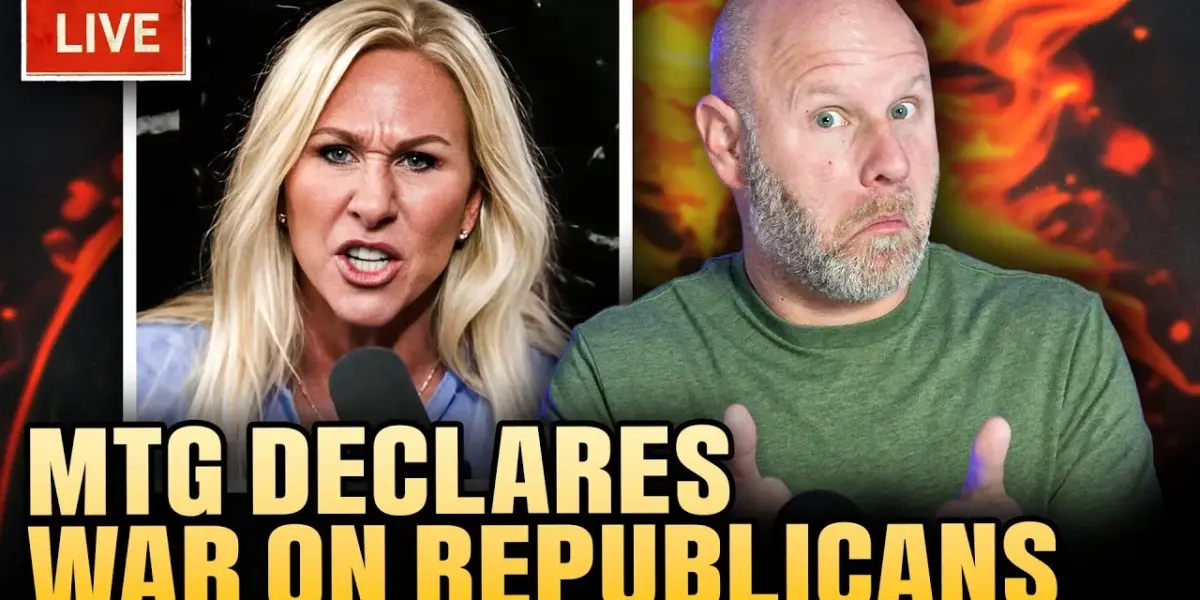
Marjorie Taylor Greene recently called for the Republican Party to be 'burned to the ground' and described Donald Trump's MAGA followers as being part of a 'cult.' These strong statements highlight deep divisions within the GOP and raise questions about the nature of political loyalty and party identity.

Greene Demands GOP Burning; Trump Followers in Cult?
Marjorie Taylor Greene recently made a bold statement, suggesting the Republican Party should be destroyed. Speaking on Alex Jones’ show, she used strong language, saying it was time to ‘burn the GOP to the ground.’ This comment comes amid growing divisions within the party. Greene also made a striking admission about Donald Trump’s supporters. She described those who follow Trump’s ‘Make America Great Again’ movement as being part of a ‘cult.’ This is a significant accusation coming from a prominent Republican figure.
These remarks highlight deep rifts and intense debates happening within the Republican Party. Greene’s call for destruction suggests a belief that the current party structure is beyond repair. Her description of Trump’s followers as a cult is particularly noteworthy. It suggests a level of devotion that she views as unhealthy or uncritical. This kind of internal criticism can signal broader struggles for a political party’s identity and direction.
Internal Party Strife
The Republican Party has faced numerous internal conflicts in recent years. Different factions often clash over strategy, ideology, and leadership. Greene, a vocal supporter of Trump, often positions herself as an outsider fighting against the party establishment. Her recent comments seem to align with this perspective, pushing for a radical change or even a complete overhaul of the party’s current form. This reflects a sentiment held by some within the party who feel it has lost its way.
Historically, political parties often go through periods of intense internal struggle. These can be caused by major political events, shifts in public opinion, or the rise of new leaders and ideas. Sometimes, these struggles lead to the party’s renewal; other times, they can lead to significant splits or decline. Greene’s call to ‘burn it down’ suggests she believes the latter is necessary for the GOP.
Trump’s Movement and Loyalty
The idea of a political ‘cult’ is a serious charge. It implies that followers are not open to questioning or independent thought. Greene’s use of this term, especially when referring to Trump’s base, is a strong indicator of how some within the party view the unwavering loyalty often displayed by MAGA supporters. This loyalty has been a key factor in Trump’s political success and influence.
Trump himself has often fostered a strong personal connection with his supporters. This connection can be seen as a source of great strength for his political movement. However, as Greene’s comments suggest, it can also be viewed by some as creating an environment where critical thinking is discouraged. This dynamic is complex, as it fuels passionate engagement but also raises concerns about independent political judgment.
Other Political Developments
The interview also touched on other figures and events. Pete Hegseth reportedly expressed fear of losing his job. While the transcript doesn’t detail the reasons, such concerns often arise in fast-paced media or political environments. Furthermore, Donald Trump reportedly had a significant negative reaction to his own followers. Details of this ‘meltdown’ are not provided, but it suggests a moment of tension or disagreement between Trump and his base.
Adding to the unusual events, there was a press conference involving Melania Trump. The description calls it ‘truly bizarre,’ hinting at an unexpected or strange presentation. These additional points suggest a week filled with unusual and potentially significant political happenings, beyond just Greene’s controversial statements.
Why This Matters
Marjorie Taylor Greene’s call to dismantle the Republican Party and her description of Trump’s followers as a cult are significant. They reveal a deep level of dissatisfaction and division within a major political party. Such internal turmoil can have a major impact on election outcomes and the direction of national policy. Understanding these internal dynamics is crucial for anyone trying to grasp the current state of American politics.
The concept of a political cult also raises important questions about leadership, influence, and democratic participation. When a significant portion of a party’s base is described as being in a cult, it prompts discussions about critical thinking and the health of political discourse. It also highlights the powerful role that personal loyalty can play in modern politics, sometimes overshadowing traditional party structures or policy debates.
Implications and Future Outlook
Greene’s statements could further alienate moderate Republicans or those who are critical of Trump. Conversely, they might energize the most ardent Trump supporters who see her as a champion of their cause. The long-term effect on the GOP is uncertain. Will it lead to a more radicalized party, or will it force a reckoning and a move towards broader appeal?
The future of the Republican Party may depend on how these internal conflicts are resolved. If factions like Greene’s gain more power, the party could become more ideologically pure but perhaps smaller. If more traditional voices manage to reassert control, they might try to broaden the party’s appeal. The role of Donald Trump and his devoted followers will undoubtedly remain a central factor in this ongoing evolution.
Historical Context
Political parties are not static; they evolve over time. The Democratic and Republican parties in the United States have both undergone massive transformations since their beginnings. For example, the Republican Party was once the party of abolition and civil rights. Today, its platform and voter base look very different.
Periods of intense internal debate and calls for radical change are not new in American political history. Think of the Civil War era, or the ideological battles within both parties during the Civil Rights Movement. These moments of crisis often lead to significant realignments. Greene’s rhetoric, while perhaps more extreme in its phrasing, taps into a long history of parties facing existential questions about their identity and purpose.
Greene’s call to ‘burn the GOP to the ground’ and her description of Trump’s followers as a ‘cult’ are not just political soundbites. They represent a profound commentary on the state of a major American political party, hinting at deep divisions and a potential crisis of identity.
Conclusion
The statements made by Marjorie Taylor Greene are a stark indicator of the internal turmoil within the Republican Party. Her words suggest a desire for radical change, potentially even the dissolution of the current party structure. Coupled with her assessment of Trump’s supporters, these comments paint a picture of a party grappling with its identity, its leadership, and the nature of loyalty among its base. The coming months and years will likely show whether these internal divisions will lead to a transformation or a fracturing of the GOP.
Source: Greene Calls For The Death Of The GOP (YouTube)

Related Articles

Trump’s Return: A Political Chess Move?
Former President Donald Trump's recent departure from Miami to Washington D.C. after his arraignment is more than just travel. It signals a potential strategic move to rally supporters and control the political narrative amidst ongoing legal challenges.


Trump Orders Iran Strait of Hormuz Blockade
President Trump has ordered an immediate U.S. Navy blockade of the Strait of Hormuz following failed negotiations with Iran. The move aims to halt all maritime traffic, but experts warn of significant risks, including potential confrontations with other nations and economic repercussions. The situation remains volatile as both sides may have used a recent ceasefire to resupply and prepare for further conflict.

Orban’s Defeat Deals Blow to Trump’s Global Standing
Viktor Orban's significant election loss in Hungary is seen as a major blow to Donald Trump and JD Vance's global influence. The outcome challenges the momentum of the far-right and offers hope for democratic movements worldwide, with potential lessons for the U.S. Democrats.