Green Party Stuns UK Politics in Shock By-Election Win
The Green Party has achieved a stunning victory in the Gorton and Denton by-election, a seat traditionally held by Labour for nearly a century. The result signifies a major upset, with Labour's vote share collapsing and highlighting deep voter dissatisfaction. Reform UK also saw gains but failed to secure the win, while Conservatives and Liberal Democrats experienced significant declines.

Green Party Victorious in Gorton and Denton By-Election
In a surprising turn of events that has sent ripples through the United Kingdom’s political landscape, the Green Party has secured a significant victory in the Gorton and Denton by-election. This result, occurring in a constituency traditionally held by the Labour Party for nearly a century, signals a potential seismic shift in voter sentiment and challenges the established order of British politics.
A Labour Stronghold Falls: The Gorton and Denton Context
The Gorton and Denton constituency, located in Greater Manchester, has been a staunch Labour heartland since 1935. In the June 2024 general election, Labour’s candidate, Andrew Gwyn, secured a commanding majority of over 18,500 votes, a testament to the party’s deep roots in the area. The results from that election also highlighted a notable surge for the Reform Party, which came second, and a third-place finish for the Green Party, outpolling the Conservative Party. This outcome was partly attributed to a general weariness with the Conservative government after a prolonged period in power, coupled with the traditional voting patterns of the North of England, which historically leans towards Labour.
The By-Election Upset: Green Party’s Unprecedented Victory
The recent by-election, triggered by the resignation of the incumbent Labour MP Andrew Gwyn, saw a dramatically different outcome. The Green Party candidate, Hannah Spencer, a qualified plumber and plasterer with no prior career in politics, emerged as the clear winner. This victory is particularly remarkable given the Green Party’s historical standing as a minor political force in the UK, typically holding only a handful of seats nationally. Their previous sole MP was based in Brighton, a known environmentalist stronghold. The win in Gorton and Denton marks the first time the Greens have secured a seat outside of the South of England and only their fifth seat ever.
“This was seen as being one of the strongest seats for Labour. It was a no-brainer, you’re always going to win this seat because everybody votes for Labour. Well, clearly they haven’t.”
Reform Party’s Rise Tempered
The Reform Party, led by Nigel Farage, also saw a significant increase in its vote share, gaining over 6,000 votes, a 135% increase. Many had anticipated Reform to be a strong contender, if not the winner, in this by-election, given their growing momentum since the 2024 general election. However, their second-place finish, despite the gains, indicates that while their popularity is rising, voters may still be hesitant to entrust them with a parliamentary seat. This suggests that the UK may not yet be fully prepared for Reform to translate its growing support into electoral victories.
Labour’s Devastating Loss and Internal Strife
For the Labour Party, the result is a significant blow. Their vote share plummeted by 50%, a stark contrast to their commanding performance just 18 months prior. This loss in a seat held for nearly 100 years is particularly embarrassing for Labour leader Keir Starmer. The transcript suggests that a contributing factor to this electoral disaster may be Starmer’s decision to block Andy Burnham, the popular Mayor of Manchester, from standing as the Labour candidate. Burnham, seen as a potential challenger to Starmer’s leadership, might have secured the seat. The decision is perceived to have backfired spectacularly, costing Labour a historically safe seat.
Furthermore, the resignation of the previous MP, Andrew Gwyn, was due to controversial remarks made in a private WhatsApp group, where he alluded to a constituent’s potential demise before the next election. This incident, coupled with other controversies surrounding Labour figures such as Peter Mandelson and Angela Rayner, has contributed to a perception of weak leadership and poor judgment within the party.
Conservative and Liberal Democrat Decline Continues
The by-election also delivered grim news for the Conservative Party and the Liberal Democrats. The Conservatives saw their vote share plummet by 72%, losing over 4,700 votes. This significant decline, even amidst general dissatisfaction with the Labour government, underscores the Conservatives’ current unpopularity and raises questions about their future electoral prospects. The Liberal Democrats fared little better, with their vote share dropping by 59%, a performance described as “embarrassing” given the availability of votes as Labour’s support fractured.
Voter Disillusionment and Shifting Alliances
The overall turnout for the by-election was 47.5%, nearly identical to the general election, indicating that the result reflects a genuine sentiment among a substantial portion of the electorate, rather than being skewed by low participation. The data from recent by-elections shows Labour has lost seven MPs, and the Conservatives five, while independents have gained seven seats. Reform has only secured three, and the Green Party one. This pattern suggests a widespread disillusionment with the two major parties, but also a hesitancy to fully embrace Reform, leading voters to explore alternative options like the Green Party.
Broader Implications and What’s Next
The Green Party’s victory in Gorton and Denton is more than just a local upset; it is a potent symbol of a restless electorate seeking alternatives. While the Green Party may not be poised for national power, their success highlights a significant protest vote against the established parties. The Labour Party faces a critical juncture, needing to address internal divisions and perceptions of weak leadership. The Conservatives appear to be in a deep trough, with little sign of immediate recovery. Reform’s inability to capitalize on this by-election opportunity, despite growing support, suggests that ideological reservations and a lack of experienced candidates may be hindering their path to power.
Looking ahead, upcoming Welsh elections will provide another test for Labour. However, the Gorton and Denton result serves as a stark warning: voters are increasingly willing to abandon traditional allegiances in search of parties that better reflect their dissatisfaction and aspirations, even if those options are currently unconventional. The political landscape in the UK is undoubtedly in flux, and this by-election has only amplified the uncertainty.
Source: UK Vote of No Confidence (YouTube)

Related Articles


Reform UK’s Euphoria Curtailed by By-Election Setback
Reform UK's ambitions have been tempered by a recent by-election loss in Gorton and Denton, suggesting a plateau in their support. While the party still holds significant appeal, factors like candidate perception and broader voter consolidation against them pose challenges. The result prompts a strategic re-evaluation for Reform and has implications for the wider political landscape.

Labour Faces Leadership Crisis After Shock By-Election Defeat
Labour faces a potential leadership crisis after a historic by-election defeat, with the Green Party securing a long-held Labour seat. Political analysts and industry figures are predicting an imminent leadership challenge for Keir Starmer, citing discontent over national party decisions and the controversial blocking of Andy Burnham from contesting the seat.

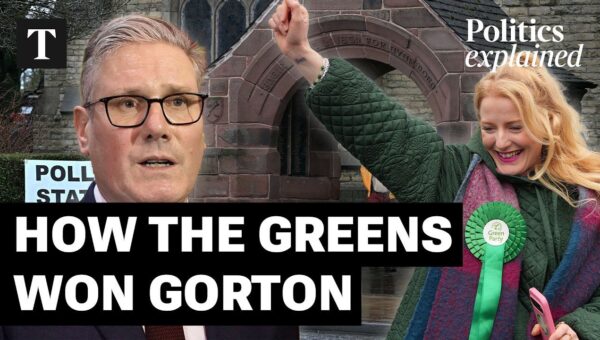
Green Party Wins Historic By-Election in Labour Heartland
The Green Party has achieved an historic victory in the Gorton and Denton by-election, securing 40% of the vote and pushing Labour into third place. This result signals a potential realignment of voters and a significant challenge to Keir Starmer's leadership.