Graham’s Iran Gamble: War Profiteering or National Security?
Senator Lindsey Graham's recent remarks on Iran have sparked debate, framing military action as a profitable investment. Critics accuse him and the military-industrial complex of war profiteering, questioning the true beneficiaries of conflict. This analysis delves into the core arguments, historical context, and implications of such hawkish rhetoric.

Graham’s Iran Gamble: War Profiteering or National Security?
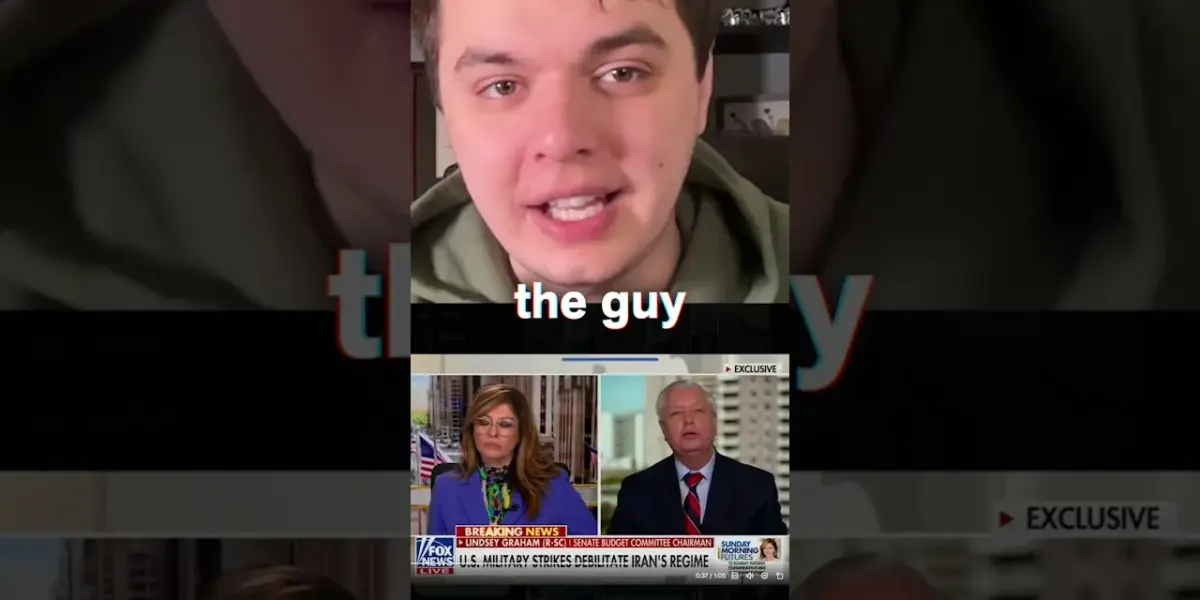
Senator Lindsey Graham’s recent remarks regarding Iran have ignited a firestorm of debate, pushing the perennial question of American foreign policy into the spotlight: when does national security necessitate military action, and who truly benefits from such interventions? Graham, in a statement that has been widely circulated, framed potential military action against Iran not as a cost, but as an unparalleled investment. His argument centers on the perceived existential threat posed by a “religious Nazi regime” seeking nuclear weapons capable of reaching American shores. He posits that dismantling Iran’s nuclear program and regime would not only neutralize this threat but also usher in a new era for the Middle East, ensuring the free flow of trade through the Strait of Hormuz and, according to his assertion, generating significant economic returns.
The Investment Argument
Graham’s rhetoric highlights a starkly utilitarian view of foreign conflict. He declared, “best money ever spent. What’s it worth to America to take down a religious Nazi regime who’s trying to build a nuclear weapon to deliver to America? That’s a really good investment.” This framing suggests a cost-benefit analysis where the potential destruction of an adversary’s nuclear ambitions far outweighs the financial and human costs of military engagement. The senator further elaborated on the perceived progress made, stating, “We now know they had enough 60% enriched uranium to make 11 bombs.” This assertion, if accurate, underscores the urgency perceived by proponents of preemptive action.
The envisioned post-conflict landscape, as painted by Graham, is one of enhanced regional stability and economic prosperity. “When this regime goes down, we’re going to have a new M East. We’re going to make a ton of money. Nobody will uh threaten the Straits of Hormoons again,” he proclaimed. This vision appeals to a sense of American exceptionalism and the idea that decisive action can reshape global dynamics to its advantage, not just militarily but also economically.
Counterarguments and Accusations of War Profiteering
However, this perspective has been met with fierce criticism. Detractors label Graham and like-minded individuals as “neocon warmongers,” accusing them of advocating for conflict for personal or vested interests. A significant point of contention is the question of who stands to profit from such a war. Critics argue that the primary beneficiaries are not the American public or the nation’s security, but rather the military-industrial complex and political figures with financial ties to defense industries. “Who’s going to make money? The military-industrial complex. You and the other Republican senators who traded on this. I’m not going to make money. You guys watching aren’t going to make money off of this war,” a critical voice in the transcript asserts, directly challenging Graham’s economic optimism.
This accusation taps into a long-standing skepticism about the motivations behind American military interventions. The notion that war can be a lucrative enterprise for a select few, while the broader population bears the costs in lives and resources, is a recurring theme in critiques of foreign policy. The transcript further illustrates this sentiment by referencing a decade-old internet meme depicting an elderly Republican senator with an insatiable desire for conflict, symbolizing a perceived hawkishness detached from pragmatic concerns.
Historical Context and the Specter of Past Conflicts
The debate echoes historical precedents where the justifications for war have been scrutinized for hidden agendas. The lead-up to the Iraq War, for instance, was marked by claims of imminent threats and weapons of mass destruction, which later proved to be either exaggerated or non-existent. The subsequent revelation of the war’s immense human and financial cost, coupled with the destabilization of the region, fueled widespread disillusionment and a deep-seated suspicion of the narratives used to promote military action. Graham’s current stance on Iran, particularly his confident assertions about the enemy’s capabilities and the positive outcomes of conflict, inevitably invites comparisons to these past debates.
Furthermore, the emphasis on Iran’s nuclear program is a critical element. For decades, international efforts have focused on preventing Iran from acquiring nuclear weapons, with various diplomatic and sanction-based approaches employed. The effectiveness and ultimate goals of these measures are constantly debated. Graham’s suggestion that military action is a more viable or even superior solution revisits the long-standing tension between diplomacy and force in addressing proliferation concerns.
Why This Matters
This exchange is not merely political theater; it cuts to the core of how nations decide on matters of war and peace, and how those decisions are communicated to the public. Graham’s framing of war as an “investment” and a source of future wealth is a provocative assertion that demands scrutiny. It raises crucial questions about transparency in government, the influence of special interests, and the ethical considerations of advocating for military action. The accusation of war profiteering, while serious, highlights the public’s right to understand the full spectrum of consequences and beneficiaries of foreign conflict.
The discourse also underscores the divide in how potential threats are perceived and addressed. Are we to believe that Iran, as described, represents an immediate and insurmountable threat that justifies preemptive, potentially costly, action? Or are such claims part of a broader geopolitical strategy with less transparent motivations? The answer has profound implications for regional stability, international relations, and the allocation of national resources.
Implications, Trends, and Future Outlook
The ongoing tension surrounding Iran’s nuclear program and the broader geopolitical landscape of the Middle East suggests that debates like Graham’s will persist. The trend towards increasingly assertive foreign policy rhetoric, coupled with the persistent influence of the defense industry, means that the line between legitimate national security concerns and aggressive expansionism will likely remain blurred. The rise of social media as a platform for disseminating such arguments, as seen with the meme reference, also indicates a shift in how political discourse is shaped and consumed, often simplifying complex issues into easily digestible, albeit potentially misleading, narratives.
Moving forward, a more informed public discourse is essential. This requires a critical examination of the evidence presented to justify military action, a transparent accounting of the costs and benefits, and a robust debate about the role of diplomacy versus force. The future outlook depends on whether policymakers can navigate these complexities with integrity and whether the public remains vigilant in questioning narratives that potentially prioritize profit over peace and security.
Source: Lindsey Graham Makes Shocking War Comment #politics #fyp #new (YouTube)

Related Articles


Fox News Urges Tankers to Risk Lives, Sparking Outrage
Fox News host Brian Kilmeade's suggestion that oil tankers should sail through war zones to diminish threats has sparked outrage. Critics argue this encourages mariners to risk their lives for political gains, raising ethical and safety concerns.

Iran Conflict Backfires: Trump’s War Fuels Unrest, Profits
Donald Trump's approach to Iran is reportedly backfiring, fueling public unrest in Tehran and sparking accusations of family members seeking to profit from a new drone company. The conflict's economic impact is evident with disruptions to oil infrastructure, while political rhetoric focuses on internal divisions.
UK Charity Network Linked to Iran Faces Extremism Probe
A new report by Lord Walney identifies over 30 UK organizations allegedly linked to Iran, acting as 'soft power hubs.' The report raises concerns about insufficient scrutiny and potential links to the IRGC, prompting a review of the Charity Commission's powers.