Grads Face 10-Year High Unemployment Rate
Recent college graduates are facing a challenging job market, with unemployment hitting a 10-year high of 5.6%. Rising tuition costs and the growing impact of AI are raising questions about the value of certain degrees.


Grads Face 10-Year High Unemployment Rate
The job market for recent college graduates is showing signs of strain, with unemployment reaching its highest point in over a decade. The unemployment rate for new grads has climbed to 5.6%, a significant increase that has economists and business leaders concerned.
This surge in unemployment comes as the cost of higher education continues to rise. The average tuition fee for college is around $12,000 per year. For students attending out-of-state schools, the cost jumps to nearly $32,000 annually. Private institutions charge even more, with tuition averaging $45,000 per year. This makes college a substantial financial investment for many families.
AI’s Growing Influence on the Job Market
A major factor contributing to the uncertainty in the job market is the rapid advancement of artificial intelligence (AI), particularly large language models. Businesses are increasingly looking for ways to cut costs and stay competitive. Some roles may be automated by AI, leading companies to question the return on investment for certain degrees.
The fear is that if competitors adopt AI and reduce their workforce or operational costs, companies that don’t will be at a disadvantage. This technological shift is prompting a reevaluation of which skills and degrees will be most valuable in the coming years.
Degrees with Varying Returns
New research from a center at American University highlights significant differences in the financial payoff of various graduate degrees. Degrees in high-demand fields like medicine, law, and pharmacy generally offer the highest return on investment. This means graduates in these areas tend to earn back the cost of their education relatively quickly through higher salaries.
However, the study also found that some graduate degrees may offer little to no financial benefit. Fields such as social work, psychology, and curriculum development were identified as potentially having zero or even negative returns. This suggests that the career path and earning potential can vary greatly depending on the chosen field of study.
Questions About Degree Value
The findings have sparked debate, with some questioning the necessity of such studies. While government statistics generally show that college graduates earn more over their lifetimes compared to those without a degree, this trend can differ significantly by specific academic field. The increasing cost of education coupled with a changing job market raises important questions about whether the investment in certain degrees is still worth the time and money.
Historically, a college degree has been seen as a reliable path to a better-paying job and greater financial security. However, the current data suggests that this may not hold true for all fields of study. The rising cost of tuition, combined with concerns about job security and the impact of new technologies like AI, is creating a more complex landscape for today’s graduates.
Market Volatility and Investor Concerns
The broader market has also experienced significant volatility, adding to the general sense of economic uncertainty. While no single issue is solely responsible, this instability can impact investor confidence and hiring decisions by businesses. When markets are unpredictable, companies may become more cautious about expanding their operations or taking on new staff.
What Investors Should Know
The rising unemployment rate among recent graduates and the increasing influence of AI on the job market are key trends to watch. Investors should consider how these factors might affect different sectors. For instance, companies heavily reliant on roles that could be automated may face challenges. Conversely, businesses focused on AI development or those providing essential services with less automation risk might present different opportunities.
The varying returns on investment for different degrees also suggest a potential shift in workforce skills demand. This could influence consumer spending patterns and the growth prospects of industries tied to specific educational fields. Understanding these dynamics is crucial for making informed investment decisions in the current economic climate.
Source: GRAD CRISIS: Unemployment SURGES to decade highs (YouTube)

Related Articles


Google Releases Open AI Models That Run Locally
Google has launched Gemma 4, a new family of open AI models designed to run on personal devices like phones and laptops. This move allows for greater privacy, cost savings, and accessibility in AI development and usage.
Jobs Surge in March, But Inflation Fears Loom Large
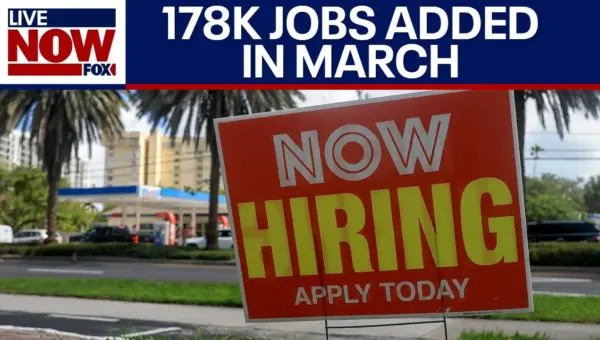
The U.S. economy added a robust 178,000 jobs in March, significantly exceeding expectations and signaling a strong rebound in hiring. However, this positive news is tempered by concerns over rising inflation and the economic impact of ongoing geopolitical conflicts, which could affect future job growth and consumer spending.


Google’s Gemma 4: Tiny Model Outsmarts Giants
Google's new Gemma 4 AI model is surprisingly powerful for its small size, capable of running on phones and laptops. This open-source release offers a free and private alternative to paid AI services, challenging major tech companies.