Governor Noem’s Lavish Jet Spending Sparks Outrage
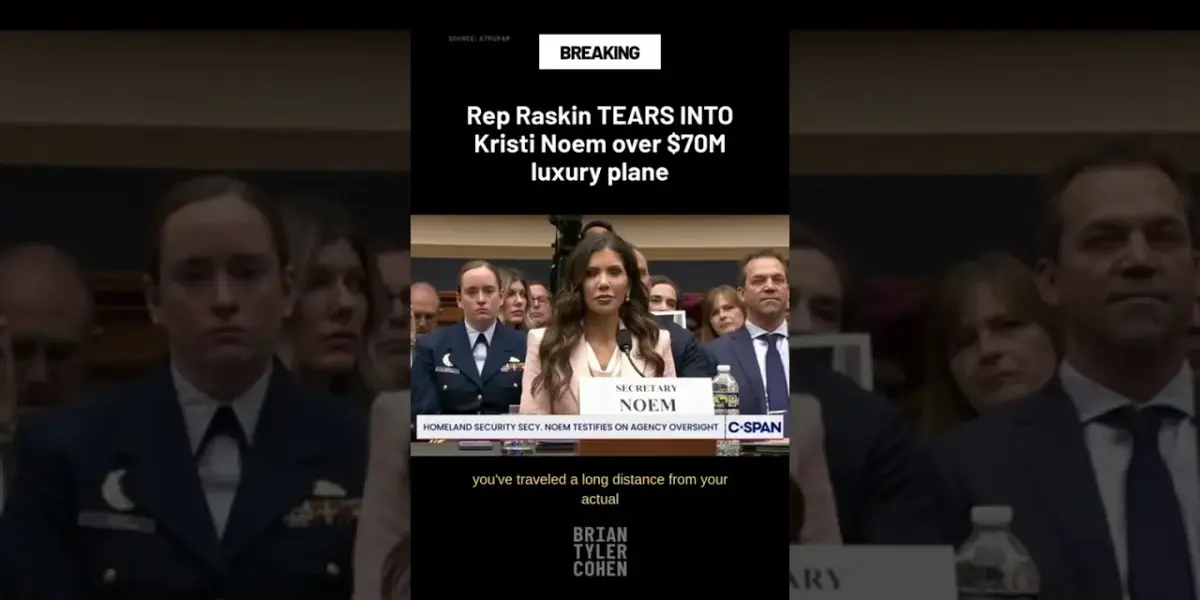
Representative Jamie Raskin has sharply criticized Governor Kristi Noem over the acquisition and use of a $70 million luxury jet, alleging misuse of public funds and neglect of Homeland Security duties. The controversy highlights concerns about executive excess and resource misallocation.

Governor Noem’s Lavish Jet Spending Sparks Outrage
A recent congressional hearing has thrust South Dakota Governor Kristi Noem into the spotlight, not for her policy initiatives, but for allegations surrounding the procurement and use of a $70 million luxury jet. The controversy, brought to light by Representative Jamie Raskin, centers on the acquisition of a Boeing 737 Max, reportedly outfitted with opulent amenities such as a queen-size bedroom, a deluxe serving bar, and multiple flat-screen televisions. This expenditure, allegedly funded by a significant government bill, has raised serious questions about fiscal responsibility and priorities within public service.
The $70 Million Jet: Executive Travel or Executive Excess?
The core of the dispute lies in the justification and purpose of this extravagant purchase. Representative Raskin pointedly questioned Governor Noem’s statements regarding the jet’s intended use. Initially, it was suggested that the jet would be refurbished for executive travel and, paradoxically, for deportations, with the claim that this would save taxpayer money. Raskin likened this logic to purchasing a Rolls-Royce with the intention of converting it into a metro bus, suggesting a fundamental disconnect between the expense and the stated utility.
The transcript highlights a perceived absurdity in the argument that a $70 million luxury aircraft would be repurposed for mass deportations. The question arises: if mass deportations were a primary operational need, wouldn’t it have been more cost-effective to acquire a dedicated, less luxurious aircraft from the outset? This line of questioning suggests a potential misallocation of funds and a disregard for economical solutions.
An “Airborne Episode of Entitlement”
Beyond the financial implications, the situation has been further complicated by an alleged incident involving the jet and a personal item. According to the transcript, Governor Noem’s “special blanket” was reportedly left behind on a previous government jet. In a peculiar turn of events, a government employee, identified as Cory Luwendowski, is said to have fired the pilot mid-flight to ensure the blanket’s transfer to the new aircraft. This act, if accurate, has been characterized as an “airborne episode of entitlement, arrogance, and contempt.” The pilot in question was a distinguished Coast Guard commander, adding another layer of concern regarding the treatment of experienced public servants.
The situation necessitated the immediate rehiring of the pilot, as there was no other qualified personnel available to complete the flight. This incident underscores the extraordinary circumstances surrounding the jet’s operation and raises concerns about the chain of command and the prioritization of personal comforts over professional conduct and operational integrity.
Shifting Focus from Homeland Security to Personal Perks
Representative Raskin’s critique extends beyond the jet itself to broader accusations of neglecting core duties. He argues that with “all these free planes and houses and pilots,” Governor Noem has “traveled a long distance from your actual job.” The Department of Homeland Security, under her purview, is responsible for a vast array of critical functions, including FEMA, TSA, the Secret Service, the Coast Guard, CISA, ICE, and CBP. Raskin contends that these essential missions have been undermined.
The transcript alleges that thousands of personnel tasked with critical national security functions, such as tracking terror financing and combating cyber threats, have been redeployed to assist with “mass immigration roundups.” Furthermore, agents working on a significant probe into Iran’s terror financing were reportedly reassigned, potentially paralyzing the investigation. This redirection of resources, Raskin implies, represents a dangerous dilution of the agency’s primary security mandate.
Questionable Leadership and Staffing Decisions
Adding to the criticism, the transcript points to questionable staffing decisions within the Homeland Security apparatus. It is alleged that the head of the agency’s terrorism prevention office, described as “ruined,” was filled by a 22-year-old intern whose primary qualification was participation in a Model UN club. Such appointments, if true, raise serious doubts about the competence and seriousness with which national security threats are being addressed.
The transcript also cites FEMA’s role in disaster relief, referencing a situation where crucial support was allegedly withheld following devastating floods in central Texas. This alleged failure to provide timely assistance during a natural disaster, which resulted in numerous fatalities, further fuels the narrative of a department whose priorities may be misaligned.
Why This Matters
The allegations surrounding Governor Noem’s use of a luxury jet and the broader criticisms of her leadership at the Department of Homeland Security touch upon fundamental issues of public trust, accountability, and the effective allocation of taxpayer resources. When high-ranking officials appear to prioritize personal comfort and extravagant expenditures over core governmental responsibilities, it erodes public confidence. The alleged redeployment of national security personnel to less critical tasks, if substantiated, represents a significant dereliction of duty with potentially grave consequences for national security.
Implications, Trends, and Future Outlook
This controversy highlights a persistent tension in public service: the balance between the necessary resources required for effective leadership and the potential for abuse and excess. The increasing politicization of government agencies can lead to decisions driven by political optics or personal gain rather than strategic necessity. The trend of using government resources for personal or political advantage is not new, but the scale and nature of the alleged expenditures in this case are particularly striking.
Moving forward, this incident is likely to fuel further scrutiny of government spending on official travel and the ethical conduct of public officials. It may also lead to calls for more stringent oversight mechanisms and clearer guidelines regarding the use of government assets. For Governor Noem, the challenge will be to address these allegations directly and demonstrate a renewed commitment to her official duties and the responsible stewardship of public funds. The future outlook for her leadership, particularly concerning public perception and trust, will largely depend on how effectively these controversies are resolved.
Historical Context
The use of government aircraft by high-ranking officials has a long history, often fraught with controversy. From presidential travel to the logistical needs of cabinet secretaries, the question of who travels where, when, and at what cost has frequently been a subject of public debate and media scrutiny. Incidents involving perceived misuse of aircraft, such as the controversies surrounding former Secretary of State Hillary Clinton’s use of government planes or the extensive travel of Trump administration officials, have set precedents for public expectation and governmental accountability. The current allegations against Governor Noem fit within this broader historical pattern of questioning the appropriateness and cost-effectiveness of official travel, particularly when juxtaposed against the pressing needs of the departments they lead.
Source: Rep. Raskin TEARS INTO Kristi Noem over $70M luxury plane (YouTube)

Related Articles


Noem’s Border Testimony Crumbles Under Bipartisan Scrutiny
Homeland Security Secretary Kristi Noem faced a harsh bipartisan grilling in a Senate hearing, with criticism from Republicans proving particularly damaging. The event highlights deep-seated concerns about border security and leadership effectiveness.
Noem Faces House Scrutiny on Immigration After Senate Grill
Homeland Security Secretary Kristi Noem faced intense scrutiny from both the House and Senate Judiciary Committees this week regarding the nation's immigration policies. The hearings delved into border enforcement, detention conditions, and departmental spending, highlighting deep partisan divides on the issue.


Noem Faces House Scrutiny Over Trump Immigration Policies
South Dakota Governor Kristi Noem faced intense questioning from the House Judiciary Committee regarding her involvement with former President Donald Trump's immigration policies. The hearing focused on key aspects of the Trump agenda and its implications.