GOP’s War Rationale Crumbles Amidst Public Scrutiny
MAGA Republicans face mounting criticism for their justifications of potential military action against Iran, revealing a perceived conflict between "America First" rhetoric and a foreign policy driven by allied interests. The debate highlights constitutional questions and the historical echoes of past interventions.


GOP’s War Rationale Crumbles Amidst Public Scrutiny
A growing chorus of criticism is emerging from within and outside the Republican party, questioning the justifications and strategic underpinnings of a potential military conflict with Iran. The current rhetoric, particularly from prominent MAGA Republicans, appears to be unraveling under closer examination, revealing a complex and potentially dangerous foreign policy stance that prioritizes perceived Israeli security over American national interests, and sidesteps constitutional war-making powers.
The Shifting Sands of Justification
At the heart of the controversy is the argument presented by figures like MAGA Mike Johnson, the Speaker of the House. Johnson, a self-proclaimed constitutional law attorney, articulated a rationale for preemptive action against Iran that has drawn sharp rebukes. His reasoning, as presented in a press conference, suggested that an immediate invasion of Iran was necessary because Israel might act first. The fear was that if Israel initiated conflict, Iran would retaliate against the United States, thus necessitating a U.S. preemptive strike. This line of reasoning, where the U.S. is drawn into conflict based on a potential Israeli action and subsequent Iranian retaliation, has been labeled as an offensive rather than defensive posture, directly contradicting the “America First” ethos often espoused by the MAGA movement.
“They had to evaluate the threats to the US, to our troops, to our installations, to our assets in the region and beyond. And they determined because of the the exquisite intelligence that we had that if Israel uh fired upon uh Iran and took action against Iran to take out the missiles, then they would have immediately retaliated against US personnel and assets. We have uh troops in harm’s way and we have many Americans in the region and that was of a great concern. If we had waited for all of those eventualities to take place, the consequences of inaction on our part would have been could have been devastating.” – MAGA Mike Johnson (as quoted in transcript)
This justification has been met with bewilderment and strong opposition. Critics point out the inherent risk of basing U.S. military action on a hypothetical scenario driven by another nation’s potential actions. The idea that the U.S. must invade first to prevent a retaliatory strike after an Israeli invasion fundamentally reorients American foreign policy from self-preservation to preemptive intervention based on allied actions.
The Spectacle of “Dumbest” Rhetoric
The situation has been further exacerbated by the public statements of other MAGA Republicans. Representative Markwayne Mullin’s flippant remark about Donald Trump “creating jobs in Iran by killing the people” was widely perceived as insensitive and out of touch, especially in the context of potential military casualties. Similarly, Senator Tommy Tuberville’s comments, suggesting that President Trump “isn’t ruling out sending ground troops into Iran” and that “this is President Trump’s war” and not a “Democrat war,” highlight a concerning trend of personalizing foreign policy decisions and divorcing them from established constitutional processes.
The apparent competition among these figures to appear most aligned with Trump’s agenda, even at the expense of logical or constitutionally sound reasoning, paints a troubling picture of the Republican party’s current foreign policy discourse.
Constitutional Overreach and Abdication of Duty
A significant point of contention is the perceived abdication of Congress’s constitutional war-making powers. Speaker Johnson, despite his background as a constitutional law attorney, asserted that the President was acting “well within his authority” and that the actions were “defensive in nature and in design and in necessity,” thus not requiring congressional authorization. This stance has been directly challenged by Democrats, who argue that any military engagement of this magnitude requires explicit consent from Congress, as mandated by Article I of the Constitution.
Senator Chris Murphy, Vice Chair of the Senate Intelligence Committee, stated unequivocally, “There was no imminent threat to the United States of America by the Iranians. There was a threat to Israel. If we equate a threat to Israel is the equivalent of an imminent threat to the United States, then we are in uncharted territory.” This sentiment is echoed by Governor Gavin Newsom and Senator Ruben Gallego, who have both criticized the administration for a lack of clear objectives, an absence of congressional consent, and a failure to articulate an endgame. Gallego, drawing parallels to the lead-up to the Iraq War, expressed frustration over what he sees as a rush to conflict driven by foreign interests rather than clear American national interests.
“The Constitution vests the power of declaring war with Congress. Therefore, no offensive expedition of importance can be undertaken until after they shall have deliberated upon the subject and authorized such a measure.” – George Washington (as quoted by Senator Jon Ossoff)
The contrast with Democratic arguments is stark. Senator Jon Ossoff, in a powerful speech, emphasized that “Sending Americans into combat should be a last resort in the pursuit of vital national interests.” He decried the administration’s actions as lacking evidence of an imminent threat, failing to exhaust diplomacy, and proceeding without congressional consent, thereby violating the very principles of American governance.
Historical Echoes and Future Outlook
The current debate over military action against Iran carries significant historical weight, echoing the contentious lead-up to the 2003 invasion of Iraq. The arguments used then – intelligence assessments, perceived threats, and the need for preemptive action – are being replayed, raising concerns about repeating past mistakes. The invocation of the War Powers Resolution by some in Congress is an attempt to reassert legislative authority and ensure that the decision to engage in conflict is a deliberative one, not a unilateral presidential decree.
The fragmented and often contradictory messaging from Republican figures suggests a party struggling to reconcile its “America First” rhetoric with a foreign policy that appears increasingly interventionist and influenced by external actors. The reliance on the idea of an “imminent threat” that is primarily perceived as a threat to an ally, rather than the U.S. homeland, is a dangerous precedent. Furthermore, the willingness of some Republican leaders to downplay or dismiss the constitutional requirement for congressional authorization for war is a direct challenge to the checks and balances that define American democracy.
Why This Matters
The implications of this debate extend far beyond the immediate geopolitical situation. At stake are fundamental questions about American sovereignty, the balance of power between the executive and legislative branches, and the principles guiding U.S. foreign policy. The normalization of preemptive military action based on subjective threat assessments, particularly when driven by the perceived needs of allies, risks drawing the United States into protracted and costly conflicts with unclear objectives and devastating consequences. The erosion of constitutional processes in favor of executive discretion in matters of war is a slippery slope that could undermine democratic institutions and the rule of law. The public’s understanding and engagement with these issues are crucial to ensuring that foreign policy decisions are made transparently, deliberately, and in the best interest of the nation, rather than on the basis of political expediency or foreign influence.
The analysis of the situation highlights a critical juncture where the Republican party’s approach to foreign policy is being tested, revealing potential fissures and raising serious questions about its commitment to both constitutional governance and the core tenets of its own political platform.
Source: GOP makes FATAL ADMISSION as Trump’s WAR IMPLODES! (YouTube)

Related Articles
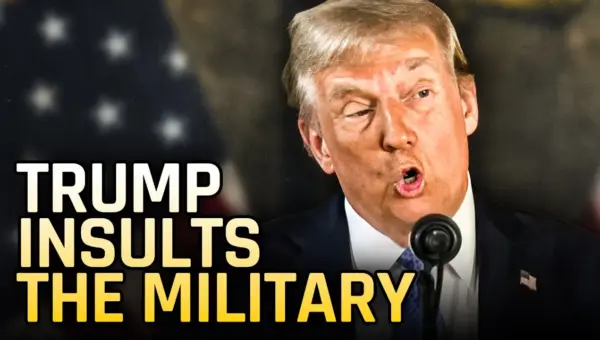
Trump’s ‘Casualties’ Remark: A Betrayal of Service Members?
Donald Trump's remarks on U.S. service members killed in Iran have sparked outrage, with critics accusing him of viewing lives as bargaining chips. This analysis explores the implications of such transactional rhetoric for military morale and national leadership.
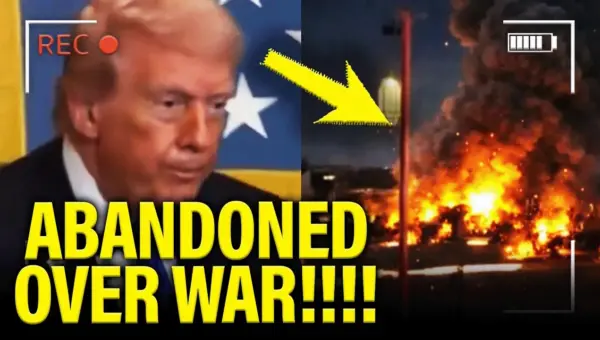
MAGA’s Shifting Sands: War in Iran Exposes Deep Divides
Prominent MAGA figures and influencers are reportedly expressing significant dissent towards Donald Trump's administration over its actions concerning Iran. This internal fracturing suggests a potential crisis of faith within the movement, driven by a perceived betrayal of core principles like non-interventionism.
Trump, Germany’s Merz Meet Amid Iran Tensions
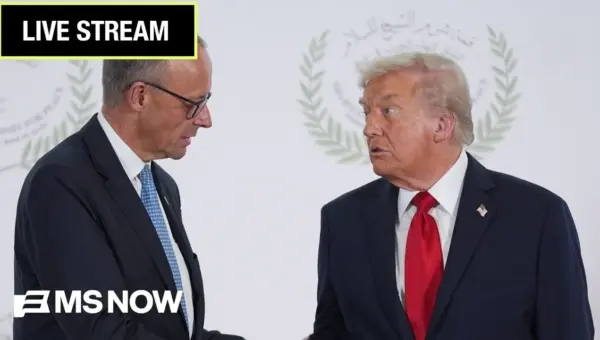
President Donald Trump met with German Chancellor Friedrich Merz at the White House to discuss the escalating Iran conflict following U.S. and Israeli strikes. The meeting marked the first time Trump has met a world leader since the attacks began, highlighting critical transatlantic diplomatic efforts amidst heightened global tensions.