GOP’s Iran Stance: War Critics Aren’t Mainstream Republicans
New analysis reveals that vocal critics of potential military action against Iran within the MAGA movement do not represent the broader Republican electorate. A historical conservative viewpoint and recent polling suggest underlying support for a tougher stance on Tehran, despite 'America First' sentiments.

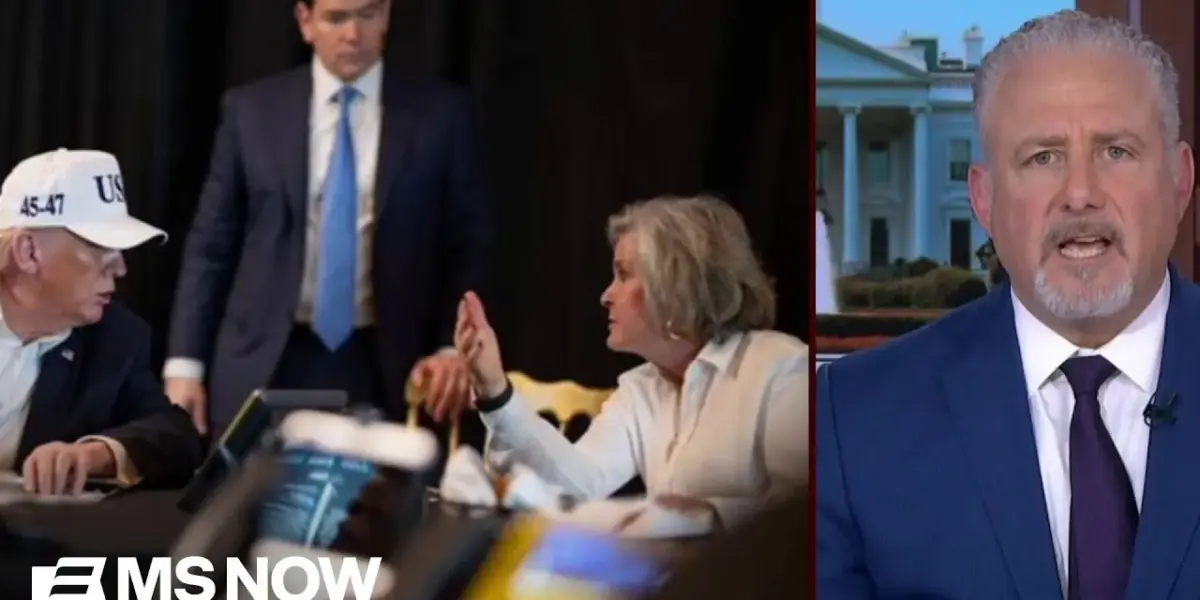
GOP’s Iran Stance: War Critics Aren’t Mainstream Republicans
Washington D.C. – Amidst escalating geopolitical tensions, a significant segment of the Republican Party finds itself at a crossroads regarding foreign policy towards Iran. While prominent voices, particularly within the MAGA movement, have voiced strong opposition to potential military engagements, new analysis suggests these critics do not represent the broader Republican electorate. This distinction is crucial for understanding the party’s internal dynamics and its approach to international relations.
A Historical Conservative View on Iran
For decades, a core tenet of conservative foreign policy has been a critical stance against the Iranian regime. Since the 1979 revolution, many Republicans have advocated for a tougher American approach, viewing Iran as a destabilizing force in the Middle East. This perspective was deeply shaped by events such as the American hostage crisis in Iran and subsequent incidents involving Iranian-backed forces, including the Beirut barracks bombing and the Khobar Towers attack, which resulted in American casualties.
David Drucker, Senior Writer for The Dispatch and Columnist for Bloomberg Opinion, highlights this historical context. “Since 1979, conservatives have wondered why America hasn’t been tougher on this terrorist regime,” Drucker stated. He emphasized that for those who came of age witnessing these events, the desire to see the Iranian regime weakened is a deeply ingrained sentiment.
“I think we saw the Iranians holding our people hostage, saw the Iranians killing our Marines in Beirut, saw the Iranians killing Americans at Khobar. That really, we can be twisted up about how Donald Trump is going about doing this, but not that Khamenei is gone and this regime is being rooted up.”
Challenging the “America First” Narrative
The rise of Donald Trump and his “America First” platform introduced a perceived shift in Republican foreign policy. During his campaigns in 2016 and 2020, Trump frequently criticized prolonged military interventions and what he termed “stupid wars,” referencing the conflicts in Iraq and Afghanistan. This stance resonated with a significant portion of the Republican base, fostering an expectation of reduced American involvement in overseas conflicts.
However, the current discourse surrounding potential actions against Iran reveals a divergence. While Trump himself has historically expressed skepticism about large-scale military engagements, the underlying conservative sentiment towards Iran remains potent. Drucker observes that many Republicans, voters and policymakers alike, see an argument for a more assertive policy after decades of diplomatic efforts that have yielded limited results.
“So fast forward, you get to this. And you have so many Republicans, voters as well as Republicans in Washington who are saying to themselves after almost 50 years of diplomacy that hasn’t worked and it’s good that we tried it. There’s an argument for this, and I’m glad he’s doing it, and it’s something I can support,” Drucker explained.
The Loudest Voices vs. The Broader Electorate
The most vocal opposition to military action often emanates from social media platforms, where influencers and certain political figures amplify their messages. This has led to a perception that these critical voices represent the prevailing mood within the Republican Party, particularly among the MAGA base.
Figures like Congresswoman Marjorie Taylor Greene have been outspoken, urging a focus on domestic issues such as immigration and warning against entanglement in foreign wars. This sentiment reflects a strain of isolationism within the party, often associated with the “America First” ideology.
Drucker, however, cautions against equating these loud voices with the entirety of the Republican electorate. “A lot of us are watching the very loudest voices, which these days are magnified on social media… And these seem to be the loudest voices. And they’re not insignificant because they are part of this broader coalition that Donald Trump created,” he noted. “But if you want to look at where the breath of the party is on this war right now, it’s supportive.”
Pollsters and strategists consulted by Drucker indicate that Republican voters, even those who identify with the MAGA movement, generally support a firmer stance against the Iranian regime. The historical context of the 1979 hostage crisis and subsequent actions by Iran remain a powerful motivator for many.
Challenges in Communication and Execution
Despite the underlying support for a tougher policy, the current administration faces challenges in articulating its strategy. Drucker points out a lack of clear communication from the White House, which can leave the public and even some allies uncertain about the objectives and rationale behind its actions.
“Part of the problem the President is having here… is that he hasn’t made a case in the months leading up to this, the way previous presidents would have, that gives people something to hang their hat on,” Drucker observed. He referenced insights from the late George Shultz, who noted that Ronald Reagan understood the importance of connecting with voters abroad. “The president often gets himself into trouble and I have voters telling me, you know, I can appreciate the underlying policy. I think he may have a point, but he’s not explaining it well. I don’t get it. And the execution seems like it’s not working.”
The Future of Republican Foreign Policy
The internal debate within the Republican Party over Iran policy underscores a broader tension between its traditional foreign policy establishment and the newer populist, “America First” wing. While the loudest critics of intervention are highly visible, especially online, the historical animosity towards the Iranian regime continues to resonate with a significant portion of the Republican base.
Moving forward, the ability of Republican leaders to effectively communicate their foreign policy objectives and navigate these internal divisions will be critical. The party must reconcile its historical commitment to projecting American strength with the “America First” sentiment that has reshaped its electorate. As Drucker succinctly put it, the challenge lies in bridging the gap between those who believe in a more assertive foreign policy and those who prioritize domestic concerns, all while ensuring the public understands and supports the chosen path.
Source: David Drucker: Don't confuse war's MAGA critics with most Republicans (YouTube)

Related Articles


Nepal Election: Caught Between India and China’s Influence
Nepal's upcoming election is a critical moment, with the nation caught between the geopolitical influences of its giant neighbors, India and China. The outcome will shape the country's foreign policy and economic development as it navigates its strategic position.

US Regime Change: A Pattern of Failed Intervention
The repeated attempts by the U.S. to engineer regime change have historically failed, often exacerbating conflicts and creating instability. This analysis explores the flawed premise of removing leaders without a viable plan for post-intervention governance.
Russia’s Iran Deal: A Partnership’s Limits Revealed
The strategic partnership between Russia and Iran is being re-evaluated as questions arise about its mutuality and Russia's capacity to fulfill its commitments. Journalist Joe Luke Barnes discusses the shifting dynamics, Russia's limited global reach, and the enduring legacies of the Soviet Union.