GOP’s Election Plan Fails; Trump Looks Weak
Republicans' ambitious 'Save America Act' has spectacularly backfired in the Senate, leaving Donald Trump appearing weakened. The plan to force a vote on election law changes crumbled, exposing divisions and a lack of support for controversial amendments.


GOP’s Election Scheme Stumbles in Senate
Republicans in the Senate recently attempted a major legislative push with the “Save America Act,” a bill championed by Donald Trump, who claims it will secure Republican victories for decades. However, the plan has hit a significant roadblock, leading to what many are calling a humiliating defeat for the party.
The Strategy and Its Flaw
The initial Republican strategy was to force Democrats into a filibuster. A filibuster is a tactic where a senator or group of senators talks for an extended period to delay or block a vote on a bill. The idea was that by making Democrats talk, Republicans could then propose to eliminate the filibuster itself with a simple majority vote (50 votes plus the Vice President). This would allow the Save America Act to pass with fewer than the usual 60 votes needed to overcome a filibuster.
However, this plan quickly unraveled. Senate leaders realized there weren’t enough votes within their own party to eliminate the filibuster. This led to a modified approach, sometimes called a “talking filibuster.” The goal here was to make Democrats hold the floor and talk for a long time, hoping they would eventually give up. But even this proved unworkable.
A “Talking Filibuster” Backfires
Instead of Democrats being forced to talk, it was the Republicans themselves who ended up holding the floor, discussing their own bill. Senators like Mike Lee and others spoke at length, essentially debating their own proposal without any opposition from the other side. This tactic failed to achieve its goal and instead made the Republicans appear to be filibustering their own legislation.
One key issue is that even if the Save America Act could somehow pass, it includes amendments pushed by Donald Trump that would ban mail-in voting. These amendments are considered “poison pills” by some, making the bill even less likely to gain support. Senator John Thune, a key Republican figure, seemed caught in the middle, facing pressure from Trump’s allies and an inability to gather enough votes for the bill, especially with the controversial amendments.
“This whole thing seems very humiliating for the Republicans. I mean, they were going to put on some great show where they were going to force the Democrats to filibuster the Save Act, and you know, we were all supposed to be quaking in our boots.”
Trump’s Influence Questioned
The failure of the Save America Act in the Senate raises questions about Donald Trump’s influence. Despite his strong rhetoric and demands, he couldn’t get his own party members in the Senate to rally behind the bill. This has led to him being portrayed as a “paper tiger” or a “clownish fool” who cannot control his own senators.
The situation is further complicated by the fact that even if the bill fails in Congress, Trump has hinted at using executive orders to enact similar measures. However, legal experts suggest that any such executive order would likely be challenged in court and struck down, just as a previous executive order on voting was. The hope is that Republican states would not use such orders as an excuse to change voting laws.
The Reality of Voter Fraud Claims
A central argument for the Save America Act and its proposed changes is the claim of widespread voter fraud, particularly involving non-citizens voting. However, evidence presented suggests these claims are largely unfounded. For instance, a study in Utah, where Senator Mike Lee is from, examined voter registration records. Researchers found only one non-citizen registered to vote, and that person did not actually cast a ballot.
Studies on ballot fraud have found very few instances. One long-term study covering over a billion ballots found only 31 cases of fraud. The narrative pushed by some Republicans, like Senator Lee, about millions of non-citizens being registered to vote is not supported by data. This disconnect between the claims and the reality weakens the justification for drastic changes to voting laws.
Why This Matters
The failure of the Save America Act in the Senate is significant because it highlights a deep division within the Republican party and exposes the challenges in passing major legislation, especially when it relies on controversial claims. It also shows that despite rhetoric, political realities and a lack of consensus can derail even the most high-profile plans.
For voters, this situation underscores the importance of understanding the legislative process and the basis for proposed changes to voting laws. The focus on unsubstantiated claims of fraud can distract from real issues and potentially lead to policies that make it harder for eligible citizens to vote. The fact that a bill intended to secure elections for 50 years could not even pass the first hurdle in the Senate suggests a fundamental weakness in the argument and the strategy.
Implications and Future Outlook
The immediate implication is a setback for Donald Trump’s agenda and his ability to project strength. His allies in Congress appear unable to deliver on his key demands, making him seem less powerful. This could embolden opponents and potentially weaken his negotiating position in future political battles.
Looking ahead, the debate over voting rights and election security will undoubtedly continue. While legislative action on the Save America Act has stalled, the underlying issues and the strategies to address them will likely resurface. The possibility of executive actions or state-level changes remains. However, the recent Senate experience suggests that any such moves will face significant legal and political challenges. The lack of clear evidence for widespread fraud makes it difficult for these arguments to gain broad traction, even within Congress.
Historical Context
The current debate echoes past struggles over voting rights and election integrity in the United States. Throughout history, there have been periods of intense political division regarding who can vote and how elections are administered. Proposals to restrict voting access have often been framed as measures to prevent fraud, while opponents argue they are designed to suppress votes. The filibuster itself has a long and complex history in the Senate, often used to block civil rights legislation and other significant measures.
The Save America Act, with its focus on mail-in voting and claims of widespread fraud, taps into long-standing political anxieties. However, the current attempt to pass it shows that even with a unified party structure, the Senate’s rules and the need for broader consensus can act as significant barriers. The reliance on unsubstantiated claims, as seen in the discussion around Senator Lee’s statements, further complicates the narrative and highlights the importance of factual evidence in policy debates.
Source: “Humiliated!” Republicans’ huge plan BACKFIRES in devastating fashion (YouTube)

Related Articles
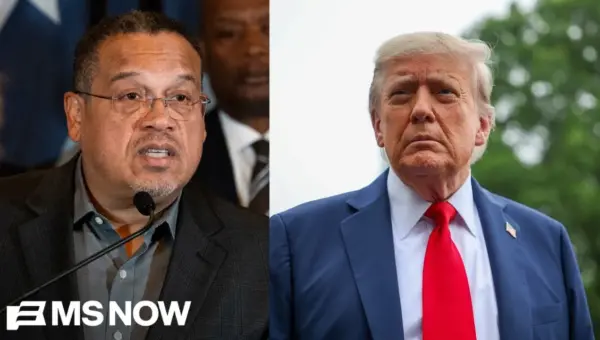
MN AG Blasts Trump’s ‘Wicked’ Insults Amid ‘No Kings’ Protests
Thousands protested President Trump's policies nationwide, with Minnesota AG Keith Ellison condemning his "wicked" and "corrupt" nature. Ellison also discussed a state lawsuit against the federal government over withheld evidence in officer-involved shootings.
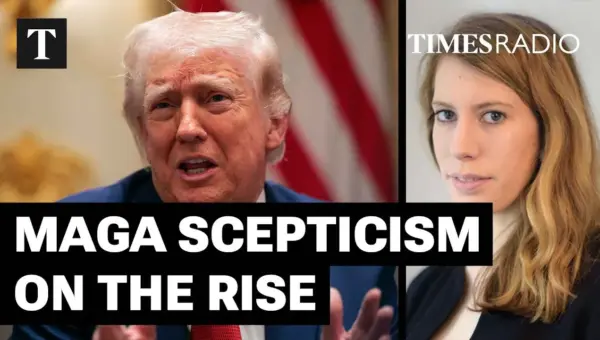
Trump’s War Strategy Faces Skepticism Amidst Shifting Goals
President Trump's strategy in the ongoing Middle East conflict is facing increasing skepticism, even from his own base. While military actions have seen success, strategic goals are unclear and diverging from allies like Israel. The prolonged war and shifting public perception are creating a sense of uncertainty and doubt.
Protests Challenge Trump’s Grip as ‘No Kings’ Movement Grows
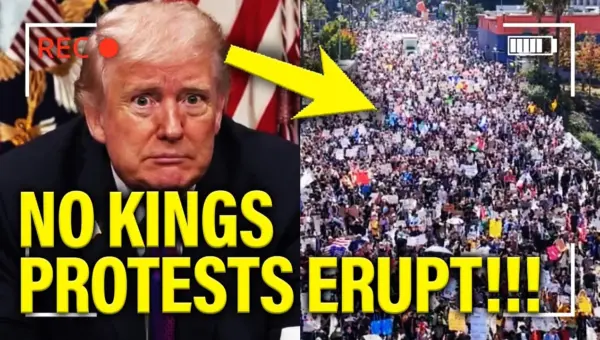
Massive 'No Kings' protests swept the nation, challenging the Trump administration and advocating for democratic values. Organizers highlighted growing support and a shift in protest tactics, positioning the movement as a force for positive change.