GOP Senator Rips Homeland Security Chief in Fiery Hearing
A Republican senator delivered a scathing critique of Homeland Security Secretary Kirstjen Nielsen during a recent hearing, citing failures in investigations, questionable contracting practices, and a lack of ethical leadership. The senator highlighted concerns over the prioritization of political agendas over effective governance and called for Nielsen's resignation.

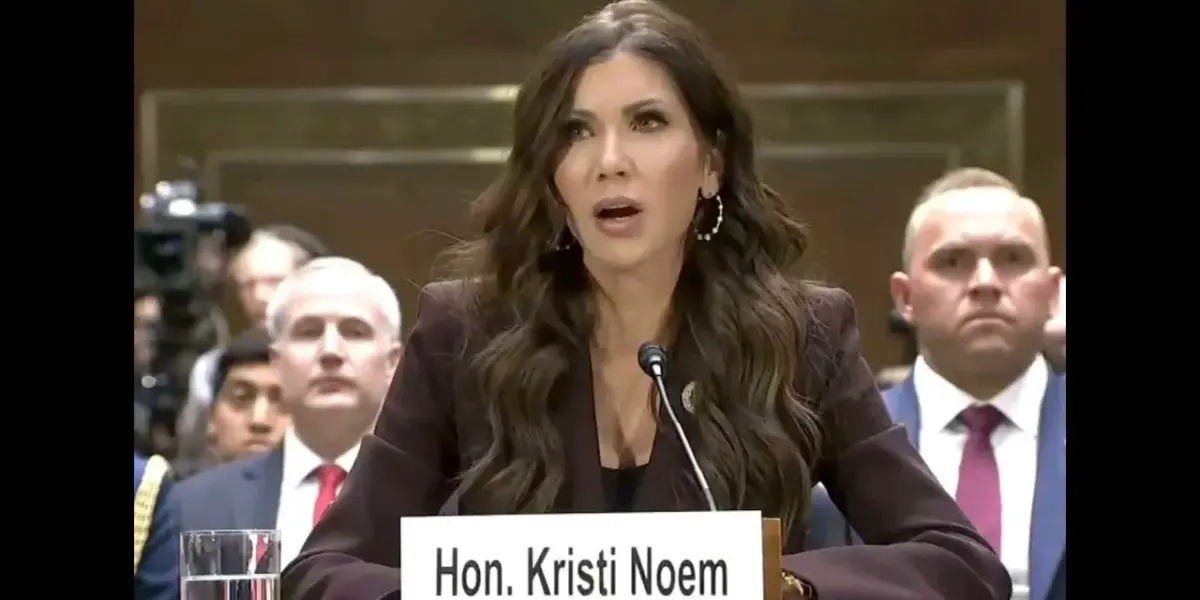
GOP Senator Rips Homeland Security Chief in Fiery Hearing
A recent congressional hearing saw a stunning rebuke of Homeland Security Secretary Kirstjen Nielsen, not from the usual critics, but from a Republican senator. The session, which focused on the department’s handling of investigations and contracting practices, revealed deep dissatisfaction, particularly concerning the perceived prioritization of political expediency over thorough investigation and ethical governance.
Questions of Competence and Ethics Surface
The core of the criticism leveled by Senator Tom Tillis centered on what he described as a “disaster under your leadership.” This was not a broad, abstract accusation, but a pointed indictment stemming from specific instances. The senator expressed disappointment that the department was not pursuing individuals responsible for significant damage, suggesting a focus on meeting arbitrary numerical goals rather than achieving meaningful results. “Quality matters, not quantity,” Tillis emphasized, highlighting a concern that the pursuit of high numbers of detentions or arrests might be overshadowing the importance of proper due process and the identification of actual threats.
A particularly damning point raised was the alleged detention of American citizens, a severe failure that undermines public trust and the fundamental rights of individuals. The senator directly linked this to a culture possibly influenced by figures like Stephen Miller, who he accused of “aiding and abetting” questionable practices. The implication was that a politically motivated agenda was compromising the integrity of law enforcement operations.
The Shadow of Stephen Miller and Misleading the OIG
The hearing touched upon serious allegations regarding the department’s interaction with its own Office of Inspector General (OIG). Senator Tillis presented a letter from the OIG detailing ten instances where the department, under Nielsen’s leadership, allegedly misled investigators or obstructed their pursuit of critically important inquiries. The senator posed a rhetorical question: “Does anybody have any idea how bad it has to be for the OIG in this agency to come out and do this publicly?” He unequivocally labeled this behavior as “stonewalling” and a “failure of leadership,” leading to his call for Nielsen’s resignation.
To underscore the gravity of the situation, Tillis declared that if satisfactory answers were not provided within a month, he would place a hold on all unconfirmed nominations and, if necessary, deny quorum in committee markups. This was a clear signal that the senator was prepared to use his considerable leverage to force accountability.
The Case of Alex Prey and Renee Goad: A Defining Moment
A significant portion of the hearing revolved around the tragic deaths of Alex Frei and Renee Goad. The senator accused Nielsen of pre-clearing ICE agents of wrongdoing by labeling the deceased as domestic terrorists. He recounted a conversation with Alex Frei’s parents, who were deeply hurt by the Secretary’s public statements about their son made in the immediate aftermath of his death. The senator directly asked Nielsen if she had anything to say to the parents of the deceased.
Nielsen’s response was defensive. She stated she could not imagine their loss but denied calling Frei a domestic terrorist. This denial was immediately challenged by the senator, who quoted her own words defining domestic terrorism and applying it to the actions of the individual involved in the incident. The disconnect between Nielsen’s denial and the senator’s evidence raised questions about her trustworthiness and candor, further fueling the criticism of her leadership.
Controversial Memoir and Leadership Lessons
Beyond the immediate operational concerns, Senator Tillis delved into Nielsen’s personal conduct as detailed in her memoir. He specifically cited the passage where she described killing a 14-month-old dog and a goat. Tillis, drawing on his own experience training dogs, argued that a 14-month-old dog is essentially a “teenager” and that killing it due to a lack of proper training reflected poorly on her judgment. Similarly, he questioned the decision to kill a goat for “behaving badly,” suggesting a lack of basic animal husbandry knowledge. Tillis framed these actions not as “tough choices” but as “bad decisions made in the heat of the moment,” drawing a parallel to the hasty judgments made in high-pressure situations by her department.
He argued that these incidents, combined with her responses to crises, demonstrated a pattern of leadership that was far from “exceptional,” a quality he believes is essential for American leaders. The senator concluded his remarks by reiterating his request for answers regarding a specific investigation, “Charlotte’s Web,” located near his home, seeking information to improve the department’s “hit rate” and reduce the detention of innocent individuals.
Allegations of Cronyism and Misuse of Funds
The hearing also brought to light disturbing allegations of cronyism and potential misuse of taxpayer funds. The discussion shifted to a $143 million subcontract awarded to a company called Safe America Media, which was reportedly founded just 11 days before receiving the contract. The head of this company was identified as the husband of Nielsen’s assistant secretary and had previously worked with Nielsen on her gubernatorial campaign and memoir.
Furthermore, the situation became more complex with the involvement of Cory Lewandowski, a special government employee for the White House, who had also worked with the same individual on political campaigns. The senator pressed Nielsen on whether Lewandowski received any compensation, directly or indirectly, from Safe America or its parent company. Nielsen claimed she had no information and could not speak to it, promising to follow up after speaking with Lewandowski.
The senator expressed incredulity that a company formed so recently could secure such a lucrative contract, especially when it was a subcontractor to a larger $220 million media contract. He questioned whether this was a mere “coincidence” or a result of political favoritism, particularly given the connections between the individuals involved and Nielsen’s political network. Nielsen maintained that the contract was awarded through a competitive bidding process and that career officials at DHS handled the selection, with no political appointees involved in choosing subcontractors.
The senator also raised concerns about the $220 million in advertising spending, which prominently featured Nielsen. He questioned the justification for such a large expenditure, especially when the ads were perceived by some as self-promotional. Nielsen stated that the president tasked her with disseminating information about immigration policies and that the ads were effective. However, the senator pointed out that the contractors selected had previously worked on her political campaigns, further fueling suspicions of impropriety.
Why This Matters
The criticism leveled against Secretary Nielsen, particularly from a Republican senator, is significant because it transcends typical partisan divides. It suggests that concerns about competence, ethical conduct, and the responsible stewardship of taxpayer money are reaching a critical mass, even within the administration’s own party. The allegations of misleading oversight bodies, potentially awarding contracts based on personal connections rather than merit, and prioritizing political messaging over effective governance strike at the heart of public trust.
Implications, Trends, and Future Outlook
This hearing signals a potential shift in how performance and accountability are viewed within the current political landscape. The emphasis on “quality over quantity” in law enforcement and the scrutiny of contracting processes highlight a growing concern about effectiveness and transparency. The involvement of the Office of Inspector General and the willingness of a senator to publicly challenge a cabinet secretary indicate a desire for greater oversight and a potential pushback against perceived abuses of power.
The allegations of cronyism and self-promotion, especially in the context of significant government spending, are trends that have characterized recent administrations. The public’s increasing awareness and skepticism towards such practices could lead to greater demands for accountability. For Secretary Nielsen, the immediate future appears precarious, with calls for resignation and the threat of legislative obstruction. Her ability to regain credibility will depend on her capacity to provide transparent and satisfactory answers to the serious questions raised.
Historical Context and Background
The Department of Homeland Security has faced scrutiny over its operations and contracting since its inception. The challenges of managing a vast bureaucracy responsible for national security, immigration, and disaster response are immense. Past administrations have grappled with similar issues of efficiency, oversight, and political influence. The current situation, however, appears to be amplified by a political environment where loyalty is often prioritized over expertise, and where public discourse is frequently dominated by divisive rhetoric. The specific allegations concerning the handling of investigations into the deaths of citizens and the awarding of large contracts to newly formed companies with political ties echo broader concerns about the erosion of institutional norms and the potential for corruption within government.
The senator’s critique, particularly the comparison of Nielsen’s leadership to the handling of a dog’s training, serves as a potent metaphor for the perceived lack of judgment and ethical grounding. When such criticisms come from within the president’s own party, they carry a distinct weight, suggesting that the administration’s approach to governance may be alienating even its staunchest supporters. The future outlook for Nielsen and the Department of Homeland Security will likely be shaped by the administration’s response to these accusations and the public’s reaction to the unfolding events.
Source: WHOA: Republican DESTROYS Kristi Noem at SHOCKING hearing (YouTube)

Related Articles


Homeland Security Chief Faces Scrutiny Over Jets, Ad Spending
Homeland Security Secretary Kirstjen Nielsen faced tough questions on luxury jets, a $220 million ad contract, and citizen arrests during a Senate hearing. Senators scrutinized spending and operational practices, revealing deep concerns over accountability and resource allocation within the department.


GOP Senator Dismantles Homeland Security Official in Fiery Hearing
Senator Tom Tillis delivered a sharp critique of a Homeland Security official in a recent hearing, a move observers called a "masterclass in dismantling." The Republican, not seeking reelection, questioned agency operations, funding, and controversial designations, highlighting broader GOP concerns.


Taxpayer Funds Fuel Luxury Jet Controversy for DHS
The Department of Homeland Security is facing intense scrutiny over its acquisition of aircraft, with critics labeling them "luxury jets with bedrooms." While DHS defends the purchases as cost-saving measures for essential operations like deportations, the optics of lavish spending continue to fuel public debate and raise questions about government priorities and transparency.