GOP Rep Admits Election Bill Could Hinder Women Voters
Representative Chip Roy's SAVE Act, aimed at election reform, faces scrutiny over potential barriers for married women voters. While the congressman claims no undue hardship, his own staff's experience highlights the complex process of updating IDs after name changes, raising concerns about voter accessibility.

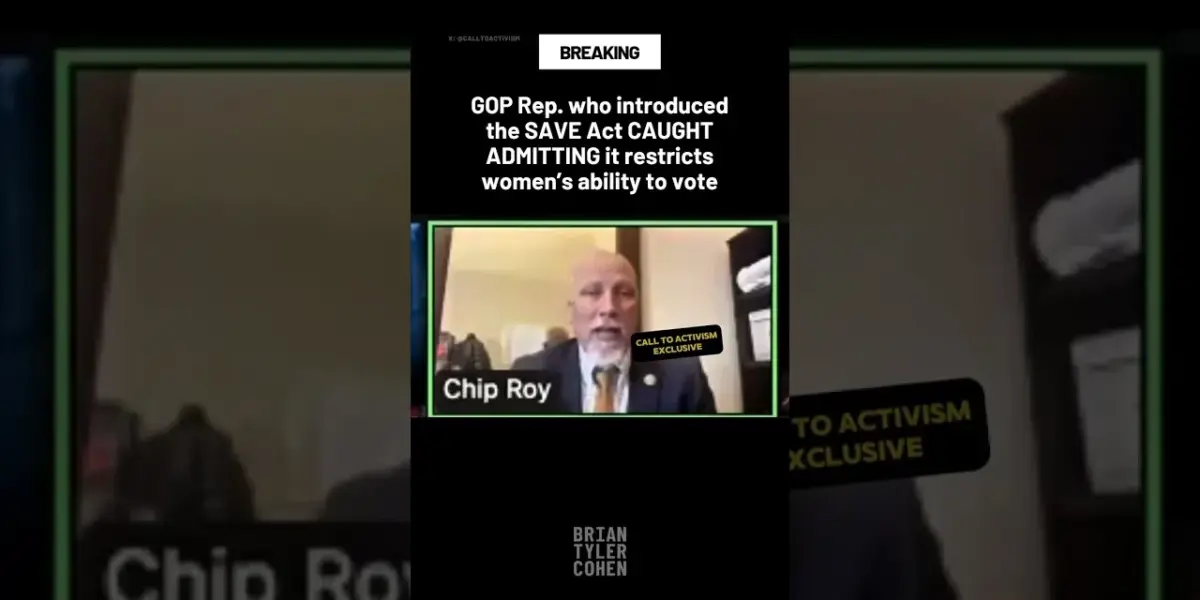
Congressman Caught in Election Bill Debate
A Republican congressman, Representative Chip Roy, recently spoke about a bill he introduced called the SAVE Act. This act aims to change how people vote. However, questions have come up about whether it makes it harder for certain people to cast their ballots. Specifically, concerns have been raised about married women and their ability to vote.
Concerns Over Voter ID Requirements
The main worry is that the SAVE Act might create problems for married women who have changed their names. They might need new identification to vote. Getting these updated IDs could be a hurdle. This is because changing a name on official documents often involves a lot of paperwork and visits to government offices. The congressman acknowledged this potential difficulty.
Acknowledging the Process
While trying to downplay the issue, Representative Roy admitted that the process of getting new identification can be complicated. He shared an example from his own office. His chief of staff recently had to get a new ID in Virginia. Virginia uses the REAL ID system, which requires specific documents. His staff member had to go to the Department of Motor Vehicles (DMV) multiple times. This shows that even for someone with access to help, the process isn’t simple.
“My chief of staff had to go get a new ID in Virginia. Virginia has adopted the real ID system. So she had to go through a bunch of hoops. She’s going to have to go back to the DMV twice because they want the paperwork for it.”
The Congressman’s Defense
Despite admitting the difficulties, Representative Roy insisted that the SAVE Act does not create actual barriers for married women to vote. He suggested that some people are trying to stir up trouble by claiming the bill is a problem. He believes the focus should be on the need for identification to ensure election integrity. He stated that the hoops his staff member jumped through are just part of how identification systems work.
Voter ID Laws: A Look Back
Laws requiring voters to show identification at the polls are not new. Many states have them. Supporters say these laws help prevent fraud and ensure that only eligible citizens vote. They argue that requiring an ID is a reasonable step to protect election security. It’s like showing your ID to buy certain items or enter certain places; it confirms who you are.
However, critics argue that these laws disproportionately affect certain groups. This includes poor people, elderly people, students, and minority groups. Many of these individuals may not have the necessary forms of identification. For example, getting a state-issued ID can cost money and require documents like birth certificates, which some may not easily possess. Critics believe these laws can suppress votes rather than prevent fraud.
The SAVE Act and Its Potential Impact
The SAVE Act, as described by Representative Roy, seems to fit into this ongoing debate. While the congressman believes it’s about proper identification, the practicalities of obtaining that ID are a concern. For married women who have recently changed their names, the process of updating their driver’s license or other state ID could indeed be a significant obstacle. This could involve gathering marriage certificates, divorce decrees, or other legal documents.
If these documents are not readily available or if the process is lengthy, a woman might be unable to vote. This is especially true if the election is close and there isn’t much time before voting day. The congressman’s own staff member’s experience highlights the effort required. It suggests that for someone without that kind of support, the task could be even more challenging.
Why This Matters
Ensuring that every eligible citizen can easily vote is fundamental to a healthy democracy. When laws are put in place, we need to consider how they affect real people. The debate around the SAVE Act shows how technical changes in voting can have unintended consequences. It’s important to balance election security with accessibility. We must make sure that rules designed to protect voting don’t accidentally prevent people from exercising their right to vote.
Future Outlook
The discussion around the SAVE Act and voter identification will likely continue. As more states adopt stricter ID requirements, the challenges faced by voters may increase. It will be crucial for lawmakers to listen to the concerns of voters and advocacy groups. They need to find ways to implement election security measures that do not disenfranchise eligible citizens. The goal should be to make voting as accessible as possible for everyone.
Source: GOP Rep. who introduced the SAVE Act CAUGHT ADMITTING it restricts women’s ability to vote (YouTube)

Related Articles

Reviving Archaic Views: The Danger of Denying Women the Vote
A recent discussion revealed a troubling viewpoint: that women should not have the right to vote, echoing dangerous historical rhetoric. This challenges the hard-won 19th Amendment and suggests power should be held by a select few. Protecting universal suffrage is vital for a democratic future.

Senator Caught in Election Integrity Hypocrisy
Reporters questioned Senator JD Vance about his past support for certain voting identification methods as Ohio Secretary of State. The exchange revealed a discrepancy between his earlier actions and his current stance on election security, sparking debate about his consistency.

Trumpism’s Fall? Voters Spark a Movement for Change
A powerful speech challenges the current political direction, urging voters to become active participants. It calls for accountability, a focus on working-class needs, and a vision for a future with healthcare for all and serious climate action. The movement aims to mobilize voters for upcoming elections to bring about significant change.