GOP Leaders Falter as Trump’s Grip Loosens Amidst Crisis
Republican leaders appear to be losing control as Donald Trump's influence wanes amidst escalating crises. This analysis explores the party's attempts to manage narratives through deflection and strained defenses, contrasting with the stark economic realities faced by Americans and the enduring importance of congressional oversight.

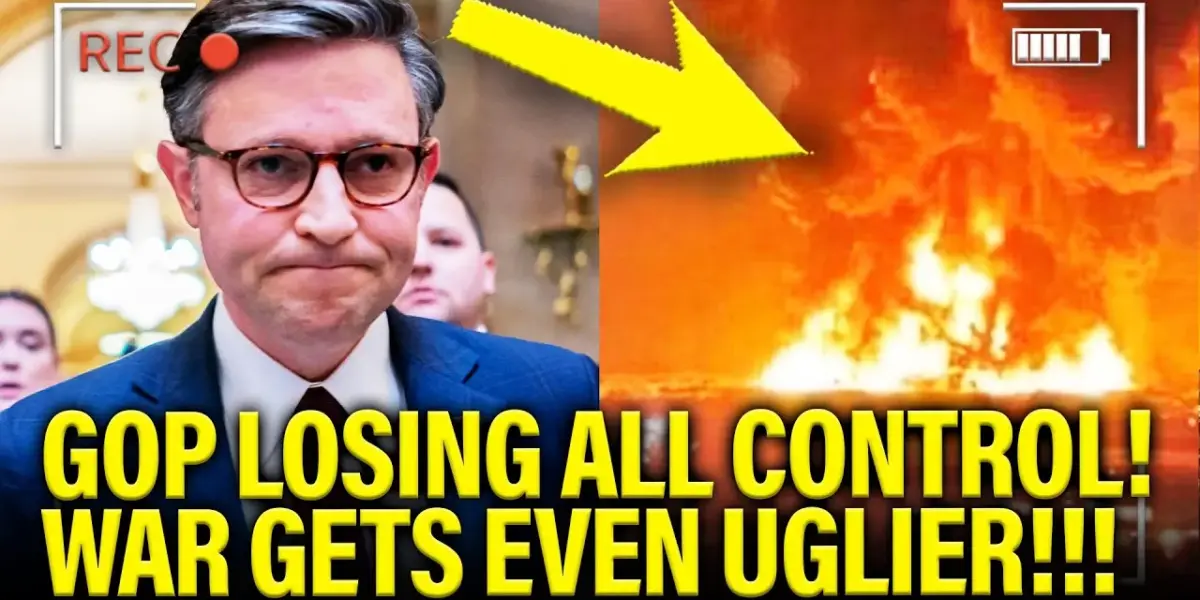
GOP Leaders Falter as Trump’s Grip Loosens Amidst Crisis
Recent political discourse reveals a growing unease within Republican leadership, as figures associated with the MAGA movement appear to be struggling to maintain control amidst escalating national and international crises. A notable sentiment emerging from the transcripts is a sense of panic and a desperate attempt to control the narrative, even as Donald Trump’s approval ratings reportedly sink to historic lows. This internal struggle is playing out on media platforms, with surrogates resorting to increasingly strained defenses and diversions.
The ‘Peace President’ Defense and Its Cracks
One of the most striking aspects of the transcripts is the attempt by some Republican figures to portray Donald Trump as a “peace president” who has diligently worked to avoid conflict. Senator Ashley Moody, for instance, is quoted as saying that Trump and his team have “done everything they can think of to avoid this conflict,” while acknowledging that one “can’t put your head in the sand and avoid threats.” This framing, however, is met with sharp criticism. Critics argue that Trump’s approach has often been confrontational, and that the current geopolitical landscape, including an ongoing war in Iran and market instability, contradicts this “peace president” narrative. The suggestion that avoiding conflict means not “running into wars everywhere” highlights a perceived disconnect between the rhetoric and the reality of international relations under his influence.
Distraction and Diversion Tactics in Right-Wing Media
The transcripts also shed light on the communication strategies employed by some in right-wing media. When faced with unfavorable circumstances, such as declining approval ratings or escalating global conflicts, the focus appears to shift to seemingly tangential issues. A clip featuring Congressman Randy Fine on Newsmax illustrates this, where the conversation pivots from the impact of ISIS-inspired terrorists to the feelings of a peaceful protester, leading to a call for deportation and strong anti-immigrant rhetoric. This tactic of deflection is further emphasized by the discussion of economic woes, including market tanking and rising inflation, juxtaposed with proposed military actions like sending special forces into Iran. The proposed “Mission Impossible” style extraction of uranium is presented as a plan, while the broader economic suffering of Americans is sidelined.
Economic Woes vs. ‘Animal Spirits’
The stark contrast between the dire economic realities faced by Americans and the optimistic, almost ethereal, economic forecasts presented on platforms like CNBC is a recurring theme. While families struggle with inflation and a worsening job market, the discussion turns to abstract concepts like “spirit animals” and the “250th year of American anniversary” as potential catalysts for market recovery. This approach is criticized for being out of touch with the immediate concerns of ordinary citizens. Democratic Congressman Joe Negus articulates this sentiment forcefully, stating that in the “real world,” families are hurting due to an “incompetent and dangerous regime” and an economy in “free fall.” He contends that the administration’s focus is on self-interest rather than the well-being of the people it serves, and that only “sycophantic supporters” are willing to defend such an approach.
The Role of Oversight and Accountability
Despite the perceived chaos and narrative control attempts, the transcripts highlight the crucial role of congressional oversight. Congressman Negus emphasizes that even with a MAGA-controlled Congress, the ability to conduct oversight and assert checks and balances remains a vital function. He points to the effective cross-examinations of officials like Christine Gregoire, suggesting that holding hearings and shining a light on corruption and fraud can lead to accountability. The firing of Gregoire is presented as an example of this, driven by the “blatant” corruption and fraud within the Department of Homeland Security under her leadership. This process, though often viewed through a partisan lens, is seen as essential for transparency and for reminding the public that accountability can still be exacted.
The Calculus of Political Survival: Embarrassment vs. Self-Enrichment
A key insight from the discussion revolves around the differing reactions to political scandals and the underlying motivations of Donald Trump. It’s suggested that while Trump may be embarrassed by corruption, he is also potentially envious if he is not the primary beneficiary. The case of Christine Gregoire versus Pam Bondi is used to illustrate this point. Bondi’s defense, even if universally condemned, was seen as loyal to Trump, whereas Gregoire’s cross-examination exposed unflattering truths about the administration and suggested that others were profiting from detention programs, not Trump himself. This distinction, the analysis suggests, explains why Gregoire was fired while Bondi remained. The ongoing investigation into who profited from certain deals and the potential for further revelations from the Epstein files underscore that the pursuit of accountability is far from over.
Navigating Distraction and Maintaining Focus
The transcripts conclude with a call to action for the public to remain focused amidst what is described as a period of mass distraction. The release of information related to the Epstein files and potential FBI concealment of information regarding Donald Trump’s alleged involvement are cited as crucial issues that could be overshadowed by other crises, such as the war in Iran. Congressman Negus urges Americans to “beat the drum” and ignore the “noise” from the administration, focusing instead on whether the government has actually improved their lives. The overwhelming consensus from his perspective is that it has not. The persistent theme is that despite the attempts to obfuscate and distract, the core question for the American people remains whether their lives have been made better by the current administration, and the answer, for many, appears to be a resounding no.
Why This Matters
This analysis is critical for understanding the current state of political communication and the challenges facing the Republican party. The reliance on deflection, the framing of controversial actions in benign terms, and the disconnect between rhetoric and reality highlight a struggle for narrative control. The emphasis on oversight and accountability, even within a partisan environment, serves as a reminder of the enduring importance of checks and balances. Furthermore, the discussion on economic hardship versus abstract economic theories underscores a widening gap between the concerns of the populace and the priorities of some political figures. As the political landscape continues to evolve, the ability of citizens to discern truth from distraction and to hold leaders accountable will be paramount.
Implications, Trends, and Future Outlook
The transcripts point to several key trends: a potential weakening of Donald Trump’s influence, an increased reliance on media surrogates to manage public perception, and a growing emphasis on diversionary tactics to distract from crises. The future outlook suggests a continued battle for the narrative, with proponents of accountability striving to maintain focus on substantive issues like economic well-being and ethical governance, while opponents may intensify efforts to obfuscate and distract. The effectiveness of congressional oversight and the public’s ability to cut through the noise will be crucial determinants of political outcomes moving forward. The ongoing investigations and the potential for further revelations suggest a period of continued scrutiny and potential upheaval.
Historical Context and Background
The discourse touches upon historical parallels of presidents facing declining approval ratings and attempting to manage public perception through various means. The mention of the 250th anniversary of American independence serves as a backdrop for discussions about national identity and renewal, contrasting with the current perceived state of crisis. The historical context of congressional oversight, particularly its role in holding executive branches accountable, is also implicitly referenced. The Epstein files and related investigations evoke a history of high-profile scandals and the public’s demand for transparency, often met with resistance or obfuscation from those implicated or their allies.
Source: 🚨 GOP Leaders LOSE CONTROL as WAP SPIRALS!!! (YouTube)

Related Articles
GOP Exodus Signals Deep Anxiety Amidst Trump’s Political Storm
An accelerating wave of Republican departures from Congress and shifts in party affiliation signal deep-seated anxiety within the GOP. This exodus, linked to Trump's leadership and economic concerns, suggests potential electoral challenges ahead.


Trump’s Legal Battles Ignite: A Nation on Edge
A live update on March 10, 2026, details a complex web of legal and political crises surrounding Donald Trump, including Iran War developments, the Epstein scandal, election integrity threats, and judicial challenges. The analysis explores the profound implications for American democracy and the rule of law.
Trump Eyes Iran’s Oil Lifeline: Kharg Island Strategy Revealed
Geopolitical analyst Ian Bremmer discusses the potential U.S. strategy of controlling Iran's vital Kharg Island, which handles 80-90% of the nation's oil exports. This move, potentially aimed at crippling Iran's finances, carries significant risks and has a history linked to President Trump's long-standing views on the region.