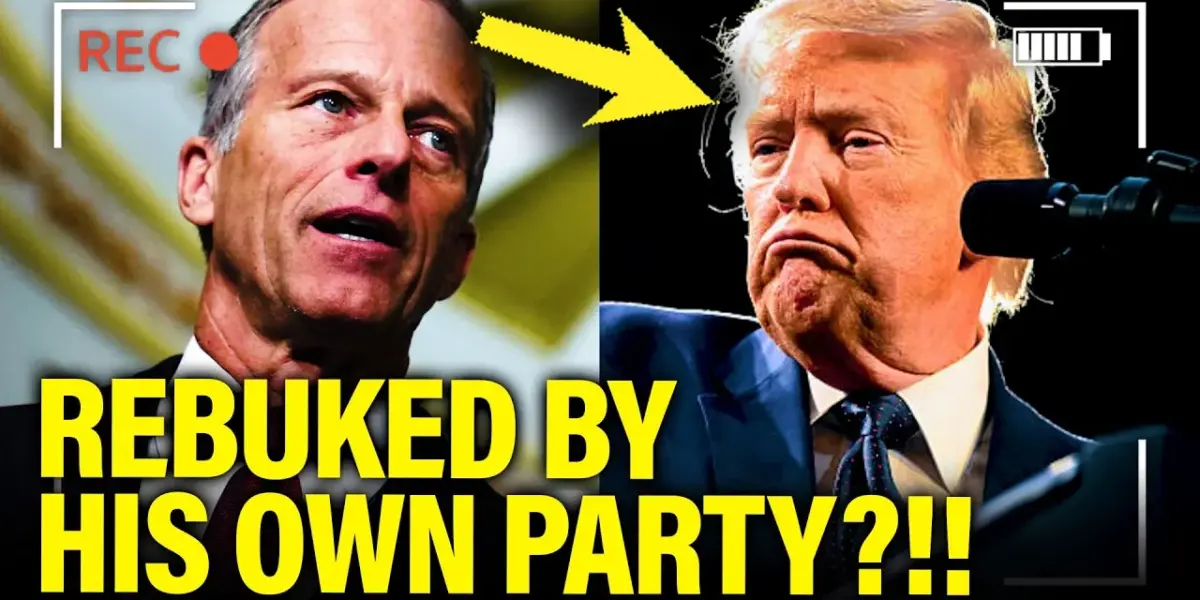
GOP Leader Thwarts Trump’s Election Scheme, Preserving Voting Rights
Senate Majority Leader Mitch McConnell's refusal to bring the "Save Act" to the Senate floor has effectively stalled a controversial piece of legislation championed by Donald Trump and the MAGA movement. The act, which proposes stringent new voter identification requirements, has drawn fierce opposition from voting rights advocates who argue it would disenfranchise millions of Americans.

GOP Leader Thwarts Trump’s Election Scheme, Preserving Voting Rights
Senate Majority Leader Mitch McConnell’s refusal to bring the “Save Act” to the Senate floor has effectively stalled a controversial piece of legislation championed by Donald Trump and the MAGA movement. The act, which proposes stringent new voter identification requirements, has drawn fierce opposition from voting rights advocates who argue it would disenfranchise millions of Americans, particularly women, minorities, and transgender individuals.
The Save Act: A Trojan Horse for Voter Suppression?
At its core, the Save Act mandates specific forms of identification for voters, such as proof of citizenship or an ID with a legal name matching a birth certificate. Critics contend that these requirements are not only burdensome but also intentionally designed to disenfranchise specific demographics. For instance, women who have changed their names due to marriage might struggle to produce documents that align perfectly with their current identification, thereby risking their ability to vote. The act also targets the transgender community by requiring identification that matches their birth name, a significant hurdle for many.
Furthermore, the legislation seeks to shift federal election oversight to the federal government, a move that directly contradicts the framers’ intent as enshrined in the Constitution’s Tenth Amendment. The historical precedent favored state control over elections, stemming from a deep-seated distrust of centralized federal power. The Save Act’s proponents, however, argue that such measures are necessary to combat widespread voter fraud, a claim that has been consistently debunked by empirical studies, court rulings, and investigations, which indicate fraud rates are infinitesimally small and do not impact election outcomes.
The Filibuster: A Shield Against Extremism
Central to this legislative battle is the Senate filibuster, a procedural tool that requires a supermajority (60 votes) to end debate on a bill and bring it to a vote. Donald Trump and his allies have pressured Senate leadership to abolish or bypass the filibuster to pass the Save Act with a simple majority. However, Senate Majority Leader Mitch McConnell has resisted this pressure. His stance is rooted in a pragmatic understanding of Senate tradition and a concern for future Republican leverage. McConnell reportedly fears that eliminating the filibuster to pass the Save Act would set a precedent that Democrats could exploit if they regain control of both chambers, leaving Republicans with no procedural means to block legislation.
The filibuster, in its current form, has evolved from its historical roots of extended floor speeches to a more procedural “verbal filibuster.” A single senator can signal their intent to filibuster, requiring 60 votes for cloture (ending debate) before a simple majority can pass a bill. This mechanism allows the minority party to obstruct legislation, a power McConnell seems unwilling to relinquish, even under intense pressure from Trump and other MAGA figures like Elon Musk and Mark Meadows.
Trump’s Fury and the MAGA Coalition’s Demands
Donald Trump has been vocal in his frustration with McConnell’s inaction, framing the Save Act as a critical measure for election integrity and a guaranteed path to Republican electoral success. In a public plea, Trump asserted that passing voter ID laws is essential for political survival and would prevent “cheating,” while also claiming it is the “most popular bill” he has ever seen. He believes that enacting the Save Act would not only secure midterm victories but also ensure long-term Republican dominance.
However, the broader MAGA coalition is divided. While figures like Elon Musk and Mark Meadows are vocally advocating for the elimination of the filibuster to pass the Save Act, others, including some legal analysts, are pushing back. The narrative from Trump and his most ardent supporters paints a picture of a nation plagued by rampant voter fraud, a narrative consistently contradicted by evidence. This internal pressure highlights the ideological rifts within the Republican party regarding legislative strategy and the very definition of election integrity.
Historical Context and the Future of Voting Rights
The debate over voter ID laws and election access is not new. Throughout American history, there have been recurring tensions between expanding suffrage and implementing measures that, intentionally or unintentionally, restrict access to the ballot box. From the poll taxes and literacy tests of the Jim Crow South to contemporary debates over voter ID and registration purges, the struggle for equitable access to voting has been a constant feature of the American political landscape.
The Save Act represents a modern iteration of these historical efforts, cloaked in the language of security and integrity. The opposition, however, is mobilizing effectively, utilizing legal challenges and public advocacy to counter what they perceive as a deliberate attempt to undermine democratic participation. The current impasse in the Senate, largely due to the filibuster, offers a temporary reprieve for voting rights advocates.
Why This Matters
The outcome of this legislative battle has profound implications for the future of voting rights in the United States. If the Save Act were to pass, it could lead to the disenfranchisement of millions, disproportionately affecting marginalized communities and altering the electorate in ways that could significantly impact election results. The refusal of Senate leadership to entertain such measures, even under immense pressure, underscores the critical role of procedural rules like the filibuster in moderating extreme legislative proposals.
Implications, Trends, and Future Outlook
The current situation highlights a broader trend of intense partisan conflict surrounding election laws. As the 2024 election cycle approaches, expect continued efforts to reshape voting access, with both parties employing various strategies to mobilize their base and influence the electorate. Trump’s persistent focus on election integrity, fueled by his unsubstantiated claims of widespread fraud, suggests that these issues will remain central to his political platform.
The resistance to the Save Act, however, indicates that established procedural norms and bipartisan (or at least non-MAGA Republican) opposition can still act as bulwarks against radical policy shifts. The future outlook depends on a complex interplay of political will, judicial rulings, public opinion, and the enduring power of procedural mechanisms like the filibuster. For now, the Save Act appears dead on arrival in the Senate, a significant victory for voting rights advocates, but the underlying appetite for altering federal election rules by certain factions of the Republican party remains a potent force to monitor.
Source: Trump FURIOUS as Republicans KILL His Election Scheme (YouTube)

Related Articles

Polls Spell Doom: Republicans Face Voter Backlash
New polling data reveals a sharp decline in public confidence regarding the economic impact of Republican policies, particularly under Donald Trump. A significant majority now feel financially worse off, a trend that is especially pronounced among independent voters. This economic discontent poses a major challenge for the Republican party heading into future elections.


Trump Delays Iran Strike Deadline Amidst Shifting Diplomacy
President Donald Trump has extended his deadline for potential strikes on Iranian energy plants to April 6th, amid reports of U.S.-Iran diplomatic talks mediated by Pakistan. This move comes as Israel continues its strikes on Iran and the U.S. deploys additional military assets to the region. Analysts point to mixed signals, economic pressures, and strategic miscalculations as key factors shaping the evolving situation.

Iran War Claims Ring Hollow as US Troops Injured in New Attack
Days after Donald Trump claimed "we've won" the war with Iran, a new attack injured approximately a dozen U.S. troops and damaged aircraft. This incident contradicts Trump's assertions of victory and raises serious questions about the strategy and reality of the ongoing conflict.