GOP Faces Uphill Battle for House Control Amidst Internal Strife
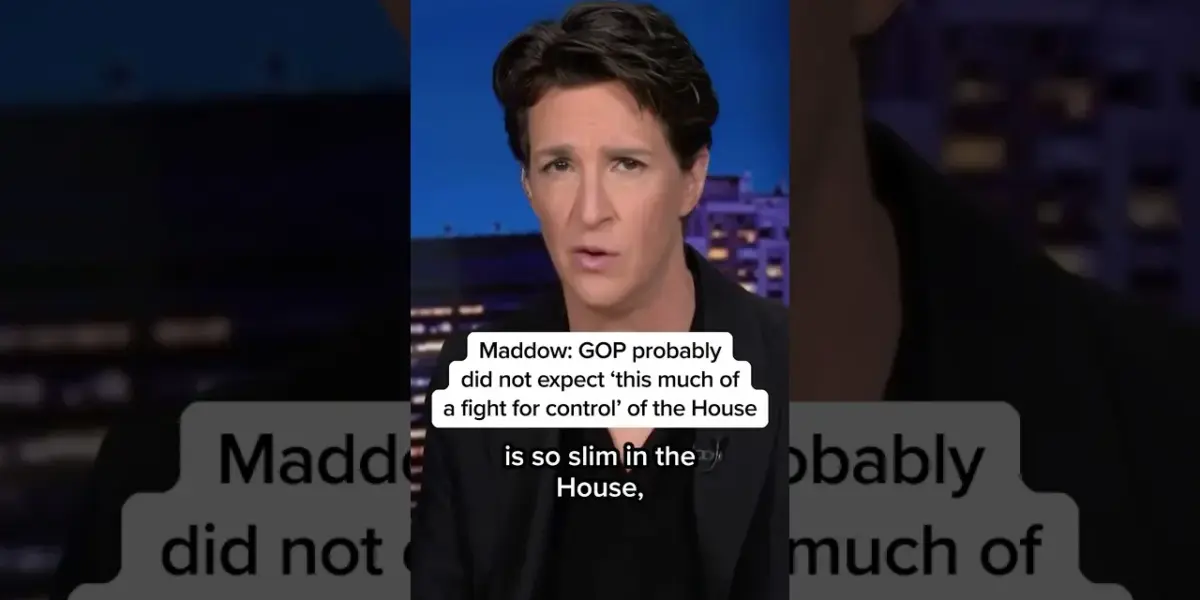
Republicans anticipated a competitive election for House control, but recent internal strife and unexpected resistance have intensified the battle, according to Rachel Maddow. Key departures within the GOP caucus signal deeper divisions, potentially complicating their strategy and impacting their ability to govern.

House GOP Grapples with Unexpected Resistance in Bid for Majority
Republicans anticipated a competitive landscape in their pursuit of maintaining control over the House of Representatives in the upcoming November elections. However, recent developments and internal dynamics suggest the battle may be more intense and fraught with unexpected challenges than initially projected, according to MSNBC host Rachel Maddow.
Maddow, in a segment discussing the current political climate, highlighted that while a contest for power was always on the horizon, the magnitude of the internal struggles and the ferocity of the opposition have seemingly caught the GOP off guard. The narrative emerging points to a Republican party that may have underestimated the resolve of its opponents and the potential for internal dissent to complicate its strategic objectives.
Departures Signal Deepening Divisions Within the Republican Caucus
The recent spate of departures from the House Republican conference has become a focal point in discussions about the party’s future and its ability to govern. These exits, often attributed to a variety of factors including legislative frustrations, ideological disagreements, and the demanding nature of congressional service, are being interpreted as indicators of deeper fissures within the party.
While the exact motivations behind each departure are multifaceted, the cumulative effect is a weakening of the Republican majority and a potential loss of institutional knowledge and experience. This situation creates a vacuum that not only impacts the party’s immediate legislative agenda but also its long-term strategic positioning.
The Impact on Legislative Agendas and Governance
The implications of these departures extend beyond mere seat counts. Each member leaving represents a unique voice and a set of policy priorities that will no longer be present in the chamber. This can make it harder for the Republican leadership to coalesce support around key legislation and to present a united front on critical national issues.
Furthermore, the constant churn of personnel can disrupt the continuity of legislative efforts. Committees may lose experienced members, and the delicate balance of power within various caucuses can be upset. For a party seeking to solidify its control and implement its agenda, such instability is a significant impediment.
Underestimating the Opposition: A Strategic Miscalculation?
Maddow’s assessment suggests a potential strategic miscalculation on the part of Republican leadership. The expectation of a challenging election is one thing; preparing for the level of resistance and internal friction that is now manifesting is another. The intensity of the fight for control appears to be exceeding prior estimations, forcing the party to divert resources and attention to internal management rather than solely focusing on electoral outreach and policy promotion.
This heightened level of opposition can be attributed to several factors, including a highly mobilized Democratic base, a growing number of swing voters concerned about key policy issues, and potentially, the effectiveness of the Republican party’s own messaging and actions in galvanizing opposition. The current political environment is proving to be more dynamic and less predictable than anticipated.
The Broader Implications for the Midterms and Beyond
The current state of affairs within the House GOP carries significant implications for the upcoming midterm elections and the broader political landscape. A fractured or internally struggling Republican party may find it more difficult to persuade independent voters and to mobilize its own base effectively.
The narrative of internal discord could also be exploited by political opponents, painting the party as dysfunctional or incapable of effective governance. This narrative, if it takes hold, could sway undecided voters and depress turnout among potential Republican supporters who are disillusioned by infighting. The fight for control of the House is thus becoming not just an electoral contest but a referendum on the Republican party’s internal cohesion and its readiness to lead.
Looking Ahead: Navigating the Turbulent Path to November
As the political calendar advances towards November, the Republican party faces the critical task of consolidating its caucus, addressing internal divisions, and effectively communicating its vision to the electorate. The unexpected intensity of the fight for House control suggests that the path ahead will be anything but smooth. Observers will be closely watching how the GOP leadership navigates these internal challenges and whether they can present a unified and compelling case to voters, or if the ongoing strife will ultimately undermine their bid to retain their congressional majority.
Source: Maddow: GOP probably didn't expect 'this much of a fight for control' of the House (YouTube)

Related Articles

House Republicans Reject Senate Deal, Sparking Government Funding Clash
House Republicans have rejected a Senate bill to end the government shutdown, citing insufficient border security measures. Congressman Randy Fine called the Senate deal a "disgrace" and highlighted the ongoing fight for full government funding. President Trump's executive order to pay TSA agents offers temporary relief, but the core disagreement over border security continues to paralyze Washington.

Voter ID: Common Sense or Suppression?
A growing debate surrounds voter ID laws, with proponents calling them a common-sense measure against fraud and opponents fearing voter suppression. Many countries and U.S. states already require ID to vote.


MAGA Voters Divided Over Potential Iran War
The potential for a US war with Iran has sparked debate at CPAC, revealing a divided MAGA base. While some support military action, many express concerns over prolonged conflicts and rising economic costs, particularly higher gas prices.