GOP Election Bill Faces Uphill Battle Amidst Partisan Divide
Republicans are pushing the SAVE Act, a bill requiring proof of citizenship to register to vote, but it faces strong Democratic opposition. A recent amendment on transgender issues was voted down, highlighting the deep partisan divide. The bill's future in the Senate remains uncertain.

GOP Election Bill Faces Uphill Battle Amidst Partisan Divide
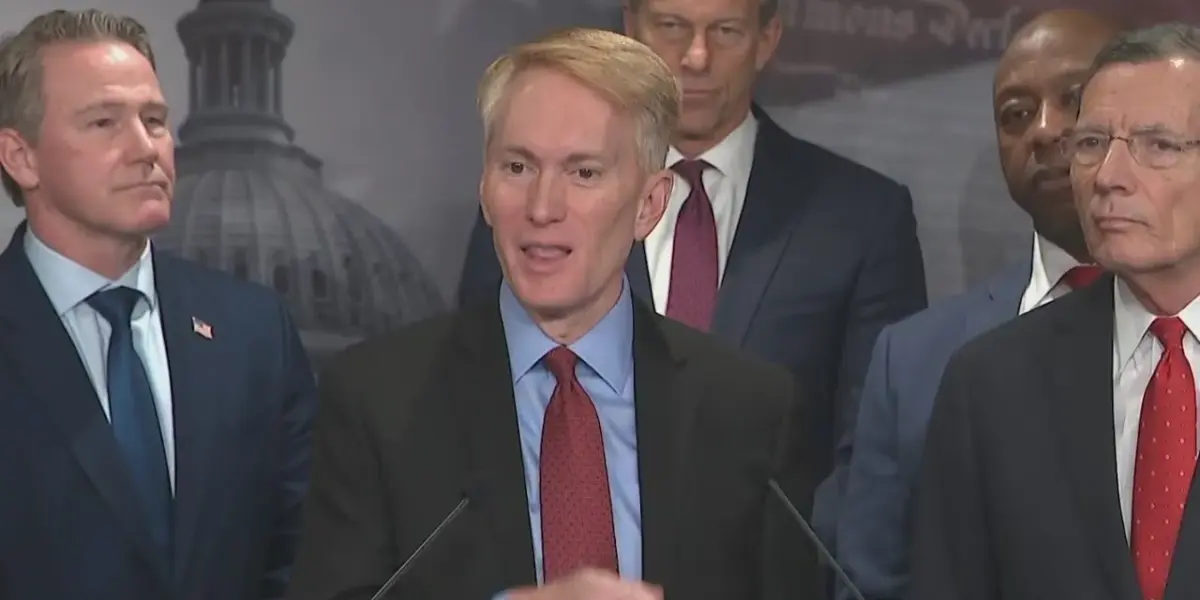
Lawmakers are gathered in Washington D.C. over the weekend to debate the SAVE Act, a Republican-backed bill championed by former President Trump. This legislation aims to tighten voting rules by requiring proof of citizenship for voter registration. However, the bill faces significant opposition from Democrats, making its passage uncertain.
Key Provisions and Republican Support
The core of the SAVE Act would mandate that individuals provide proof of citizenship, such as a passport or birth certificate, when registering to vote. Republicans argue this is a common-sense measure to ensure election security and prevent non-citizens from casting ballots. They believe it is essential to verify the identity of every voter.
Former President Trump has publicly stated that passing this bill is his top priority. He emphasized its importance in a social media post, calling it crucial for the United States. The Republican party largely supports the bill, viewing it as a necessary step to restore faith in the electoral process.
Democratic Opposition and Concerns
Democrats, however, strongly oppose the SAVE Act. They argue that it is already illegal for non-citizens to vote and that the proposed measures would unfairly suppress the votes of eligible citizens. Critics describe the bill as a “voter purge bill” designed to make it harder for certain groups to cast their ballots.
During the weekend session, a Republican amendment related to transgender athletes and medical procedures for minors was voted down. This amendment sought to ban individuals born male from participating in women’s sports and to prohibit gender-affirming surgeries for minors. While this amendment was defeated, the broader debate on the SAVE Act is expected to continue for several days, covering issues beyond just voter identification.
The Political Stalemate
The intense debate highlights the deep partisan divisions in Congress. Republicans are pushing for stricter voting regulations, while Democrats are concerned about voter suppression. This fundamental disagreement over election integrity and access is a major obstacle to the bill’s progress.
Currently, the SAVE Act does not appear to have enough votes to pass the Senate, primarily due to a lack of Democratic support. A final vote is anticipated sometime next week, with sources suggesting it could occur as early as Wednesday. The outcome remains uncertain, hinging on whether any bipartisan compromise can be reached or if Republicans can muster enough votes on their own, which seems unlikely at this stage.
Historical Context and Election Laws
The debate over voter identification and proof of citizenship has a long history in American politics. Various states have implemented different forms of voter ID laws, often leading to legal challenges and partisan disputes. Republicans typically advocate for these measures as safeguards against fraud, while Democrats often view them as barriers to voting, particularly for minority groups and low-income individuals who may have less access to required identification.
Federal election law already prohibits non-citizens from voting. The core of the current debate is not about allowing non-citizens to vote, but rather about the methods and requirements for verifying the eligibility of registered voters. The SAVE Act proposes a federal standard that would be more stringent than what is currently in place in many states.
Economic and Social Implications
While the transcript focuses on the legislative process, such election reform bills can have broader economic and social implications. Measures that make it harder to register or vote could disproportionately affect certain demographics, potentially impacting their participation in civic life and the economy. Conversely, proponents argue that secure elections foster greater public trust, which is vital for economic stability and social cohesion.
Why This Reshapes the World Order
The struggle over the SAVE Act, while seemingly domestic, reflects a global trend of political polarization and debates over national identity and security. In many countries, similar discussions are occurring about who belongs, who has a voice, and how to maintain the integrity of democratic institutions. The specific focus on citizenship verification in voting touches upon fundamental questions of sovereignty and the definition of the electorate. The inability of the U.S. Congress to find common ground on such a core democratic process can also impact its standing on the global stage, potentially signaling internal divisions that could affect its foreign policy and alliances.
Future Scenarios
Several scenarios could unfold. The bill might fail to pass due to insufficient votes, leading to continued debate and potential future attempts at election reform. Alternatively, a compromise could be reached, incorporating some Democratic concerns, though this seems unlikely given the current animosity. A third possibility is that the bill passes along party lines, further deepening the political divide and potentially leading to legal challenges in the future. The influence of former President Trump’s strong advocacy will likely continue to shape the Republican party’s approach to this issue.
Source: Democrats block SAVE America Act amendment | NewsNation Live (YouTube)

Related Articles
House Funds DHS Short-Term, Senate Stalemate Looms
The House has passed a short-term bill to fund the Department of Homeland Security, but the Senate is expected to reject it. This temporary measure highlights ongoing political divisions and the challenges in reaching long-term budget agreements in the U.S. Congress.

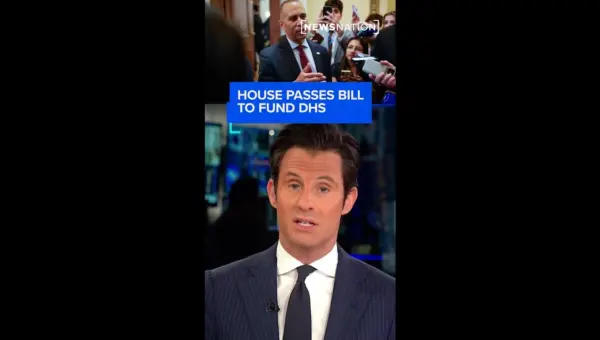
Congress Stalemate Threatens Border Security Funding
The U.S. House passed a temporary funding bill for the Department of Homeland Security, but Senate Democrats are expected to block it. This recurring stalemate highlights deep divisions over border policy and funding, potentially impacting national security and international perceptions of U.S. stability.


Americans Rally for Democracy Amidst War and Economic Woes
Thousands of Americans are participating in "No Kings" rallies nationwide, demanding accountability from leaders and drawing parallels to historical movements that spurred significant change. The protests occur amidst a controversial war with Iran, economic uncertainty, and a partial government shutdown. Organizers emphasize solidarity, joy, and the power of collective action in defending democracy.