GOP Elders Urge 25th Amendment Amidst Trump’s Erratic Behavior
Concerns are mounting among some Republicans about Donald Trump's health and decision-making, leading to calls for invoking the 25th Amendment. Questions about his foreign policy, particularly regarding Iran, and his public statements are fueling this debate.

GOP Elders Urge 25th Amendment Amidst Trump’s Erratic Behavior
Concerns are growing among some prominent Republicans about Donald Trump’s fitness for office. Reports suggest that his mental and physical health are causing alarm, leading to calls for the invocation of the 25th Amendment. This amendment allows for the removal of a president if they are unable to discharge their duties.
These calls are not coming from the fringes but from respected figures within conservative circles. For example, Scott McConnell, a co-founder of The American Conservative magazine, has publicly suggested a path forward involving Vice President J.D. Vance. McConnell’s advice includes Vance announcing support for a 25th Amendment transition, naming a potential vice president, and stating he will not run in 2028. This proposal aims to ensure stability and a clear succession plan.
Questions Surrounding Iran Conflict
Adding to the unease are questions about Trump’s decision-making regarding foreign policy, particularly the escalating situation with Iran. Reports indicate that bad intelligence from Israel may have influenced Trump’s decision to consider military action. McConnell questioned why the U.S. president would rely on intelligence from a foreign country, especially one with its own interests in the region.
“So Netanyahu fed Trump BS intelligence. Trump ignoring his own intelligence agencies lapped it up and now because things didn’t work out like the BS intelligence claim wants to commit a genocide in our name. Uh, okay.”
This situation raises concerns about the basis of U.S. foreign policy decisions and the potential for misguided actions based on flawed information. The reliance on foreign intelligence without thorough vetting from U.S. agencies could have severe consequences.
Observed Behavior and Public Statements
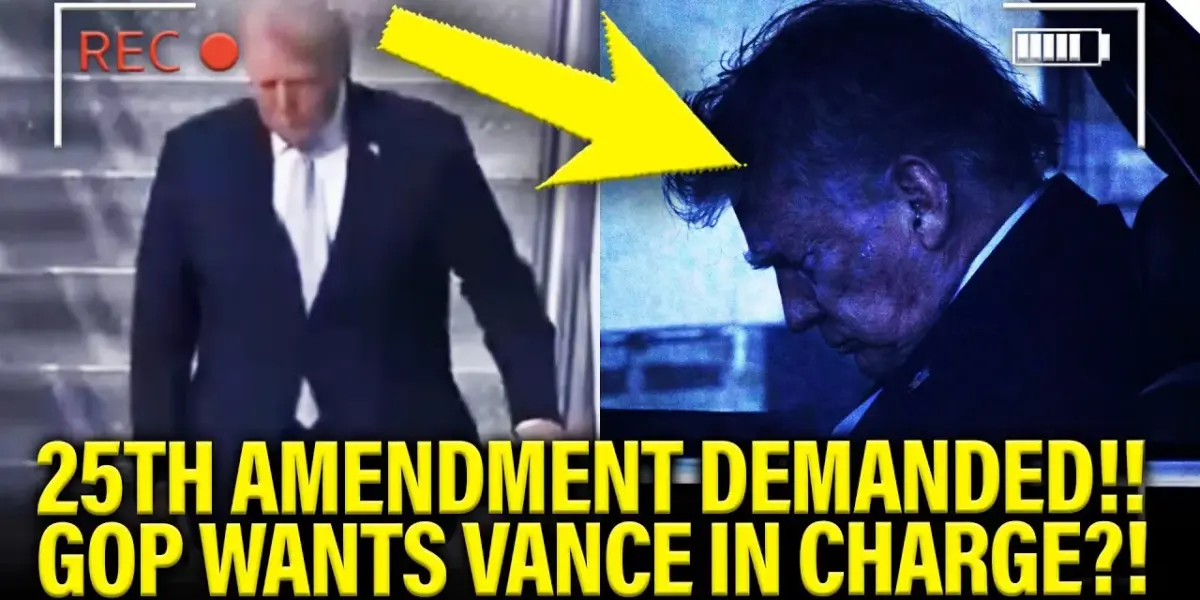
Observers have pointed to recent public appearances and social media activity as evidence of Trump’s declining faculties. Videos circulating online show him struggling with stairs, which some interpret as a sign of physical frailty. His social media posts have been described as erratic, including the sharing of old photos and seemingly nonsensical statements about political events and opponents.
During recent interviews with Israeli and U.S. news outlets, Trump’s responses to questions about the Iran conflict have been noted as unclear and disconnected. When asked about Iran’s rejection of his ultimatum, he responded, “Okay, let’s see whether or not he, the foreign minister of Iran, is right.” This kind of non-responsive answer has fueled concerns about his ability to articulate coherent policy or plans.
Furthermore, Trump’s rhetoric has been criticized as potentially inciting violence and war crimes. His statements about the “total decimation of Iran” and that it would be “fun” to bomb the country have drawn sharp condemnation. Critics argue that such language blurs the lines between the Iranian regime and its people, potentially alienating the population and increasing risks for U.S. troops.
Internal Opposition and Accusations
Not all Republicans are aligned with these concerns. Some staunch supporters, like Laura Loomer, have fiercely defended Trump and accused those calling for the 25th Amendment of orchestrating a coup. Loomer suggested that figures like Tucker Carlson, who is reportedly friendly with Scott McConnell, are involved in spreading these ideas to undermine Trump’s presidency.
This internal division highlights the deep polarization within the Republican party. While some see Trump’s actions as a threat to national security and stability, others view any criticism as an attack by political opponents and the media.
Historical Context and Precedents
The 25th Amendment was established in the wake of President John F. Kennedy’s assassination. Its primary purpose is to address presidential disability, ensuring a smooth transfer of power when the president is unable to perform their duties. It has been invoked twice in U.S. history: once when President Ronald Reagan was shot and again when President George W. Bush briefly transferred power to Vice President Dick Cheney during a colonoscopy.
The debate over invoking the 25th Amendment against a sitting president is a serious constitutional matter. It requires a consensus among top officials, including the Vice President and a majority of the cabinet, or a declaration by Congress. Such a move would be unprecedented in recent political history and would likely trigger significant political and public upheaval.
Why This Matters
The ongoing discussion about Donald Trump’s health and decision-making has profound implications for the United States and global stability. If credible concerns about a president’s fitness are ignored, it could lead to disastrous policy outcomes, increased international conflict, and a weakening of democratic institutions.
The reliance on potentially flawed intelligence, coupled with aggressive and seemingly impulsive rhetoric, poses significant risks. It could escalate tensions with Iran, endanger U.S. service members, and damage America’s standing on the world stage. The internal divisions within the Republican party also raise questions about the future direction of conservative politics and its ability to govern effectively.
Implications, Trends, and Future Outlook
The trend of political discourse becoming increasingly focused on the personal fitness of leaders, rather than solely on policy, is a concerning development. This focus can distract from substantive issues and create an environment ripe for misinformation and political opportunism.
Looking ahead, the situation underscores the importance of robust checks and balances within the U.S. government. The 25th Amendment serves as a critical, albeit rarely used, mechanism to address presidential incapacity. However, its invocation is politically fraught and requires a high threshold of evidence and consensus.
The events also highlight the challenges of navigating complex foreign policy issues in an era of rapid information dissemination and social media. The ability of a president to communicate clearly, make sound judgments, and act on reliable intelligence is paramount. The current situation suggests that these fundamental requirements may be in question, demanding careful scrutiny from both political actors and the public.
Source: Trump’s HEALTH CRASHES in WAR as 25th AMENDMENT DEMANDED!! (YouTube)

Related Articles


Tiger Woods Arrested for DUI After Crash
Golf legend Tiger Woods was arrested for DUI in Florida following a dramatic rollover crash. Meanwhile, a government shutdown continues as House Republicans block a Senate deal, leading to airport chaos and TSA worker pay issues. The stock market also plummeted into correction territory amid fears of a prolonged Iran conflict.

Trump’s Name Everywhere: A ‘Stain’ on GOP Legacy?
Former President Donald Trump's efforts to brand national symbols, including a proposed signature on dollar bills, spark debate. Critics view this as an authoritarian attempt to embed his legacy, potentially staining the Republican Party's history and contrasting with democratic ideals of public ownership.

Trump’s Iran War Plans Criticized Amid Border Funding Standoff
Lawmakers and analysts are criticizing the Trump administration's handling of the Iran conflict and its approach to border funding, arguing that a lack of clear planning and a focus on political battles are making the U.S. less safe. Concerns are particularly high regarding the FBI's priorities and the potential impact of these issues on national security.