GOP Congressman Questions Missile Blame, Eyes Iran’s Nuclear Future
Republican Congressman Cory Mills has questioned the validity of claims that a U.S. missile struck a school in Iran, demanding concrete evidence. The discussion also covered Iran's degraded military capabilities, its nuclear program, and the potential for a transitional government, with Mills emphasizing the need for thorough investigation and accountability.

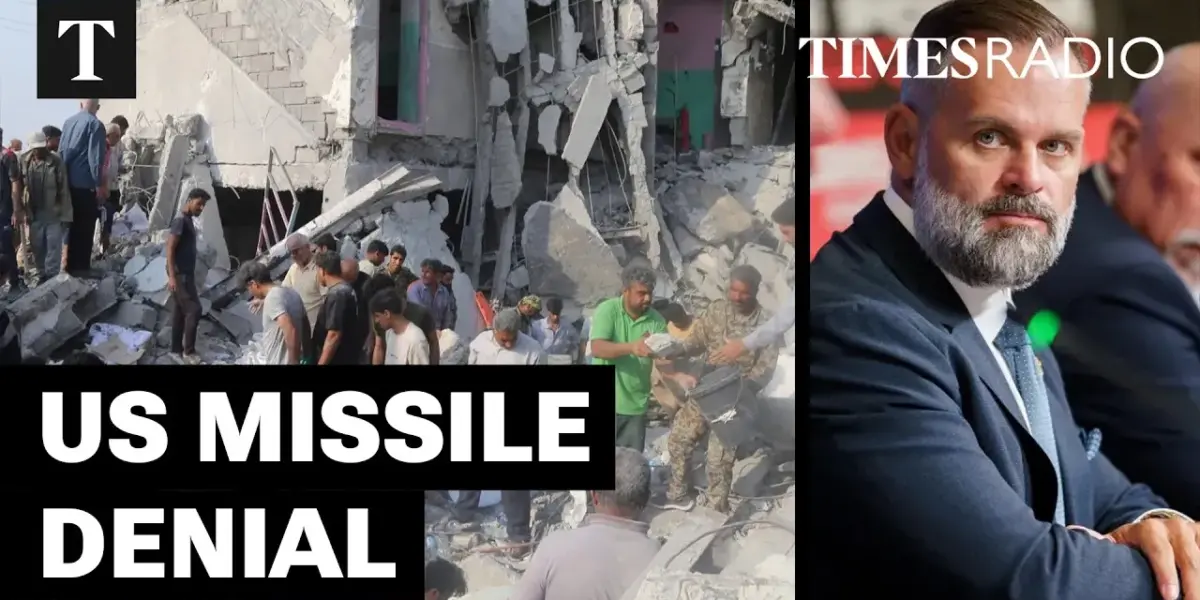
GOP Congressman Disputes Claims of US Missile Striking Iranian School
Republican Congressman Cory Mills has voiced skepticism regarding claims that an American missile struck a school in Iran, resulting in numerous casualties. Speaking on Times Radio, Mills emphasized the need for concrete evidence to substantiate such accusations, particularly given the ongoing conflict and the involvement of various actors. He suggested that reports attributing the strike to the U.S. might stem from unreliable sources.
“I would like to see where the actual evidence of this came about,” Mills stated, questioning the validity of information presented by media outlets and investigative websites. He alluded to potential misidentifications or deliberate misinformation campaigns, suggesting that “a lot of media journalists, they’re out there now and they’re inspectors and they’re also professional.” This stance comes amidst heightened tensions and a complex information landscape surrounding the conflict.
Assessing Iran’s Military and Nuclear Capabilities
The conversation with Congressman Mills delved into the broader strategic implications of the conflict, including the status of Iran’s military infrastructure and its nuclear program. Mills agreed with the assessment that U.S. and Israeli actions have significantly degraded Iran’s missile sites, factories, and navy, leading to a noticeable decline in attacks on regional allies.
“I wouldn’t describe the Iranian regime as being fully intact as well,” Mills remarked. “I think that we’ve seen where there’s been a complete denigration with regards to the military installations, headquarters, as well as for heads of those individual departments and bureaus. I’ve seen where we’ve completely looked at the elimination of many of their mobile launch sites.”
He further elaborated on the destruction of Iran’s drone manufacturing capabilities, specifically mentioning the Shahed 136, a drone that has been prevalent in recent attacks. Mills highlighted that the U.S. has even modified such technology, indicating a proactive approach to countering Iranian military advancements.
The Nuclear Question: Finding Enriched Uranium
A significant portion of the discussion focused on Iran’s nuclear ambitions and the challenge of verifying its enriched uranium stockpiles. Mills suggested that once stability is achieved and a transitional government is in place, international inspectors from the IAEA (International Atomic Energy Agency) should be allowed to assess the damage at key nuclear facilities like Natanz and Esfahan.
When pressed on how to locate the enriched uranium, estimated to be around 60% and potentially convertible to weapons-grade material, Mills indicated that its location is likely tied to the centrifuge facilities. He referenced past UN reports from Ban Ki-moon and Ban Ki-moon that established Iran had already exceeded enrichment limits under Resolution 2231 of the JCPOA.
While acknowledging the potential need for verification, Mills explicitly rejected the idea of deploying American troops on the ground for this purpose. He differentiated the current situation from conflicts in Iraq and Afghanistan, framing the action as a necessary measure to eliminate an “evil regime” and a tyrannical dictatorship that posed an existential threat to allies and posed a threat with its ICBMs capable of reaching the U.S. coast.
Transitioning to a New Iranian Government
The congressman also weighed in on the potential for a new leadership in Iran, expressing a preference for a return to a pre-1979 Persian system, referencing Crown Prince Reza Pahlavi. Mills suggested that Pahlavi could serve as an interim leader during a transitional phase.
The discussion touched upon the security guarantees required for such a transition, with Mills noting that multiple regional actors, including Qatar, the UAE, Jordan, and Israel, have a vested interest in a stabilized Iran. He drew parallels to U.S. security support for leaders in Afghanistan and Iraq, acknowledging the potential for insurgency but emphasizing the importance of learning from past mistakes, such as the de-Ba’athification process in Iraq.
Mills stressed the need for caution in establishing a new political structure, avoiding a “sectarian democracy” and ensuring a genuine chance for stability in a free Iran.
Addressing Oil Prices and Global Stability
The conversation shifted to the economic repercussions of the conflict, particularly the impact on oil prices. Mills posited that the strategic actions taken, while momentarily impacting oil markets, could ultimately lead to greater global stability. He suggested that the situation could significantly affect the economies of Russia and China, potentially hindering their ability to fund ongoing conflicts or pursue aggressive geopolitical aims.
Mills argued that the conflict could put America back on the world stage as a decisive actor. He also addressed concerns about the unpopularity of the war among American voters, suggesting that the messaging needs to be clearer: this is not a protracted conflict like Iraq or Afghanistan, but a “strategic military strike for stability” followed by a swift withdrawal.
Call for U.S. Accountability and Investigation
Returning to the initial claim about the school strike, Mills reiterated his demand for verifiable evidence. He stated that in any military action, thorough after-action reviews are essential for continuous improvement and accountability.
“So, I would like to see where the actual evidences came about because I know that the Iranian… has been verified by various sources,” Mills said, before questioning the reliability of those sources when prompted. He expressed skepticism towards media outlets presenting themselves as verification experts without robust evidence.
Despite his skepticism about the initial claims and their sources, Mills affirmed that the U.S. military, under Secretary Pete Hegseth, takes such allegations seriously. He pledged to request a classified briefing to ensure validation and either take responsibility if the U.S. is implicated or clear the names of the military if the claims are unfounded.
Looking Ahead: Verification and Future Stability
The immediate future will likely involve a rigorous U.S. military investigation into the alleged missile strike on the school, aiming to provide a definitive answer and ensure accountability. Simultaneously, efforts to monitor Iran’s nuclear program and foster regional stability will remain paramount. The potential for a transitional government in Iran, and the international support it might receive, will be a critical development to watch.
Source: Republican Congressman Disputes Claims That Missile That Hit School Was American (YouTube)

Related Articles


Hegseth’s Iran Response Criticized as ‘Disturbing in its Weakness’
Defense Secretary Pete Hegseth's responses regarding U.S. forces in Iran have been widely criticized as "disturbing in its weakness" and lacking strategic clarity. Observers pointed to his body language and ambiguous statements as indicators of a lack of transparency and gravitas.


Trump’s ‘Excursion’ Framing: A Rhetorical War on Perception?
Donald Trump's characterization of military actions as "short-term excursions" is a strategic use of language to manage public perception. This analysis explores the rhetorical power of euphemisms, historical precedents, and the potential pitfalls of downplaying conflict.


Iran Escalates Conflict: New Hardline Leader Takes Charge Amidst Global Tensions
Iran has appointed a hardline successor to its Supreme Leader amidst escalating international conflict. As missile strikes continue and global oil markets react, the UK details its military involvement, while humanitarian concerns rise. The potential for Kurdish involvement in Iran's western regions adds another layer of complexity to the deepening crisis.