Gold Surges Past $4,400 Amid “Debasement Trade” Fears
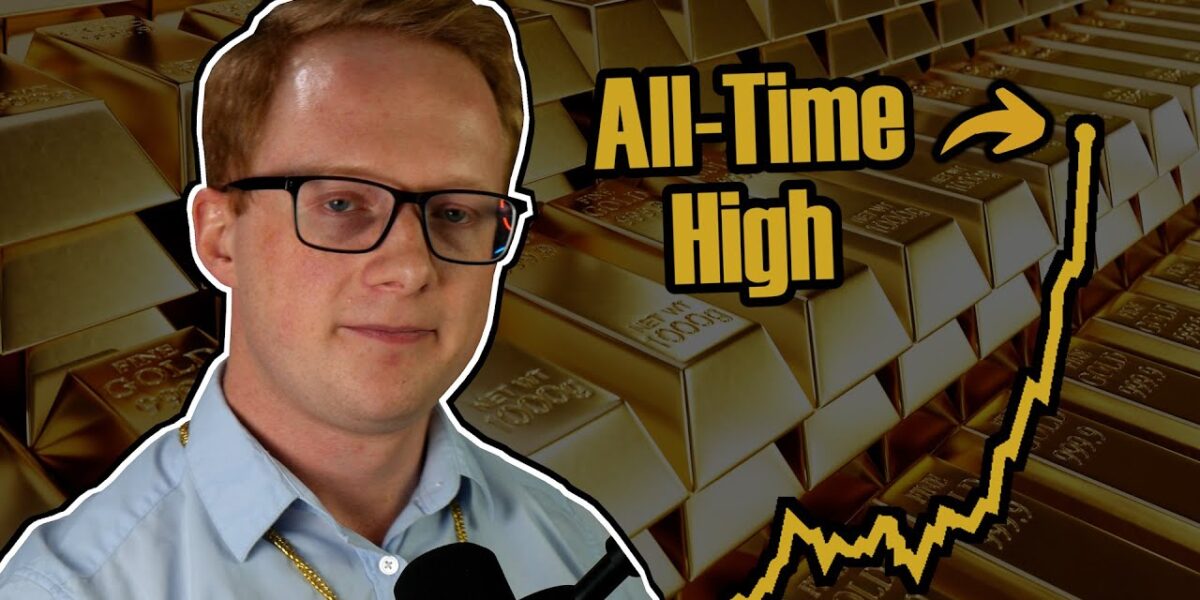
Gold prices have surged over 60% year-to-date, hitting record highs near $4,400 per ounce. This rally is fueled by economic and political uncertainty, coupled with significant central bank buying. While some attribute the rise to fears of U.S. dollar debasement, a closer look reveals a more complex picture with potential risks for investors.

Gold Reaches Record Highs as Investors Weigh “Debasement Trade” Narrative
The price of gold has surged dramatically year-to-date, surpassing 60% in gains and reaching a new all-time high of nearly $4,400 per ounce earlier this week. This rally has extended to silver, which has also seen significant price appreciation and hit its own record highs. The fervor around the precious metal has been palpable, with anecdotal evidence suggesting increased consumer interest, including long lines at gold dealers in Australia and Vietnam, and record-high search volumes for information on buying gold.
Understanding Gold as an Investment
Gold’s appeal as an investment is rooted in several key characteristics, despite its lack of cash flow or yield. Historically, gold has been viewed as a safe haven asset, a store of value that tends to perform well during periods of economic and political turmoil. Its price has notably crossed significant psychological and technical levels during times of stress: surpassing $1,000 an ounce during the Great Financial Crisis, $2,000 during the COVID-19 pandemic, and $3,000 earlier this year amidst trade tensions.
Several factors contribute to gold’s status:
- Scarcity: The global supply of gold grows by approximately 2% annually, with a portion coming from recycling, making it a relatively rare commodity.
- Inflation Hedge: Its perceived ability to retain value when fiat currencies lose purchasing power makes it an attractive hedge against inflation.
- Historical Significance: For millennia, gold has been used as a form of money, currency backing, and a coveted item for jewelry and religious artifacts due to its luster and non-corrosive properties. Central banks still hold approximately a fifth of all gold ever mined to support their currencies.
While developed countries largely abandoned the gold standard in the 1970s, the debate over gold’s role in the modern economy persists, with proponents, often termed “gold bugs,” advocating for its resurgence.
Drivers Behind the Current Rally
The current surge in gold prices appears to be driven by a confluence of factors, primarily centered around economic and political uncertainty:
Economic Uncertainty and Recession Fears
Global supply chain disruptions, reignited US-China trade tensions with threats of substantial tariffs, and broader economic anxieties have fueled demand for gold. Several analysts have warned of a potential recession, with probability estimates varying widely: Goldman Sachs projected a 20% chance within 12 months (as of September), JPMorgan estimated 40% (as of July), and one UBS analyst suggested a staggering 93% probability (as of September). Some investors are reportedly buying gold as a hedge against a potential bubble in AI stocks, anticipating a severe correction due to high valuations and unsustainable activity in the sector.
A significant economic concern is the ballooning level of government debt. Expanding deficits coupled with relatively high interest rates create a substantial interest burden, which could be exacerbated by an economic downturn. This backdrop of high debt loads and recessionary fears bolsters the case for gold as a safe haven.
Political Instability and Geopolitical Tensions
Political uncertainty, particularly surrounding Donald Trump’s unconventional policies and actions, has raised concerns about the integrity of the U.S. dollar. His criticism and attempts to pressure the Federal Reserve, including efforts to influence interest rate policy and replace board members, have added to market jitters. The prolonged government shutdown, which became the second longest in U.S. history, was also cited as a factor contributing to gold crossing the $4,000 mark.
Beyond the U.S., political divides in other major economies are also contributing to global uncertainty. France has experienced significant political flux with multiple prime ministers in a short period, and Japan’s appointment of a stimulus-friendly prime minister has raised concerns about future deficits in the debt-heavy nation, leading to increased bond yields.
Central Bank Accumulation
A significant, though often overlooked, driver of gold demand has been central banks. After a trend of offloading reserves following the abandonment of the gold standard, central banks have become the largest buyers of gold in recent years, purchasing bullion at the fastest pace since the 1950s. In the past three years, central banks have collectively bought over 1,000 tons of gold annually. For the first time since 1996, central banks now hold more gold in their reserves by value than U.S. Treasuries, a shift largely attributed to the dramatic rise in gold’s price rather than a substantial increase in the quantity held.
Retail investors have also participated, with gold Exchange-Traded Funds (ETFs) experiencing record buying activity. In the first nine months of 2025, over $60 billion flowed into gold ETFs, though total assets remain below their 2020 pandemic peak.
The “Debasement Trade” Narrative
Amidst this euphoria, a prominent narrative suggests that gold’s rise is indicative of the “debasement trade.” This theory posits that escalating government deficits, political turmoil, and central bank gold accumulation signal a world preparing for the potential collapse or replacement of the U.S. dollar as the primary global reserve currency. Currency debasement, historically, involved diluting the precious metal content in coinage, eroding trust and contributing to economic instability. Proponents of this view argue that the current ballooning U.S. debt, the “weaponization” of the dollar against Russia, and general political instability are actively debasing the dollar.
Notable figures in finance, such as Ken Griffin of Citadel, Ray Dalio of Bridgewater, and Jamie Dimon of JPMorgan, have highlighted the risks associated with U.S. debt levels, with varying emphasis on gold’s role as a hedge.
Skepticism and Alternative Perspectives
While the “debasement trade” narrative is compelling, several points warrant consideration:
- Dollar Strength vs. Gold Rally: Despite concerns, the U.S. dollar index has shown limited movement since April, while gold has experienced a significant portion of its rally during this period. The dollar remains relatively flat compared to three years ago, suggesting its decline doesn’t fully explain gold’s dramatic appreciation.
- Inflation Expectations: There is little evidence of rising inflation expectations, which would typically accompany a debasement scenario leading to runaway prices. U.S. Treasury bond yields have also increased since May, indicating a demand for U.S. debt, not a flight from it.
- Central Bank Buying Patterns: While central banks are buying gold, the primary purchasers year-to-date have been Poland, Kazakhstan, and Turkey, with China, India, and Russia also being notable buyers. According to a World Gold Council survey, most central banks are not planning significant increases to their gold reserves, with interest primarily from emerging markets. Larger global powers have shown less aggressive accumulation, as holding liquid assets like U.S. dollars or Treasuries offers greater flexibility for policy transactions.
- Gold’s Historical Volatility: Gold’s value is not guaranteed to increase indefinitely. There have been extended periods where gold’s price has fallen against the U.S. dollar, such as a 20-year period starting in the 1980s. Scarcity alone does not guarantee demand; platinum, which is 30 times rarer than gold, trades at a third of its price.
- Risk of Correction: Analysts at Bank of America have noted that such rapid price movements in gold have historically been followed by declines of 20% to 33%. The metal has already experienced a slight pullback from its recent peak, underscoring its potential volatility.
- U.S. Central Bank Holdings: Ironically, the U.S. Federal Reserve, as the largest global owner of gold, stands to benefit from gold’s price appreciation.
Market Impact and Investor Considerations
The current gold rally is fueled by a complex interplay of macroeconomic anxieties, geopolitical tensions, and institutional buying. While the “debasement trade” narrative offers a dramatic explanation, a closer examination suggests a more nuanced reality. Investors should be aware that gold’s historical performance is not a guarantee of future returns, and its price can be subject to significant volatility.
The reversal of any one of the factors contributing to the current “perfect storm”—such as a de-escalation of geopolitical tensions, a resolution to trade disputes, or a stabilization of government finances—could lead to a pullback in gold prices. Furthermore, gold does not generate income and incurs storage costs, making it a speculative asset rather than a yield-producing investment.
Ultimately, predicting gold’s future price trajectory is challenging, as it depends on evolving demand trends influenced by global economic and political developments. Investors considering gold should weigh its potential as a hedge against tail risks against its inherent volatility and lack of income generation.
Source: The 2025 Gold Rush – "Debasement Trade" or FOMO? (YouTube)

Related Articles


EU Faces Trade Uncertainty After US Tariff Ruling
Europe is facing increased trade uncertainty following a US Supreme Court tariff ruling. While the decision signals legal stability, ongoing US tariff hikes and the potential collapse of a trade deal threaten European manufacturers, especially in the automotive sector.


AI Fears Spark Market Sell-Off, Bitcoin Eyes $45K
Fears surrounding the economic impact of Artificial Intelligence (AI) have triggered a significant sell-off in traditional markets, with the Dow Jones dropping over 800 points. Amidst this turmoil, Bitcoin is being closely watched around the $45,000 mark, hinting at potential resilience in the crypto space. The situation highlights broader economic uncertainties and the evolving landscape of technological disruption.

Supreme Court Strikes Down Trump Tariffs, Causing Market Turmoil
The Supreme Court has struck down key Trump-era tariffs, ruling the former president overstepped his authority by using national emergency powers. The decision throws U.S. trade policy into uncertainty, with potential implications for businesses and global markets.