Global Tensions Spark Market Selloff, Bitcoin Falls
Global tensions and geopolitical instability are driving a significant market selloff, with both traditional assets and cryptocurrencies experiencing sharp declines. Bitcoin has fallen from recent highs, and Bitcoin ETFs are seeing outflows as investors move towards safer investments. The market faces uncertainty amid ongoing conflicts and potential economic shocks.

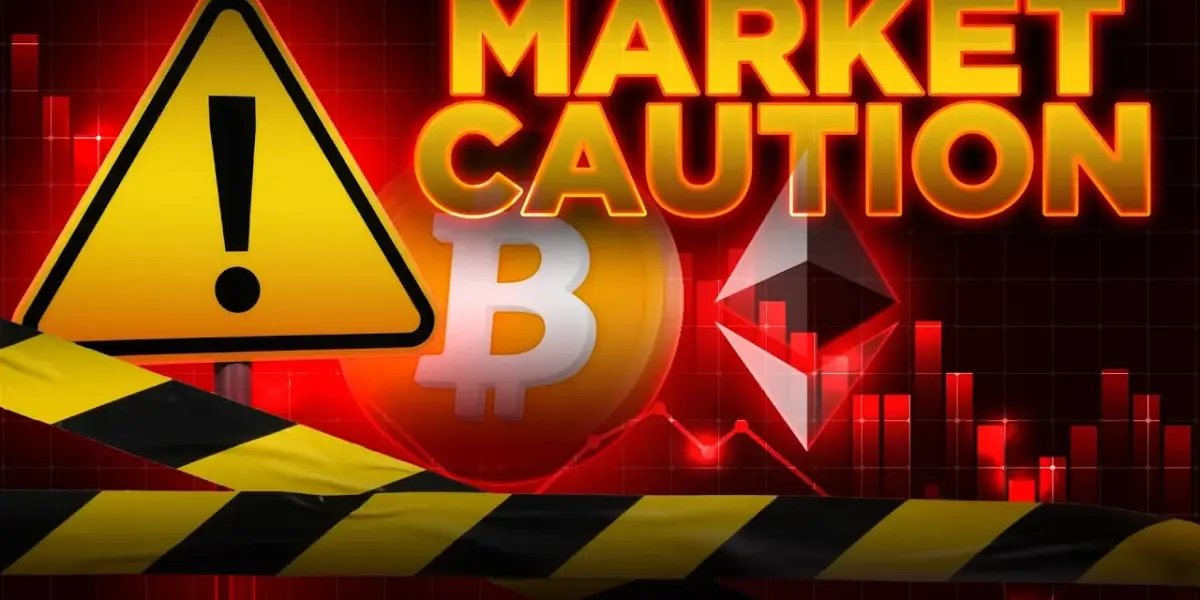
Global Tensions Spark Market Selloff, Bitcoin Falls
Markets are showing caution as global events create uncertainty, leading to a significant pullback in both traditional and cryptocurrency assets. The fear and greed index, a measure of investor sentiment in crypto, has plunged to 27, indicating extreme fear. This comes after Bitcoin briefly touched $72,000, but has since fallen under pressure.
S&P 500 Sees Major Leverage Reduction
The broader market is also experiencing a significant downturn. The S&P 500 index is showing extreme fear among investors. In fact, this marks the fifth-largest reduction in leverage over the past five years, a level not seen since the 2022 bear market. This means hedge funds and large investors are cutting back on borrowed money, signaling a move towards safer assets like cash or gold. This exit from the market is partly driven by the unstable nature of current market conditions.
Geopolitical Instability Fuels Market Fears
Tensions between the U.S. and Iran, alongside ongoing conflict in the Middle East, are major contributors to this market anxiety. Reports of missile exchanges between Iran and Israel, and the Houthi rebels entering the conflict, raise concerns about potential disruptions to global oil supplies. Bloomberg Intelligence estimates that if Saudi oil exports become vulnerable, oil prices could jump by $15 to $20 per barrel. This geopolitical instability creates a negative news flow that spooked investors, even as some reports suggested progress in U.S.-Iran talks.
The market’s reaction to these events highlights a cycle of volatility. U.S. stocks have often closed lower at the end of the week, even after starting higher. This pattern suggests that the market is not fully convinced by optimistic statements about peace talks. The recent significant drop in the U.S. stock market in just 60 minutes underscores this lack of confidence.
Bitcoin ETFs Experience Outflows Amid Risk-Off Sentiment
The risk-off sentiment is also impacting the cryptocurrency market directly. Bitcoin Exchange-Traded Funds (ETFs) have seen substantial outflows, with one report indicating an outflow of $290 million. This trend further emphasizes the growing investor caution and a preference for safer investments over riskier assets like cryptocurrencies.
Historical Data Suggests Further Pullback Potential
Looking at historical patterns, there’s a potential for further market declines. Data from 1926 shows an average drawdown of 18% in the 12 months leading up to U.S. presidential elections. Currently, the S&P 500 has pulled back about 9.14% from late January to late March. If this trend continues at the same pace for another two months, it could represent one of the quickest and most severe pullbacks in recent history.
Federal Reserve Faces Inflation Dilemma
The Federal Reserve is navigating a challenging economic environment. While Fed officials aim to bring inflation back to 2%, rising geopolitical tensions and potential supply shocks could push inflation higher. There’s a growing possibility of a Fed rate hike in 2026, with expectations climbing from 10% in March to around 22% currently. This puts the Fed in a difficult position, balancing the need to control inflation with potential risks to the labor market.
Fed Chair Jerome Powell has acknowledged the tension between the dual mandates of price stability and maximum employment. He noted that in the current climate, downside risks to the labor market suggest keeping rates low, while upside risks to inflation suggest otherwise. This uncertainty makes it difficult for the Fed to provide clear guidance.
Ethereum’s L2 Narrative Shifts, Bitcoin and Ether Gain Focus
In the crypto space, Ethereum’s Layer 2 (L2) scaling solutions are undergoing a strategic rethink. Vitalik Buterin, a co-founder of Ethereum, has suggested that the original vision for L2s may no longer be viable, necessitating a new approach. This development could significantly alter the narrative around Ethereum’s scalability and its role as a cornerstone for digital assets.
Amidst the broader market turmoil, prominent figures are emphasizing the importance of core crypto assets. Analyst Tom Lee has been consistently increasing his Ethereum holdings, adding another 71,000 ETH in a single week. Similarly, Kevin O’Leary, also known as “Mr. Wonderful,” has stated that investors only need to hold Bitcoin and Ethereum to capture 98% of the crypto market’s value. He has sold off numerous altcoin positions, deeming them “poo poo coins” with no long-term viability, and reinvested in Bitcoin and Ethereum.
Flight to Safety Dominates Investment Strategy
The current market environment is characterized by a flight to safety. Investors are moving capital away from riskier assets and seeking more stable investments. While some may consider dollar-cost averaging into Bitcoin and Ethereum, the prevailing trend is towards security and stability. As market conditions evolve, it remains to be seen how this sentiment will shift, but for now, core assets and safer havens are taking precedence.
Source: Market Caution!⚠️Crypto Selloff Update📉 (YouTube)

Related Articles

Trump Ends Iran ‘Forever War’: Military Campaign Praised
The U.S. military is executing a long-planned campaign against Iran, aiming to end a 47-year conflict. Former CENTCOM commander General Frank McKenzie confirmed the extensive preparation behind the operations. President Trump is maintaining pressure on Iran, signaling potential escalation if demands are not met.

US Escalates Bombing of Iran, Ground Invasion Looms
The United States has dramatically increased its bombing campaign against Iran, deploying heavy bombers and reportedly targeting leadership and key industrial sites. With ceasefire talks stalled and ground troops arriving, a full-scale invasion appears increasingly likely. This escalation follows a pattern of heightened tensions and carries significant global implications.
Iran’s Resilience Challenges US, Israel Military Plans
Geraldo Rivera suggests the U.S. and Israel are underestimating Iran's resilience, warning that military escalation could lead to a prolonged conflict. Amidst rising tensions, Pope Francis calls for peace, while large-scale anti-war protests in the U.S. reflect public war-weariness and impact domestic politics.