Global Solidarity Surges as World Marks Four Years of Russia’s Full-Scale Invasion of Ukraine
As the fourth anniversary of Russia's full-scale invasion approached, people worldwide rallied on February 21-22 to show unwavering solidarity with Ukraine. These global demonstrations underscored a collective commitment to international law, human rights, and the embattled nation's sovereignty, reminding governments and citizens alike of the ongoing need for robust support and accountability.

Global Solidarity Surges as World Marks Four Years of Russia’s Full-Scale Invasion of Ukraine
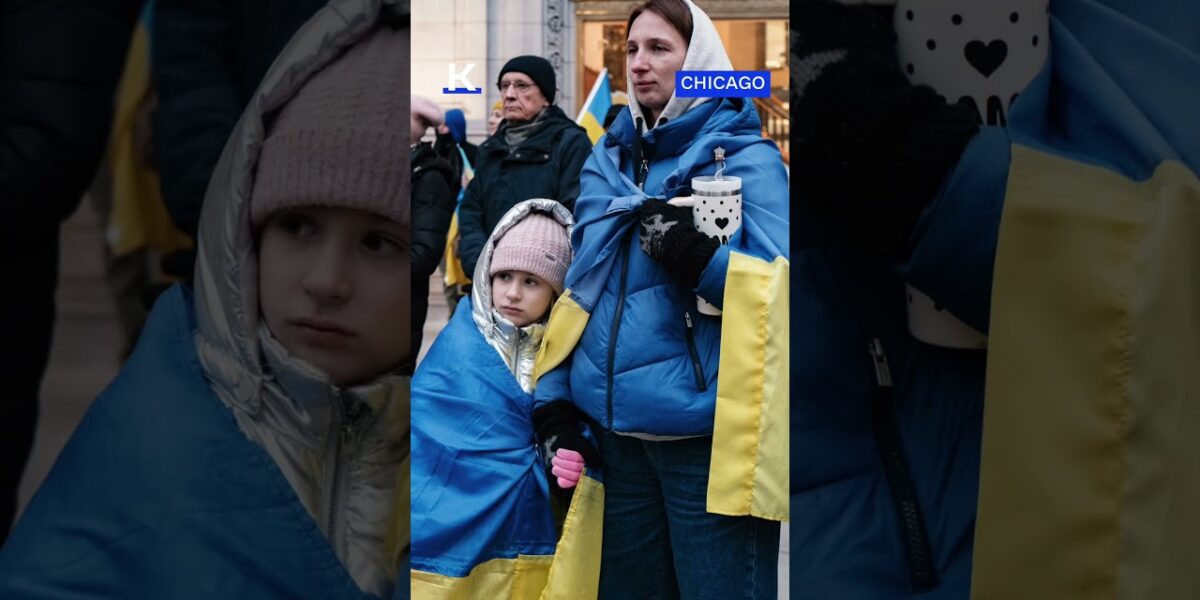
As the fourth anniversary of Russia’s devastating full-scale invasion of Ukraine approached, people across the globe rallied in an overwhelming display of solidarity and unwavering support for the embattled nation. On February 21st and 22nd, cities from Sydney to New York, London to Tokyo, witnessed thousands gathering to denounce the ongoing aggression, commemorate the lives lost, and reiterate their commitment to Ukraine’s sovereignty and freedom. These poignant demonstrations served as a powerful reminder that despite the passage of time and the emergence of new global crises, the world has not forgotten Ukraine’s plight.
A World United: Marking Four Years of Full-Scale Invasion
The global demonstrations on February 21st and 22nd were not merely commemorative events; they were vibrant expressions of a shared belief in international law, human rights, and the right of every nation to self-determination. From the steps of government buildings to bustling city squares, protestors, many draped in blue and yellow, carried banners demanding peace, justice, and accountability for war crimes. They called for continued and increased military, financial, and humanitarian aid to Ukraine, recognizing that the conflict’s resolution hinges not only on battlefield prowess but also on sustained international backing.
The rallies represented a broad spectrum of participants: Ukrainian diaspora communities, who have tirelessly advocated for their homeland since the initial aggression in 2014; local citizens deeply moved by the humanitarian crisis and the violation of international norms; and political activists committed to democratic values. Their collective voice resonated with a clear message: the world stands with Ukraine, and Russia’s aggression will not be normalized or forgotten. The visual impact of these gatherings – thousands holding candles, singing Ukrainian anthems, and sharing stories of resilience – underscored the profound human connection that transcends geographical boundaries in the face of injustice.
These demonstrations also served a crucial political purpose, reminding governments worldwide of the public’s desire for decisive action and sustained commitment. They highlighted the grassroots pressure on leaders to maintain a united front against Russian aggression, counter disinformation campaigns, and continue efforts to isolate the Kremlin on the international stage. In an era marked by geopolitical shifts and competing priorities, the consistent public outpouring of support for Ukraine remains a vital force in shaping foreign policy and ensuring the longevity of international assistance.
The Unfolding Tragedy: A Decade of Aggression, Four Years of Full-Scale War
While the immediate focus of the February rallies was the fourth anniversary of the full-scale invasion launched on February 24, 2022, the conflict’s roots stretch back much further, marking a full decade since Russia’s initial acts of aggression. The annexation of Crimea in March 2014, following a sham referendum, and the subsequent instigation of a separatist conflict in Ukraine’s eastern Donbas region, set the stage for the catastrophic events of two years ago. For eight years, a low-intensity war simmered in the east, claiming thousands of lives and displacing hundreds of thousands, largely unnoticed by much of the international community until the full-scale invasion brought the conflict into stark global focus.
February 24, 2022, marked a dramatic escalation, shattering decades of relative peace in Europe and unleashing a humanitarian catastrophe on an unprecedented scale. Millions of Ukrainians were forced to flee their homes, becoming internally displaced persons or refugees seeking safety in neighboring countries and beyond. Cities like Mariupol, Bakhmut, and Avdiivka have been reduced to rubble, testaments to the brutal ferocity of modern warfare. Critical infrastructure, including power grids, hospitals, and residential buildings, has been systematically targeted, plunging millions into hardship, especially during harsh winters.
The human cost of this conflict is staggering. Tens of thousands of soldiers and civilians have been killed or wounded. Families have been torn apart, livelihoods destroyed, and the psychological trauma inflicted on an entire generation will endure for decades. Beyond the immediate casualties, the invasion has led to widespread human rights abuses, including alleged war crimes, forced deportations of Ukrainian citizens, and the systematic destruction of cultural heritage. The sheer scale of the suffering has galvanized international condemnation and humanitarian efforts, but the wounds inflicted on Ukraine’s society and landscape are profound and long-lasting.
Economically, Ukraine has endured immense damage. Its agricultural exports, a vital component of global food security, have been severely disrupted. Industrial capacity has been decimated, and vast swathes of fertile land have been rendered unusable due to mines and environmental contamination. The nation’s resilience in maintaining critical services and even adapting its economy under wartime conditions has been remarkable, but the long-term reconstruction effort will require monumental international investment and decades of sustained commitment.
Echoes of Solidarity: Voices from Across Continents
The rallies on February 21st and 22nd were a symphony of diverse voices united by a common cause. In European capitals, where the refugee crisis has been most acutely felt, the demonstrations were particularly poignant. Thousands gathered in Berlin, Paris, and Warsaw, often marching silently or holding vigils, reflecting the somber mood surrounding the anniversary. Many carried Ukrainian flags, some adorned with black ribbons of mourning, while others displayed signs with messages like “Stop the War,” “Justice for Ukraine,” and “Freedom for All.” The sense of shared European identity and the understanding that Ukraine is fighting for values central to the continent’s future were palpable.
Across the Atlantic, in major North American cities like Washington D.C., New York, and Toronto, the Ukrainian diaspora played a prominent role, mobilizing their communities and allies. These gatherings often featured impassioned speeches from community leaders, religious figures, and even elected officials, emphasizing the need for continued robust support from the United States and Canada. The call for more advanced weaponry, tighter sanctions on Russia, and increased humanitarian aid were common refrains, reflecting the strategic importance of North American leadership in the global response.
Even in distant lands, the spirit of solidarity was evident. From rallies in Tokyo and Seoul, where concerns about regional security and the precedent set by Russia’s aggression resonate deeply, to gatherings in Sydney and Melbourne, reflecting a global commitment to democratic principles, the message was clear. These protests, though geographically dispersed, were intrinsically linked by shared values and a collective rejection of imperialistic aggression. They showcased the power of ordinary citizens to influence international discourse and hold their leaders accountable for upholding justice on the global stage. The use of social media and global news coverage amplified these voices, creating a virtual echo chamber of support that transcended physical locations.
The Geopolitical Quake: Reshaping the International Order
Russia’s full-scale invasion of Ukraine has sent shockwaves through the international system, fundamentally altering geopolitical landscapes and challenging the foundational principles of post-World War II order. The invasion unequivocally violated international law, particularly the UN Charter’s prohibition on the use of force against the territorial integrity or political independence of any state. This audacious act has forced a re-evaluation of security paradigms, leading to significant shifts in alliance structures and defense policies worldwide.
NATO, often described as ‘brain dead’ before the invasion, experienced a dramatic revitalization. The alliance strengthened its eastern flank, increased defense spending among member states, and welcomed new members, Finland and Sweden, reversing decades of neutrality. The invasion underscored the alliance’s original purpose: collective defense against aggression. Similarly, the European Union, initially perceived by some as primarily an economic bloc, demonstrated unprecedented political unity and resolve, imposing extensive sanctions on Russia and providing substantial financial and military aid to Ukraine, while also granting Ukraine candidate status for membership.
Beyond traditional alliances, the conflict has exposed and exacerbated global divisions. While a significant portion of the international community, particularly Western nations, has condemned Russia, some countries in the Global South have maintained a more nuanced or neutral stance, often prioritizing economic ties or historical non-alignment. This divergence has complicated efforts to build a truly unified global front against Russia and has highlighted the complexities of multilateral diplomacy in a multipolar world.
The war has also profoundly impacted global energy markets, supply chains, and food security. Russia, a major energy exporter, saw its oil and gas revenues curtailed by sanctions, leading to a reorientation of global energy flows. Ukraine, a critical producer of grains, saw its exports severely hampered, contributing to food price inflation and exacerbating hunger in vulnerable regions. These ripple effects underscore the interconnectedness of the global economy and the far-reaching consequences of regional conflicts.
Sustaining the Lifeline: International Aid and Its Challenges
Since February 2022, international aid to Ukraine has been unprecedented in its scale and scope. Military assistance, ranging from small arms and ammunition to advanced artillery, tanks, air defense systems, and increasingly, fighter jets, has been crucial in enabling Ukraine to defend its territory and resist the superior numerical and material strength of the Russian forces. Financial aid, in the form of grants and loans, has kept the Ukrainian government functioning, allowing it to pay salaries, maintain essential services, and fund its war efforts. Humanitarian aid has provided critical relief to millions of civilians, delivering food, medical supplies, shelter, and psychological support.
However, sustaining this lifeline has not been without its challenges. Political shifts in donor countries, particularly in the United States, have at times threatened the continuity of aid packages, leading to uncertainty and anxiety in Kyiv. Debates over the type and quantity of weaponry, the speed of delivery, and the long-term commitment to Ukraine’s defense have been ongoing. European nations have stepped up their contributions, but the sheer scale of Ukraine’s needs remains immense, requiring a coordinated and sustained effort from the entire international community.
Public support for aid, while generally strong, faces the risk of ‘war fatigue’ as the conflict drags on. Economic pressures, domestic political priorities, and the emergence of other global crises can divert attention and resources. Countering disinformation campaigns and continually articulating the strategic importance of supporting Ukraine are therefore essential tasks for leaders and advocates. The effectiveness of aid is also a constant consideration, with ongoing efforts to ensure transparency, accountability, and efficient delivery to the front lines and to those most in need.
The long-term commitment to Ukraine’s recovery and reconstruction also presents an enormous financial and logistical challenge. Estimates for the cost of rebuilding Ukraine run into hundreds of billions of dollars, a sum that will require a global effort akin to the Marshall Plan. Planning for this massive undertaking has already begun, but its successful execution will depend on the cessation of hostilities and a sustained international will to invest in Ukraine’s future.
Beyond the Frontlines: The Enduring Spirit of Ukrainian Resistance and Global Advocacy
The resilience of the Ukrainian people in the face of overwhelming aggression has been a source of inspiration worldwide. From President Volodymyr Zelenskyy’s steadfast leadership to the bravery of ordinary citizens defending their homes, the spirit of resistance has been unwavering. This resistance extends beyond military actions to encompass a vibrant civil society, cultural preservation efforts, and a fierce determination to maintain national identity.
Ukrainian artists, musicians, and cultural figures have used their platforms to draw international attention to the war, sharing their nation’s rich heritage and the devastating impact of the conflict. Volunteers, both within Ukraine and abroad, have played a critical role in supporting the war effort and humanitarian initiatives, demonstrating the power of grassroots mobilization. The Ukrainian diaspora, numbering in the millions across the globe, has been particularly instrumental in advocating for their homeland, organizing rallies, fundraising, and lobbying governments to maintain strong support for Ukraine.
Moreover, the global advocacy network extends beyond the Ukrainian diaspora to include human rights organizations, international legal bodies, and peace activists who tirelessly work to document war crimes, provide legal assistance, and push for accountability. The pursuit of justice for victims of the conflict, including through international criminal courts, remains a critical component of the broader response to Russia’s aggression. These efforts underscore a collective commitment to ensuring that those responsible for atrocities are held accountable and that the rule of law ultimately prevails.
The Path Ahead: Navigating a Complex Future
As the conflict enters its fifth year, the path to a just and lasting peace remains fraught with challenges. Ukraine’s stated goals – the restoration of its territorial integrity within its internationally recognized borders, accountability for war crimes, and security guarantees to prevent future aggression – are non-negotiable for Kyiv. Russia, conversely, continues to occupy significant portions of Ukrainian territory and shows no sign of relenting its maximalist demands.
Diplomatic efforts, though ongoing, have yielded little progress, largely due to the fundamental divergence in war aims. Any future peace settlement would require complex negotiations, likely involving international mediation and robust security assurances for Ukraine. The role of international organizations, particularly the United Nations, in facilitating dialogue and monitoring any potential ceasefire or peace agreement will be crucial, though their effectiveness has often been hampered by geopolitical divisions.
The long-term security architecture of Europe is also undergoing a profound transformation. Ukraine’s aspirations for NATO and EU membership, once distant prospects, have gained significant momentum, driven by the imperative of preventing future Russian aggression. Integrating Ukraine into these Western structures would represent a fundamental realignment of the continent’s political and security landscape. However, the timelines and pathways for such integration remain complex and dependent on various factors, including the ongoing conflict’s resolution.
Finally, the question of reconstruction is paramount. The sheer scale of destruction necessitates a comprehensive, internationally coordinated effort. This includes not only rebuilding physical infrastructure but also addressing the deep societal and psychological scars left by the war. The international community’s willingness to invest in Ukraine’s future, not just its defense, will be a critical test of global solidarity and commitment to democratic values. The future of Ukraine, and indeed of European security, will depend on these interconnected efforts.
Conclusion: A Testament to Hope and Resolve
The global rallies on February 21st and 22nd, ahead of the fourth anniversary of Russia’s full-scale invasion, served as a powerful testament to enduring international solidarity with Ukraine. They underscored that despite the passage of time and the immense challenges, the world has not grown weary of supporting a nation fighting for its very existence and for the fundamental principles of international law. These demonstrations were a collective affirmation of hope, a defiant stand against aggression, and a renewed pledge to stand with Ukraine until a just and lasting peace is achieved. The unwavering spirit of the Ukrainian people, coupled with sustained global support, offers the most potent antidote to the darkness of war and a beacon for a future where sovereignty and freedom prevail.
Source: People around the world rally in support of Ukraine (YouTube)

Related Articles

Ukraine’s New Defense Minister: A Bold Gamble for War
Ukraine's new Defense Minister, Mykhailo Fedorov, is implementing a data-driven reform strategy amid potential June peace talks. His appointment signals a shift towards efficiency and modern metrics, challenging traditional military structures while navigating external political pressures.

Zelensky Links Iran’s Drone Supply to Russia’s War Effort
President Zelensky drew a direct link between Iran's drone supply to Russia and global instability, urging for a united front against aggression. He also highlighted ongoing diplomatic efforts and strengthened alliances, particularly with the Netherlands, to bolster Ukraine's defense capabilities.
Kremlin Ultimatum Revealed: NATO on High Alert Amidst Russian Response
China's potential role as a peace broker in the Russia-Ukraine conflict is viewed with skepticism, with concerns raised about its impartiality. Meanwhile, Russia's diplomatic maneuvers are seen as part of a broader hybrid warfare strategy, while Hungary's actions under Viktor Orbán are described as consistently pro-Russian, potentially disrupting European unity.