Global Powers Fuel Wars With Real-Time Targeting Data
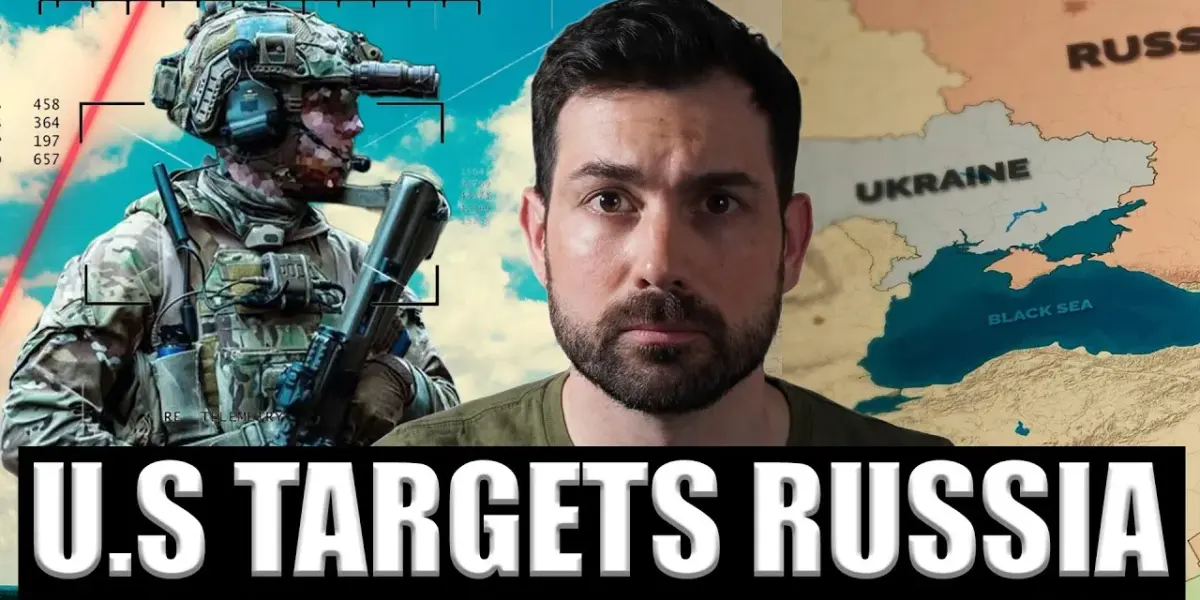
Global superpowers are increasingly fueling conflicts by sharing advanced targeting data, blurring the lines between proxy wars and direct confrontation. The U.S. provides Ukraine with real-time intelligence, while Russia, China, and Iran collaborate, escalating tensions.

Superpowers Escalate Conflicts Through Advanced Intelligence Sharing
Major global powers are increasingly using sophisticated targeting data to influence ongoing wars, creating a complex and interconnected web of conflicts. The United States is providing Ukraine with real-time intelligence on Russian troop movements, while Russia retaliates by aiding in targeting against U.S. personnel in the Middle East. Meanwhile, North Korea is sending troops to Russia, and China is assisting Russia in targeting Ukrainian forces. This interconnectedness suggests a fundamental shift in how proxy wars are fought, with data now playing a decisive role.
US and Ukraine Forge Deep Intelligence Partnership
The collaboration between the U.S. and Ukraine marks a new era in proxy warfare. Following Russia’s invasion, the U.S. began sharing targeting data with Ukraine to help defend its territory without deploying its own troops. This partnership deepened when Ukrainian Lieutenant General Serhiy Naboyev met with U.S. Lieutenant General Christopher Donahghue in Germany. Their meeting established a direct intelligence pipeline, allowing American intelligence to inform Ukrainian strikes. This level of military integration was unprecedented in past proxy conflicts.
According to The New York Times, the U.S. government officially sanctioned this intelligence-sharing alliance. Task Force Dragon, led by General Donahghue, acts as a mission command center for both U.S. and Ukrainian officers. This collaboration has been linked to a significant increase in high-ranking Russian officers being killed in precision strikes. The speed at which intelligence is gathered and acted upon, sometimes within minutes, is a result of combining U.S. Space Force’s intelligence, surveillance, and reconnaissance (ISR) capabilities with low-cost drones and long-range weaponry.
The “Kill Chain”: How Real-Time Intelligence Works
The process, often called a “kill chain,” involves Ukrainian commanders using U.S. intelligence, geographic data, and their own intelligence – such as intercepted Russian communications – to pinpoint targets. This combined information allows them to identify and strike senior Russian officers effectively. In the past, sharing intelligence in proxy wars was considered safe because it was deniable and had limited immediate impact. However, today’s real-time intelligence is far more impactful.
General Mark Milley, former Chairman of the Joint Chiefs of Staff, confirmed that the U.S. had “opened up the pipes” for significant intelligence flow to Ukraine. U.S. intelligence reportedly provided the Ukrainian military with the exact locations of Russian mobile headquarters, gathered from a network of spies. By May 2022, a comprehensive kill chain system was reportedly operational.
Technological Edge: Satellites and Drones Transform Warfare
The effectiveness of this system relies heavily on advanced technology. Ukraine’s military uses U.S. intelligence to feed targeting data into systems like HIMARS and artillery, enabling them to track and strike Russian forces before they are detected. This intelligence also serves as an early warning system for missile launches and flight paths. This contrasts sharply with past conflicts where armies often fought with limited visibility, a situation akin to removing the “fog of war.”
A prime example of this new capability was the sinking of the Russian warship Moskva in April 2022. The U.S. provided Ukraine with the ship’s real-time location, leading to a Ukrainian missile strike that sank the vessel. This event, the loss of a major warship in combat in decades, would have been nearly impossible to coordinate during the Cold War due to the lack of real-time, space-based surveillance.
The Evolving Nature of Proxy Wars
Historically, proxy wars were less direct. Nations would supply weapons and sometimes advisors, but intelligence was slow and often outdated. This created a buffer, limiting direct superpower involvement. Today, the ability to track enemy forces in real time and direct strikes within minutes has removed that buffer, creating a new, less clearly defined form of proxy warfare.
While many nations possess drones, only a few possess the sophisticated satellite networks needed for real-time, precise intelligence. The U.S. operates hundreds of military satellites, costing billions annually, providing continuous coverage and advanced analytical capabilities. Software and algorithms analyze minute changes in satellite imagery, detecting hidden enemy troop movements with high certainty, enabling swift strikes.
Intelligence as a Geopolitical Tool
U.S. intelligence targeting has become a significant geopolitical tool, used by different administrations to influence events. In May 2024, Ukraine requested more access to targeting data deeper inside Russian territory, which was initially denied due to fears of escalation. When intelligence sharing was halted under the Trump administration in March 2025, Ukrainian defenses reportedly weakened in some areas, leading to retreats.
This withholding of data was seen as leverage to pressure Ukraine into accepting U.S. peace terms. The U.S. eventually resumed support, and by October 2025, under the Trump administration, satellite targeting assistance was significantly increased, including strikes deep inside Russia. The U.S. also provided battle damage assessments for strikes on Russian oil refineries, helping Ukraine target these facilities and avoid Russian air defenses. By March 2026, these efforts, along with U.S. and European seizures of Russian oil tankers, had reportedly destroyed 40% of Russia’s oil export capacity.
A World at War: Expanding Alliances and Capabilities
The model of using advanced targeting data is spreading. Russia is now providing targeting data to Iran’s ballistic missile program, which has been linked to the deaths of Americans and the destruction of military assets. France’s foreign minister noted that Russia appears to be supporting Iran’s military efforts, particularly against American targets. Ukraine is also supplying anti-drone capabilities to Middle Eastern countries to counter Iranian drones.
Russia is reportedly sending advanced drone technology and targeting information to Iran, including the locations of U.S. military assets. This collaboration highlights the growing capabilities of nations like Russia and China in space-based intelligence, rivaling that of the U.S. While Europe is developing its own satellite capabilities, it will take years to match existing powers.
China’s Growing Role in Global Conflicts
China is also actively involved, providing targeting data to Russian forces against Ukrainian units since at least October 2025. This intelligence focuses on identifying strategic targets linked to the West, aiming to deter foreign investment. Evidence suggests China is supplying Russia with dual-use drone components, electronics for missile guidance, and materials for tank production. The majority of parts in Russian Shahed drones are reportedly from China.
Leaked documents reveal secret training between Chinese and Russian troops, with China gaining experience in large-scale airborne operations from Russia. This cooperation is driven by increasing economic ties, particularly in oil and gas, and a shared interest in challenging U.S. influence. The alliance between Russia and China, once strained, has been strengthened by new infrastructure like oil and gas pipelines.
The New Rules of Engagement
The current global situation, with nations like Russia, China, and Iran loosely aligned against the U.S. and its allies, represents a more dangerous phase than the Cold War. The containment that once characterized proxy wars is breaking down as major powers actively shape battles in real time. The potential for escalation, particularly concerning China’s actions regarding Taiwan, raises the specter of a third world war.
Market Impact
The increasing use of advanced intelligence in conflicts highlights the critical role of space-based assets and cybersecurity in modern warfare. Companies involved in satellite technology, defense, and intelligence gathering are likely to see continued demand. Conversely, nations heavily reliant on oil exports, like Russia, face significant economic pressure if their energy infrastructure becomes a primary target, as seen with the destruction of its oil export capacity. The interconnectedness of these conflicts also means that disruptions in one region can have ripple effects on global supply chains and economies. Investors should monitor geopolitical developments closely, as they can significantly impact defense spending, technology investment, and global economic stability.
What Investors Should Know
- Technological Arms Race: The emphasis on real-time intelligence, satellite surveillance, and advanced drones signifies a major technological shift in warfare. Companies developing and providing these capabilities are well-positioned.
- Geopolitical Risk Premium: Increased global tensions and the blurring lines between proxy wars and direct conflict can lead to higher volatility in financial markets. Investors may seek assets that offer protection against such risks.
- Energy Market Volatility: Attacks on energy infrastructure, like Russian oil refineries, can cause significant price swings in global oil and gas markets, impacting energy companies and broader economic activity.
- Supply Chain Disruptions: Conflicts and the resulting sanctions or blockades can disrupt global supply chains, affecting various industries from manufacturing to technology.
- Defense Spending: The evolving nature of warfare is likely to drive increased defense budgets globally, benefiting companies within the defense sector.
Source: How US Troops are Targeting Russian Soldiers (YouTube)

Related Articles
Trump’s Mideast Strategy: A Long Game
Newt Gingrich argues President Trump's Middle East strategy is a long game, not a withdrawal. Powerful U.S. military assets ensure a persistent presence. The strategy aims to pressure adversaries and encourage allies to take greater responsibility for regional security.


EU Leaders Visit Bucha, Demand Justice for War Crimes
EU foreign ministers visited Bucha, Ukraine, to commemorate victims of Russian atrocities and reaffirm support for Ukraine. They are pushing for a special tribunal to prosecute the crime of aggression, separate from war crimes prosecutions. Concerns remain about Ukraine's agenda slipping as global focus shifts, and President Zelenskyy's Easter ceasefire proposal faces uncertainty regarding US backing and Russian compliance.


US Unleashes Strikes: Video Reveals Iran Targets Hit
The United States has released video footage showing its military forces carrying out strikes against targets in Iran. U.S. Central Command shared the video, offering a visual account of recent military actions. This release provides a direct look at the U.S. response to perceived threats or actions originating from Iran.